
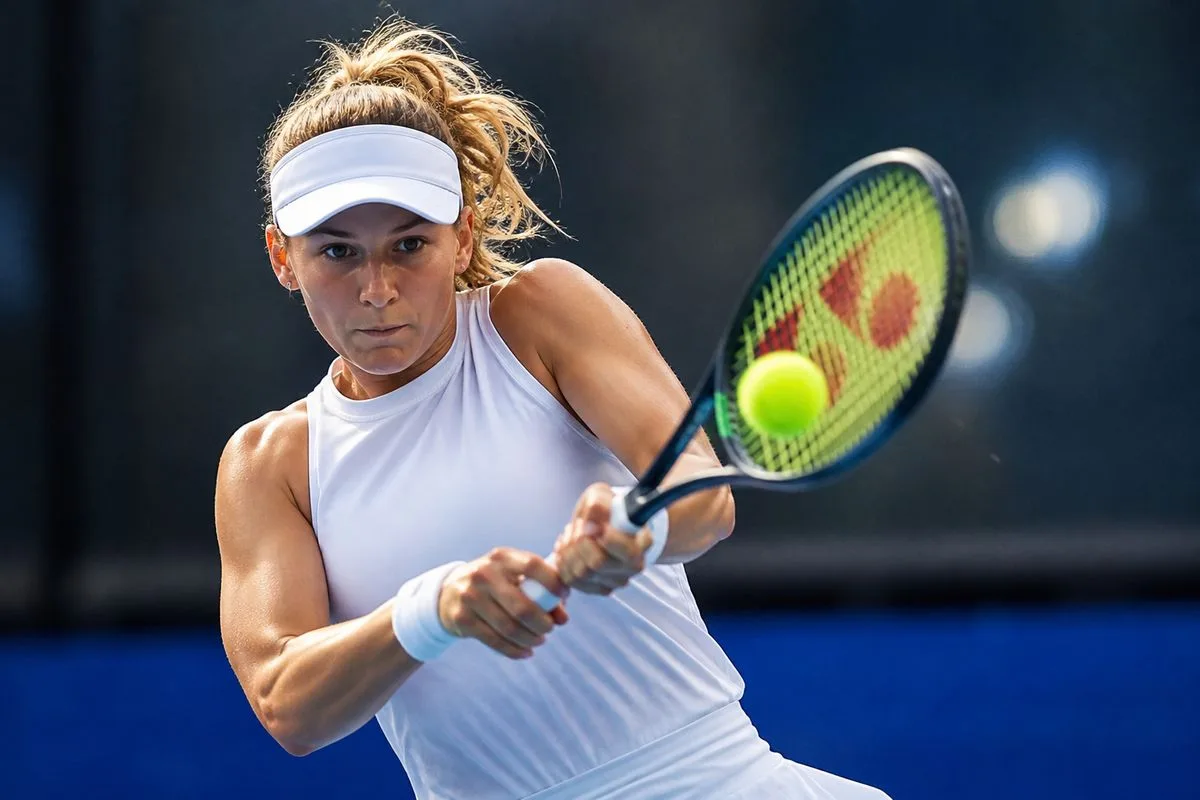
WTA Wuhan 2026, a WTA 1000 week defined by volatility and opportunity
The story of wta wuhan in October 2026 is not simply that a major event is under way, it is that the Dongfeng, Voyah Wuhan Open is producing the kind of early round churn that reshapes a draw and, potentially, the end of season narrative. With the tournament scheduled for 12 to 18 October 2026, the first half of the week is already delivering a mix of expected authority from established contenders and the kind of surprise results that only a deep WTA 1000 field can generate.
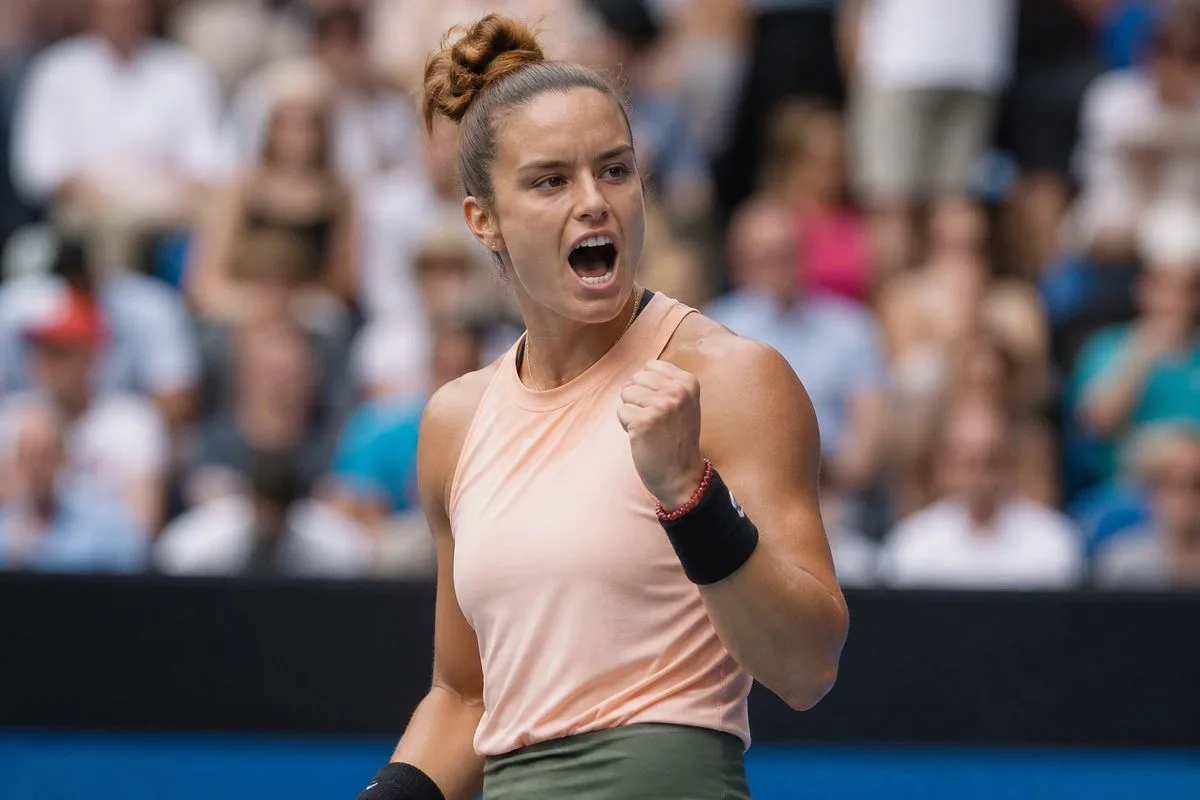
Several headline moments set the tone. Maria Sakkari eliminates Marta Kostyuk in the second round, a result that signals Sakkari’s ability to impose her physical patterns on a fast hard court. Iga Swiatek reaches the third round after recording her 40th win of the season, a milestone that underlines consistency rather than a single hot streak. Alongside those known quantities, the week also features the kind of local and wildcard storylines that give Wuhan its distinctive rhythm, including a first round upset where a wild card ranked No 217, Shi, defeats 13th seed Eala from a set down.
That combination matters because Wuhan is not a minor stop, it is a WTA 1000 event. Points, confidence, and match sharpness gained here tend to carry into the final stretch of the calendar. The early evidence suggests a tournament where the margins are thin, the draw is live, and the pressure on seeded players is immediate.
WTA Wuhan match results so far, Sakkari’s statement, Swiatek’s milestone, and a bracket that will not settle
The most straightforward headline is Sakkari’s second round win over Kostyuk. The WTA’s own reporting frames it as a notable scalp, and in a week already dotted with surprises, it reads as a reminder that experience and physical durability still travel well in Wuhan. Sakkari’s game is built around repeatable patterns, heavy first strike tennis, and the willingness to win long exchanges, and a second round victory over a dangerous opponent is the kind of result that can stabilise a week.
Swiatek’s progress carries a different kind of significance. The note that she earns her 40th win of the 2026 season is not a throwaway line, it is a marker of sustained performance across surfaces and months. Wuhan’s hard courts reward clean timing and disciplined shot selection, and Swiatek’s ability to keep her level high enough to bank wins is often what separates her from the pack over a long season. The available source material does not specify her full match details beyond the milestone and advancement, but the message is clear, she is arriving in Wuhan with a season’s worth of habits that make early round upsets less likely.
At the same time, the draw is already showing how quickly assumptions can collapse. Community discussion around the tournament highlights a first round result where wild card Shi, ranked No 217, defeats 13th seed Eala 4 to 6, 6 to 3, 6 to 3. The scoreline tells its own story, a slow start, then a tactical or emotional shift that flips the match. In WTA 1000 events, this kind of upset is not just a curiosity, it changes the probability map for everyone in that section, because it removes a seed and injects a player riding momentum and crowd energy.
Further down the draw, another community highlighted result shows wild card M. Pohankova defeating wild card Xiy. Wang 7 to 6(2), 6 to, with the second set score not fully visible in the provided material. Even without the missing detail, the key point is that Wuhan is giving wild cards real traction. That is a meaningful signal about the depth of the field and the potential impact of local familiarity, travel load, and the specific conditions in Wuhan.
Why WTA Wuhan is uniquely punishing, the WTA 1000 format, scheduling, and the pressure on seeds
To understand why early round turbulence is so consequential at wta wuhan, it helps to remember what a WTA 1000 week demands. The category sits just below the Slams in prestige and points, and the depth is typically unforgiving. Players who might cruise through early rounds at smaller events are forced into high quality matches almost immediately, often against opponents with the weapons to take a set quickly and the belief to close.

Wuhan’s 2026 edition is explicitly billed as a world class WTA 1000 women’s tennis event, and the schedule window of 12 to 18 October 2026 places it in a part of the calendar where fatigue and motivation collide. Some players arrive chasing points and form, others arrive managing bodies after a long year. That context makes the upset of a seeded player by a No 217 wild card more than a one off surprise, it can be a symptom of a broader dynamic where match readiness and adaptation matter as much as ranking.
The tournament’s identity is also shaped by its commercial and organisational framework. The event name, Dongfeng, Voyah Wuhan Open, signals major domestic sponsorship, and the WTA’s own tournament pages emphasise the scale and production value. Big events bring big expectations, and that pressure can cut both ways. It can lift local entrants who feed off the atmosphere, and it can tighten the margins for seeds who feel they should be progressing smoothly.
Even the doubles schedule, as reflected in listings that include pairings such as Ellen Perez and Demi Schuurs against Marie Bouzkova and Sara Sorribes Tormo, points to a week where the courts are busy and the demands are constant. For singles players who also play doubles, or for those who rely on extensive practice blocks, the logistics of a packed WTA 1000 week can influence performance in subtle ways.
Player profiles shaping WTA Wuhan, Sakkari’s reset, Swiatek’s consistency, and the wild card surge
Sakkari’s win over Kostyuk reads like a form check at the right time of year. While the source material does not provide season long statistics for Sakkari, the significance of the result lies in opponent quality. Kostyuk is widely viewed as a player capable of disrupting rhythm and turning matches into uncomfortable problem solving exercises. A second round victory suggests Sakkari is executing her patterns with enough clarity to prevent the match from becoming chaotic on Kostyuk’s terms.
Swiatek’s 40th win of the season is the kind of number that points to a player who rarely gives away matches to the field. It also hints at a broader truth about elite performance in the WTA, the top players separate themselves by turning good weeks into points even when they are not at their absolute peak. Wuhan is a venue where that skill is tested, because the field is strong and the conditions can reward aggressive shot making. Swiatek advancing while hitting a season milestone suggests she is doing what champions do, collecting wins without drama.
The most intriguing character in the early narrative, however, is the wildcard cohort. The upset by Shi, a No 217 wild card, over 13th seed Eala is a reminder that rankings can lag behind true level, especially for players who have been injured, have limited schedules, or are developing rapidly. The scoreline, losing the first set then winning the next two, also suggests composure, the ability to adjust, and the fitness to sustain intensity.
Pohankova’s progress, also as a wild card, reinforces the theme. Even with incomplete score detail in the provided material, the fact of a straight sets win that includes a tie break points to a player who can handle pressure moments. In WTA 1000 events, tie breaks often decide whether a promising run becomes a headline or a footnote. Wuhan’s early rounds are already showing that wild cards are not simply filling slots, they are forcing seeded players to earn every game.

What the early Wuhan Open results mean, for rankings, confidence, and the late season race
The immediate implication of the early results at wta wuhan is that the draw is opening in unpredictable ways. When a 13th seed goes out in the first round to a No 217 wild card, it does not just remove a name, it changes match ups for the next two rounds. Players who expected a certain style of opponent must pivot quickly, and coaches must prepare for less familiar patterns. That is where tournaments can swing, not necessarily on the biggest court, but in the scramble to adapt.
For Sakkari, a high profile second round win can function as a platform. In a WTA 1000 environment, confidence is often built through one or two matches where a player feels their identity returning. The WTA’s framing of the result as a notable knockout suggests it is being read as a statement rather than routine progression. If Sakkari can back it up, Wuhan becomes a week that recalibrates expectations for the rest of the season.
For Swiatek, the meaning is slightly different. A 40th win is a marker of baseline excellence, and Wuhan offers the chance to convert that consistency into a deep run. The key for top players at this stage of the year is not only to win, but to win in a way that preserves physical resources. While the source material does not provide match duration or physical notes, the general principle holds, efficient early rounds are often the hidden ingredient in late week dominance.
For the tournament itself, the wild card success is a commercial and cultural boost. Big events thrive on local storylines, and nothing energises a stadium like an underdog run. At the same time, it raises questions for the WTA ecosystem about depth and volatility. If a No 217 can beat a seeded player in a WTA 1000 first round, it suggests the gap between the top tier and the chasing pack may be narrower than rankings imply, at least in specific conditions and moments.
The Bigger Picture
Wuhan’s 2026 story sits inside a broader trend in women’s tennis, the increasing difficulty of predicting outcomes outside the very top tier, and the way WTA 1000 events have become pressure cookers rather than processional stops. The early evidence from this week, a seeded player falling to a low ranked wild card, and multiple wild cards pushing into later rounds, aligns with a tour where athleticism and ball striking depth are widespread. That does not mean rankings are meaningless, but it does mean that on a given week, the difference between seed and outsider can be a handful of points played under stress.
There is also a structural point that often gets missed in day to day coverage. Late season tournaments compress incentives. Some players are chasing points, others are chasing form, others are managing workload. In that environment, a player with nothing to lose, such as a wild card ranked outside the top 200, can play with a freedom that is hard to match. Wuhan’s schedule, 12 to 18 October 2026, places it in precisely that psychological window. The result is a tournament that can feel more like a series of finals than a standard early round progression.
Finally, Wuhan highlights how the WTA’s global footprint is increasingly shaped by major events in Asia with significant sponsorship and high production values. The Dongfeng, Voyah branding signals domestic corporate investment, and the WTA 1000 designation signals institutional priority. When those forces combine, the tournament becomes more than a week of matches, it becomes a statement about where the sport is building its biggest stages. The competitive volatility seen in the early rounds is not a side effect, it is part of the product, a deep field on a big stage where reputations are tested daily.
What to watch next at WTA Wuhan 2026, momentum players, pressure matches, and the draw’s new logic
From here, the key question is whether the early shocks turn into sustained runs or whether the established names reassert control. Upsets in the first two rounds can sometimes be isolated, a favourite has an off day, an outsider plays the match of their life, and the next round restores order. Wuhan’s early pattern, however, suggests something more persistent, a tournament where multiple players are arriving with the belief and the level to challenge seeds.
For Sakkari, the next test is whether she can maintain the intensity that carried her past Kostyuk. In WTA 1000 events, a statement win is only as valuable as the follow up, because the field punishes any emotional drop. For Swiatek, the question is whether she can keep turning her season long consistency into clean progress, and whether the draw around her becomes more favourable as seeds fall, or more dangerous as underdogs play with momentum.
The wild card narrative is also worth tracking closely. Shi’s comeback win over the 13th seed is the kind of result that can unlock a player’s week, especially with crowd support. Pohankova’s ability to win a tie break and progress suggests similar resilience. If either player strings together another win, the story shifts from upset to campaign, and the tournament’s identity becomes even more defined by new faces and local energy.
What is already clear is that wta wuhan in 2026 is delivering what a WTA 1000 event is supposed to deliver, high stakes tennis early, meaningful results that reshape the draw, and a collision between proven contenders and players seizing a rare opening. As the week moves towards its decisive rounds, the tournament is set up not just to crown a champion, but to reveal which players can handle a modern WTA landscape where nothing is given and every round feels like a test.