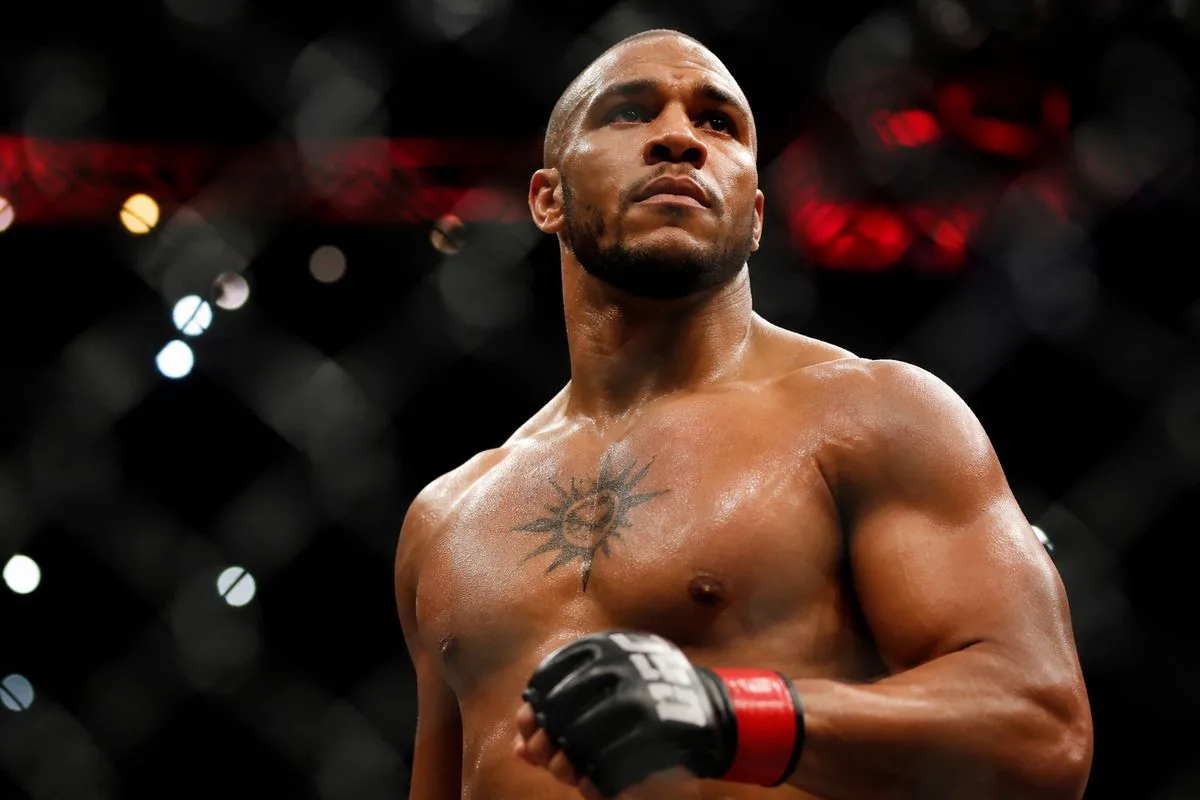
Ciryl Gane becomes the mixed martial arts heavyweight champion again, and the UFC’s heavyweight story shifts
Ciryl Gane’s status as the mixed martial arts heavyweight champion is the defining development in the UFC’s men’s heavyweight division in 2026, because it signals both a sporting reset and a commercial recalibration for the promotion’s most marketable weight class. According to the UFC champions list, Gane holds the UFC Heavyweight Championship from 14 September 2026, with zero title defences recorded so far. That single line in the record book carries outsized implications, not only for the contenders now queuing behind him, but for how the UFC frames its heavyweight era after Jon Jones’s retirement.
The immediate news value is straightforward: the UFC has a new champion at heavyweight, and it is a familiar name with unfinished business. Gane is not an anonymous belt-holder emerging from the margins. He is a 36 year old French heavyweight, fighting out of Paris with MMA Factory under Fernand Lopez, and he is already one of the division’s most recognisable technicians. His championship return also reopens a narrative that has hovered over the weight class since Jones beat him to win the heavyweight title in 2023, a result that effectively defined the division’s hierarchy for the next two years.
What changes in September 2026 is not merely the name on the belt, but the set of questions the UFC must answer next. Can Gane convert championship status into a stable reign, or does the heavyweight title continue to change hands in a division historically prone to volatility? How does the UFC sell a new cycle of contenders when the previous era was anchored by a once in a generation star who has now stepped away? And what does it mean for European MMA that a French fighter is again at the top of the sport’s most mythologised division?
What the 14 September 2026 championship change actually tells fans
The UFC champions list records Gane as champion from 14 September 2026, with 0 defences. The source material does not specify the opponent, the event name, or the method of victory for the title win, so any attempt to describe the bout itself would be speculation. What can be said with confidence is that the UFC’s official championship ledger now places Gane at the head of the heavyweight table, and that the division enters a new phase where the first defence becomes the key indicator of legitimacy and momentum.
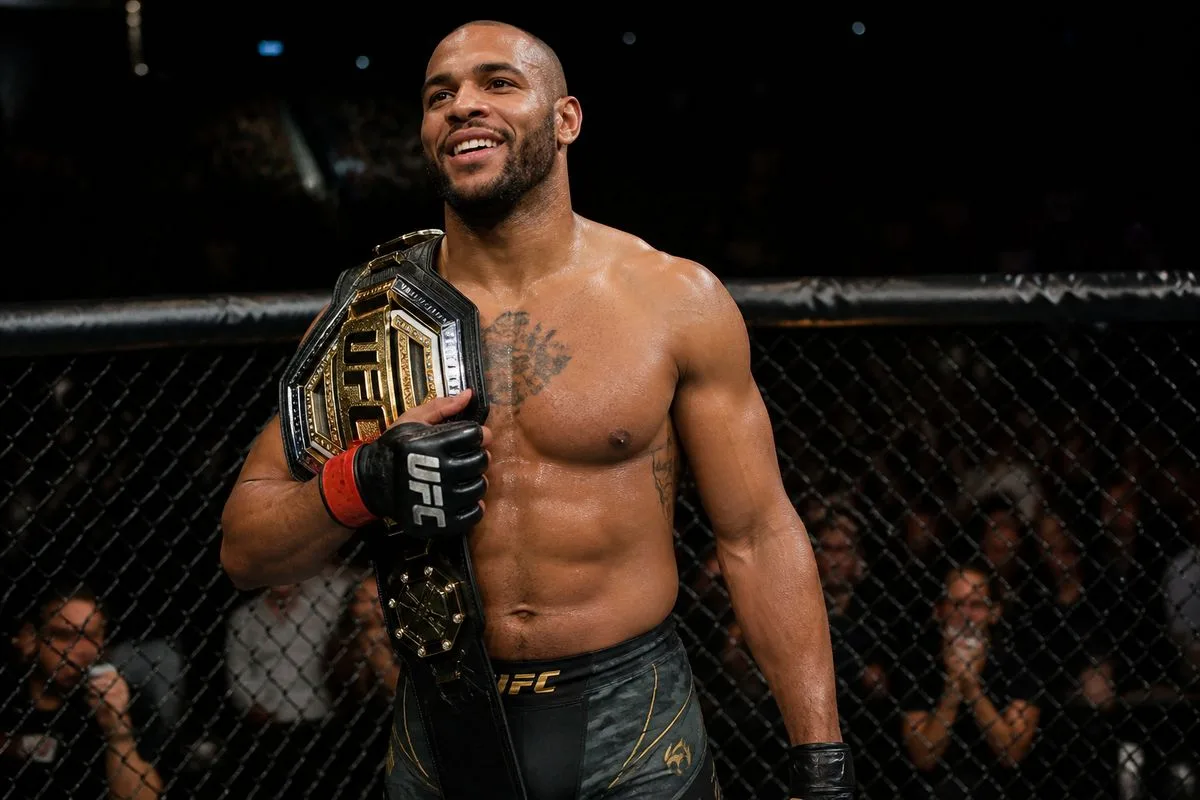
In modern UFC politics, the first defence often matters almost as much as the title win. A champion with no defences is, in practical terms, still a champion in waiting, because the promotion’s matchmaking and marketing machine tends to treat the first defence as the moment a reign becomes real. For Gane, that means the next booking will likely determine whether his championship is framed as the start of a durable era or as another short chapter in a division that has frequently struggled to keep its belt on one waist for long.
There is also a subtle but important distinction between being champion and being the division’s gravitational centre. Heavyweight champions can be dominant sporting forces, but they can also be transitional figures while the UFC manoeuvres towards a bigger commercial fight. With Jones retired, the UFC no longer has the simplest possible promotional pitch, the greatest of his generation moving up and ruling the biggest men. Gane’s championship therefore arrives at a moment when the UFC needs a new centre of gravity, and it is not yet clear whether the promotion will build around him as a long term face of the division or use his reign to set up the next blockbuster.
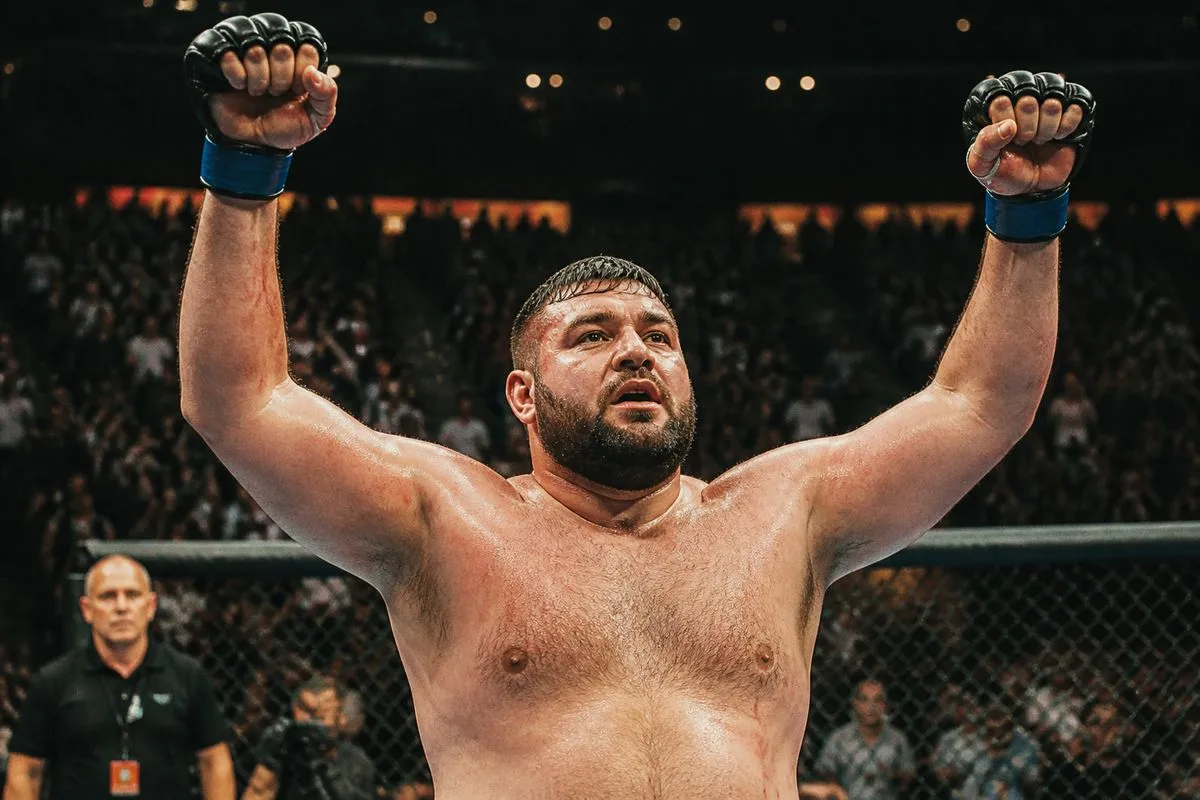
Who is Ciryl Gane, the mixed martial arts heavyweight champion, and why his style matters
Gane’s profile is unusually modern for a heavyweight champion. Born on 12 April 1990 in La Roche-sur-Yon in France’s Vendée department, he arrives at elite MMA through a route that blends late specialisation with high level striking credentials. He stands 6 ft 5 in, weighs around 248 lb, and has an 81 in reach. He fights out of Paris and has been with MMA Factory since 2017, coached by Fernand Lopez. The UFC’s heavyweight division has long been populated by athletes with power first identities. Gane’s selling point is different: movement, timing, and a willingness to win minutes rather than only moments.
His combat sports foundation is in Muay Thai, and the timeline matters. Gane’s professional Muay Thai career runs from 2014 to 2018, and the record in the source material lists 14 wins, with 9 by knockout. He transitions to MMA in 2018, and by the time he reaches the UFC in 2019 he already looks like a heavyweight built for the sport’s contemporary judging and pacing. The source material lists his MMA record as 17 total bouts, with 14 wins, 2 losses, and 1 no contest. Among his wins are 7 by knockout, 3 by submission, and 4 by decision, numbers that underline his versatility for a division where many fighters are defined by a single method.
Gane’s early UFC run, as captured in the source material, shows the breadth of his toolkit. He wins his promotional debut on 10 August 2019 against Raphael Pessoa by arm triangle choke at the end of the first round. He then beats Don’Tale Mayes on 26 October 2019 via a heel hook in the third round, earning a Performance of the Night bonus. He follows that with a unanimous decision win over Tanner Boser on 21 December 2019. Even before the championship, the pattern is clear: he is comfortable finishing, comfortable grappling, and comfortable going long, a combination that is rarer at heavyweight than at any other men’s weight.
That style matters because heavyweight is often a division of extremes, explosive early exchanges, long layoffs, and title fights that can be shaped by a single mistake. A champion who can manage distance, bank rounds, and still threaten finishes can change the division’s incentives. If Gane’s reign holds, contenders may be forced to evolve from power hunting into more layered game plans, and the UFC’s heavyweight title fights could become more technical, not less. That is a meaningful shift in a weight class that has historically been sold as the sport’s purest expression of danger.
Jon Jones’s exit, and the vacuum it leaves behind in heavyweight
Any discussion of the UFC heavyweight title in 2026 has to account for Jon Jones, because the source material is explicit about his heavyweight reign and its endpoint. Jones holds the UFC Heavyweight Championship from 2023 to 2025, and he retires in 2025. The same material notes that he returns after three years away from MMA to win the heavyweight title against Ciryl Gane in 2023, a result that becomes a key reference point for both men’s legacies. Jones is also described as a two time UFC Light Heavyweight Champion, and as one of the greatest mixed martial artists of all time, with extensive records at 205 pounds.
The heavyweight division, however, is not simply a continuation of Jones’s light heavyweight dominance. It is a different ecosystem, with fewer elite athletes, more variance in outcomes, and a promotional history that often depends on star power rather than depth. When Jones retires in 2025, the UFC loses a champion who can sell a fight on name alone. That does not mean the division collapses, but it does mean the UFC must work harder to make the belt feel like the centre of the sport, rather than a prize that changes hands while attention drifts elsewhere.
Gane’s championship in September 2026 can therefore be read as the UFC’s attempt to stabilise the division with a champion who has both credibility and a distinct identity. He is not a replica of Jones, nor is he a throwback brawler. He is a European based heavyweight with a technical striking base and enough grappling success in his record to deter simplistic narratives about him being only a kickboxer. For the UFC, that creates a different kind of marketing challenge: explaining why a more nuanced heavyweight champion is compelling, and doing so in a sport where casual audiences often equate heavyweight greatness with knockouts alone.
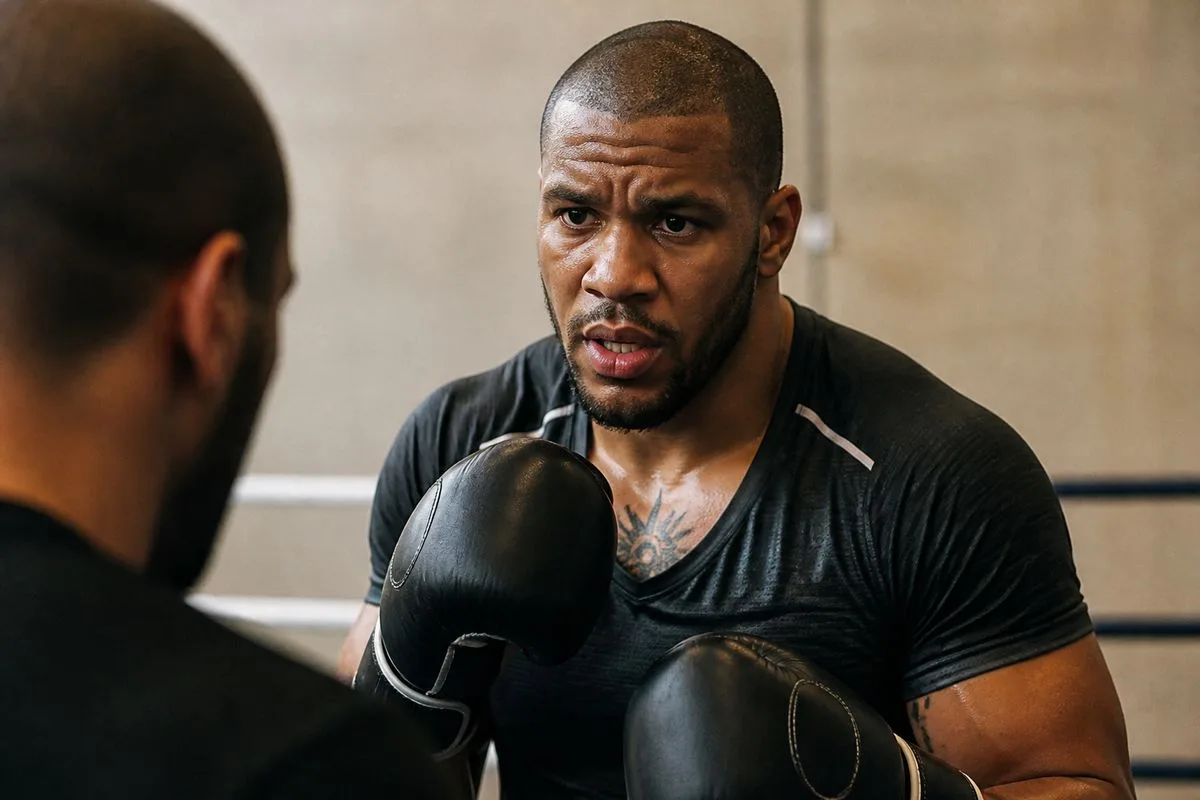
How the UFC’s heavyweight championship evolved, and why 2026 fits a longer pattern
The UFC’s own history shows that the heavyweight title is not just another belt, it is the original organising principle of the promotion’s modern era. The source material notes that when the UFC begins in 1993, mixed martial arts is not sanctioned in the United States and does not include weight classes. The early UFC uses tournaments, with winners receiving a permanent appellation rather than a conventional championship. Under political pressure, including criticism from Senator John McCain that contributes to the loss of a television deal and bans in thirty six states, the UFC cooperates more closely with athletic commissions and introduces weight classes in 1997, starting with UFC 12.
In that first codification, heavyweight effectively functions as the sport’s default category. The UFC initially creates only two divisions, heavyweight for competitors above 200 pounds and lightweight for those at 199 pounds and under. The heavyweight title is unified to determine the inaugural UFC Heavyweight Champion on 7 February 1997, when Mark Coleman defeats Dan Severn at UFC 12. That origin story matters because it frames heavyweight as the division most closely tied to the UFC’s legitimacy project, the move from spectacle to regulated sport.
The early championship history also shows how quickly instability can enter the picture. Maurice Smith’s reign in 1997 includes a recorded defence against Tank Abbott on 17 October 1997. Randy Couture is stripped in January 1998 after leaving due to a contract dispute. Bas Rutten vacates in June 1999 to drop to light heavyweight and later retires due to training injuries. Even in the sport’s formative years, heavyweight is shaped by forces beyond the cage, contracts, injuries, and strategic career decisions. Gane’s 2026 reign begins in a far more professionalised UFC, but the division’s tendency towards disruption remains a defining feature.
That is why the number next to Gane’s name, 0 defences, is not a trivial detail. It is the first test of whether the UFC can keep its heavyweight title active and coherent in a post Jones landscape. Heavyweight champions, more than champions in other divisions, are often asked to be both athletes and symbols. They represent the UFC’s claim to having the world’s baddest man, even as the sport’s competitive reality is far more complex than that slogan suggests.
The Bigger Picture
Gane’s championship is also a story about geography and the UFC’s long term business strategy, not just a story about one fighter’s redemption arc. A French champion fighting out of Paris is significant in a sport that historically centres the United States, Brazil, and a handful of other pipelines. The source material does not provide audience figures or gate data, so it is not possible to quantify the commercial impact from these sources alone. Still, the symbolic value is clear: the UFC heavyweight belt, the promotion’s most mythic asset, sits with an athlete whose identity is explicitly European and whose team base is in France.
There is a second, more technical trend that mainstream coverage often misses. Heavyweight has traditionally lagged behind lighter divisions in tactical sophistication, partly because speed and cardio constraints narrow the range of viable styles. Gane is one of the heavyweights whose record suggests a broader skill set, with submissions and decisions alongside knockouts. If the UFC matches him against challengers who can force grappling exchanges, the division could be pushed towards more complete MMA, rather than the familiar pattern of two large athletes trading power shots until someone falls. That would not necessarily make heavyweight more popular overnight, but it could make it more credible in the eyes of purist fans who increasingly judge greatness by completeness, not just by violence.
Finally, Gane’s return to the top highlights how the UFC’s star system now functions across eras. Jones’s career shows the promotional power of long reigns and record setting narratives, but it also shows how controversy and inactivity can complicate a champion’s tenure. With Jones retired, the UFC has an opening to build a new heavyweight identity that is less dependent on a single transcendent personality. Whether it succeeds will depend on activity, matchmaking clarity, and the promotion’s willingness to sell technical excellence at heavyweight as a feature rather than a footnote.
What comes next for the mixed martial arts heavyweight champion, and what fans should watch
The immediate question for Gane is not whether he deserves the title, the UFC’s own champions list confirms he holds it, but how he defines it. Champions are remembered by defences, by rivalries, and by the opponents they turn back when the division adjusts to them. With 0 defences recorded since 14 September 2026, the next booking becomes the hinge point. A quick defence would signal a UFC intent on momentum. A long delay would risk the familiar heavyweight problem, a belt that feels distant from the week to week life of the sport.
There is also a reputational layer specific to Gane. The source material states that Jones returns in 2023 to win the heavyweight title against Gane. That loss, in the public imagination, becomes a shorthand critique that Gane must continually answer, regardless of what he does later. Holding the title again in 2026 gives him the platform to rewrite that shorthand, but only if he can stack wins against elite challengers and demonstrate that his style holds up under the highest stakes.
For the UFC, the opportunity is to present heavyweight as more than a nostalgia product. The promotion can lean into the division’s history, from Mark Coleman’s inaugural championship in 1997 through the regulatory reforms that legitimise the sport, while also presenting Gane as a contemporary champion for a more global, more technically literate fanbase. If the UFC gets the matchmaking right, Gane’s reign can become a bridge between heavyweight’s old selling points, raw power and danger, and its newer potential, high level mixed martial arts performed by athletes who can do more than one thing.
In the end, the significance of September 2026 is that the UFC heavyweight title has a new steward at a moment of transition. Gane’s championship is not just a line on a Wikipedia table. It is the start of a test, for him and for the promotion, about what heavyweight can be when the biggest name of the previous era is no longer there to carry it.