Kimbo Slice MMA Legacy: Street Fighting Versus Traditional Discipline
More than a decade after the death of Kevin "Kimbo Slice" Ferguson in 2016, the man still sparks one of the most polarising conversations in mixed martial arts. The trigger for the latest round of debate is a fan comment doing the rounds online, in which an admirer admits that Kimbo "peaked a lot of people's interest" with a reputation as an undefeated street fighting king. The commenter praises his "STREET fighting style", points to his victory over Tank Abbott, and argues that Kimbo "contributed a whole new angle of winning in MMA" because he bragged about not knowing any one recognised discipline.
The comment raises a question that refuses to go away: was Kimbo Slice's raw, unpolished approach a genuine alternative to the wrestling, jiu-jitsu, Muay Thai and boxing that form the backbone of the sport? Or was it simply entertaining chaos that worked against limited opposition and collapsed against genuine technicians? This article examines the two approaches across striking, grappling, conditioning, durability and legacy, and ends with a clear verdict for anyone wondering whether the "street" path has anything to teach modern fighters.
The Rise of Kimbo Slice: From Backyard Brawler to Mainstream Draw
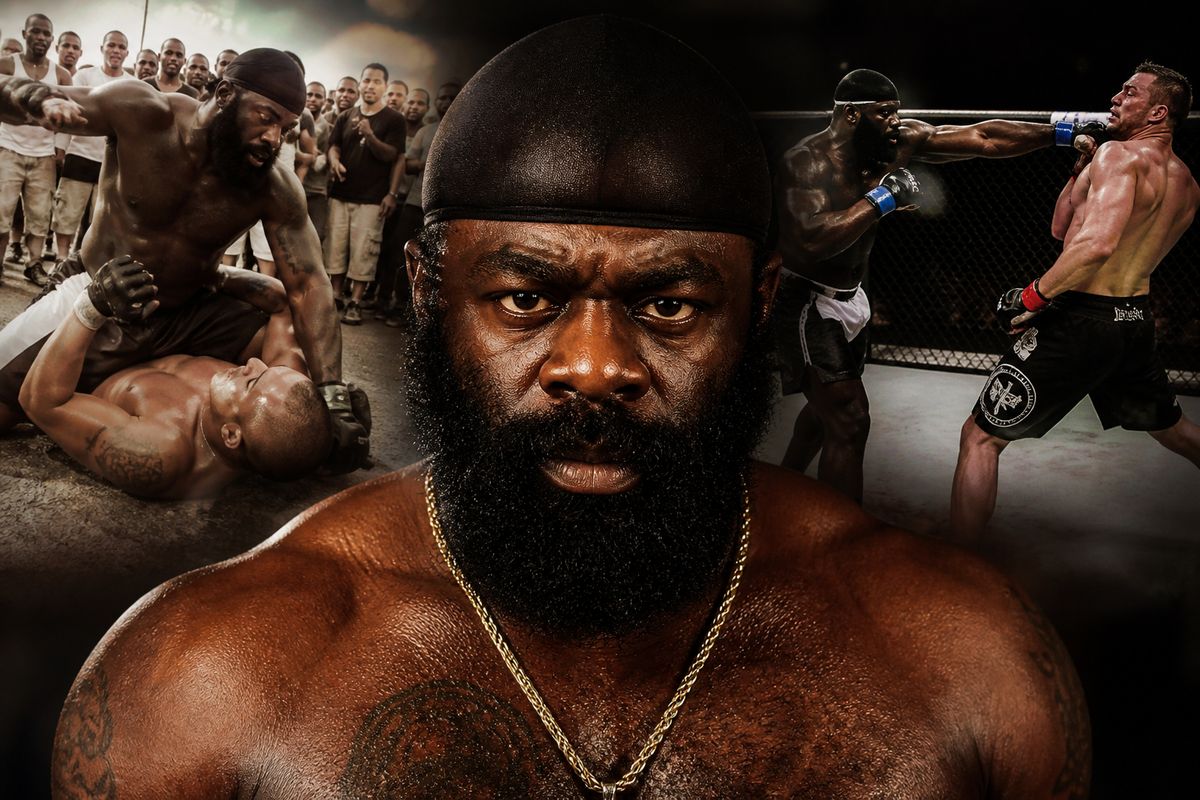
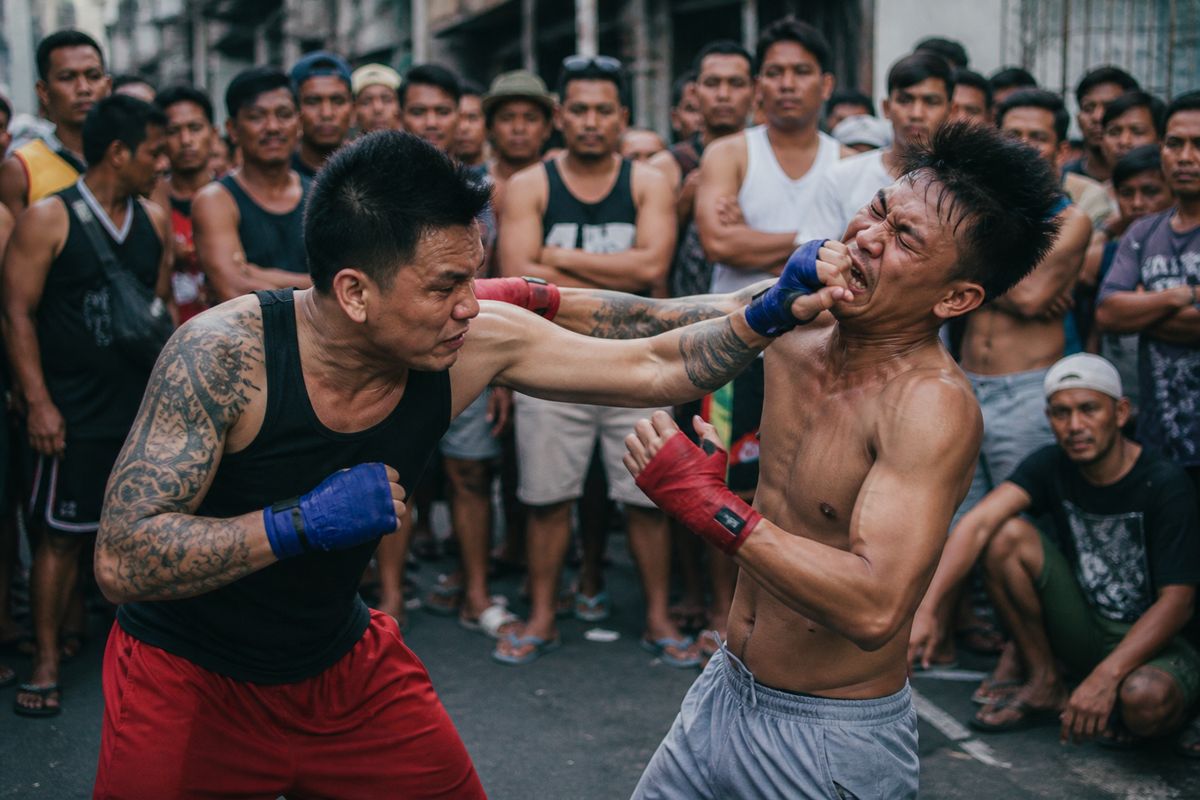
Kimbo Slice's story begins far from any sanctioned ring. He built his reputation in unsanctioned backyard fights in Florida, where grainy videos of a bearded heavyweight battering opponents circulated online years before the term influencer existed. His allure was simple: he looked dangerous, he finished fights quickly, and he claimed never to have lost on the street. No official records exist for those contests, because none were licensed or governed, so the "undefeated street fighter" claim rests on reputation rather than verifiable data.
That reputation carried him into EliteXC, where his bouts were treated as pay-per-view events in themselves. The source material singles out Tank Abbott as an opponent who also carried a street reputation and unusual strength, and it invokes Ray Mercer as an example of a genuine bad man in the boxing ring. Abbott and Kimbo were matched in 2008 precisely because both men sold danger rather than technique. Kimbo won that fight, and the victory reinforced the idea that instinct and power could beat a veteran brawler.
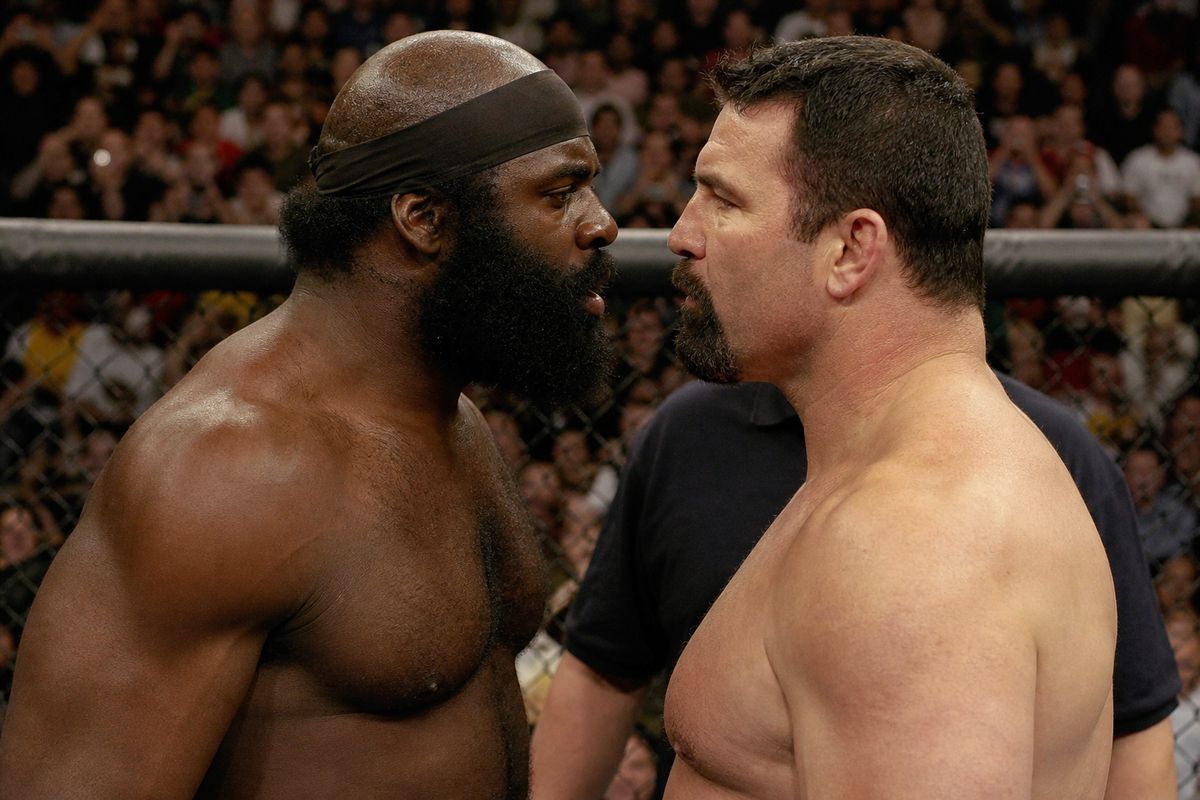
Yet the career that followed told a more complicated story. Kimbo moved through EliteXC and into the UFC, where he faced credible names but not the division's elite. His most famous loss came in 2008 against Seth Petruzelli on short notice, a defeat that exposed how vulnerable a purely street-driven game could be against a trained fighter. His later UFC appearances against Houston Alexander and Matt Mitrione produced one win and one loss, and his professional stint ended with mixed results that stand in stark contrast to the myth of the unbeaten street king.
Kimbo Slice Versus MMA Disciplines: The Striking Showdown
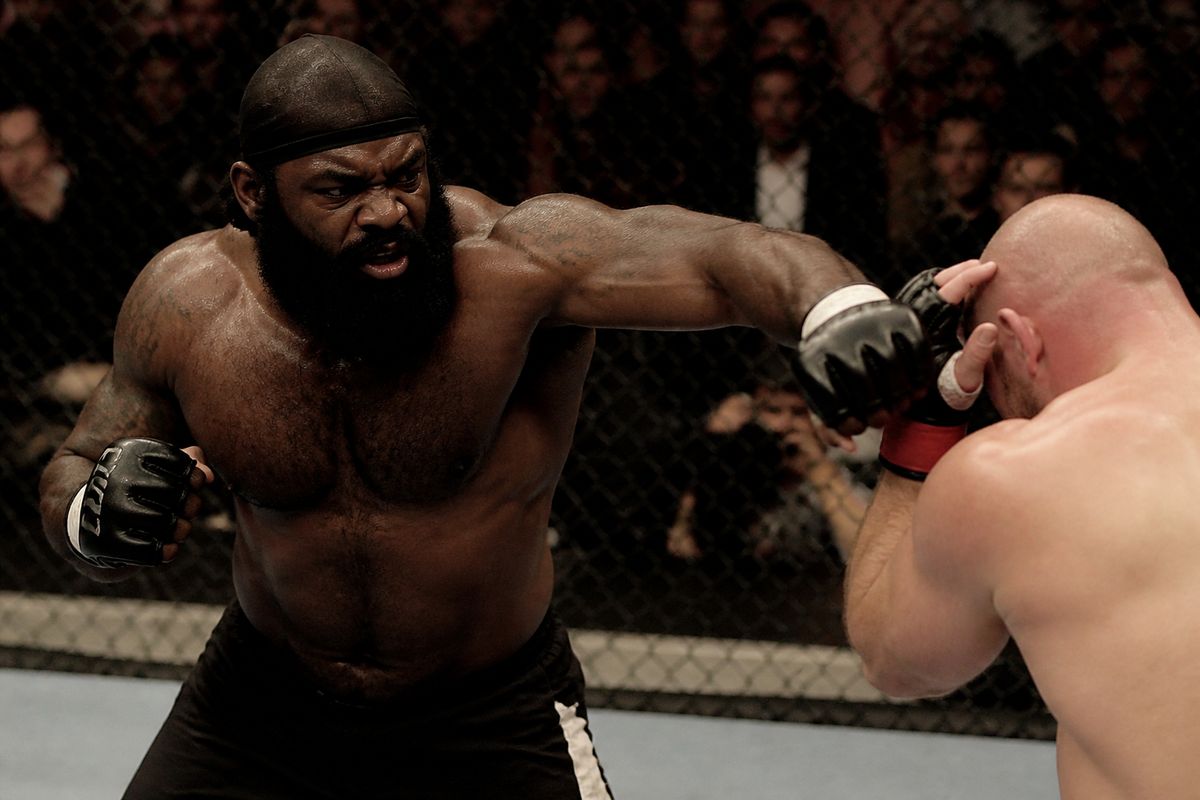
Kimbo's striking was authentic in its violence. He threw heavy overhand rights, swung with bad intentions, and finished opponents with brutal ground and pound. In short exchanges, his power was a genuine equaliser, and his willingness to trade blows made him compelling television. The fan comment captures this appeal when it describes him knowing "how to win in the street". In a fight measured in seconds, that is a real skill.
Traditional striking arts build something different. Muay Thai teaches fighters to manage distance with teeps and jabs, to cut angles, and to conserve energy while setting up combinations. Boxing develops head movement, footwork and the ability to counter without taking damage. Kimbo's head movement was minimal, his stance was narrow, and his punches were often telegraphed by the wind-up before they landed. Against Abbott, a fading heavyweight near the end of his career, that was enough. Against quicker, more technical strikers, it was a liability.
The deeper problem was defensive. Street fighting rewards the first clean shot and punishes hesitation, but MMA rounds last five minutes and fights are scheduled for three or more rounds. A street brawler who fails to land the early knockout must survive the later rounds with tired arms and compromised guard. Kimbo's striking highlights belonged to the opening exchanges. When fights extended, the technical gap widened, and the evidence from his professional losses supports that reading.
Grappling and the Ground Game: Where the Street Method Collides With MMA Science
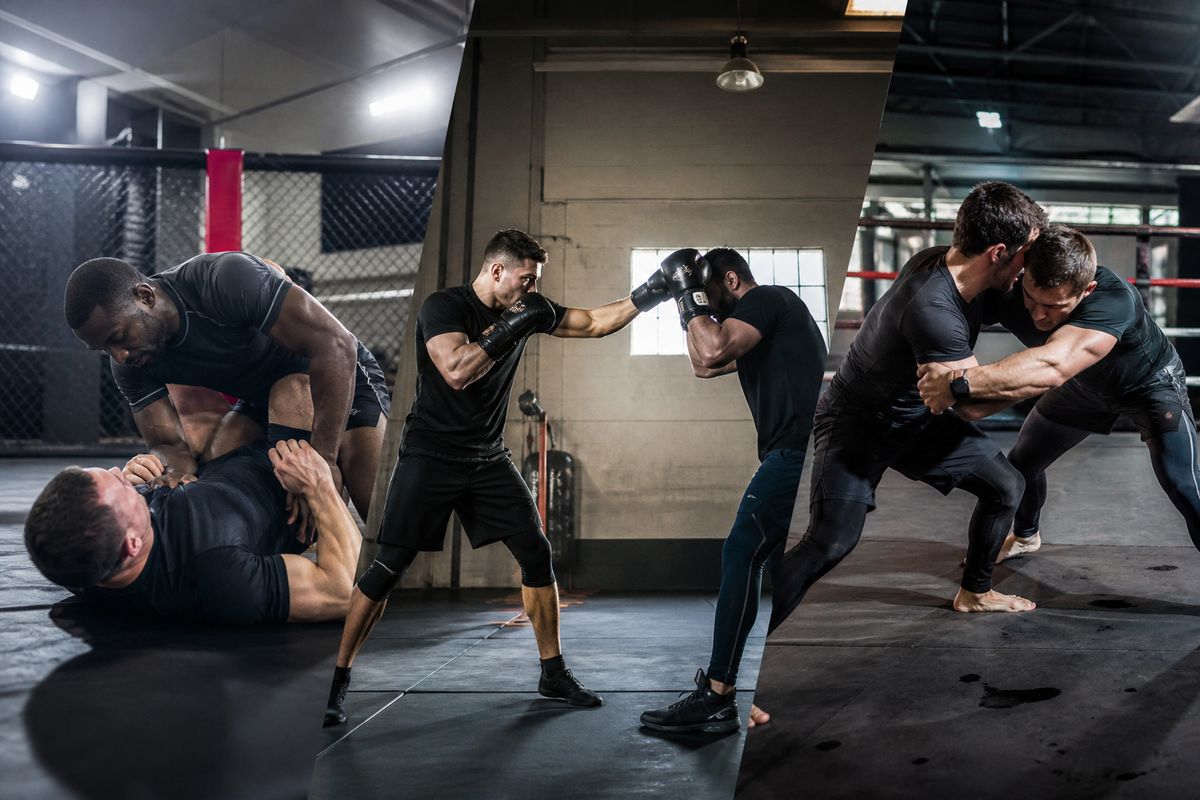
The most significant divide between Kimbo's approach and traditional MMA sits on the mat. Brazilian Jiu-Jitsu introduced the sport to the reality that fights are often decided on the ground, where position, submission and pressure matter more than punching power. Wrestling contributed takedown chains, scrambles and the ability to dictate where the contest takes place. These disciplines reward patience, leverage and systematic progression rather than raw aggression.
Kimbo's ground game was improvised. He used strength to posture, threw powerful blows from top position, and fought to return to his feet when underneath. That strategy worked against opponents who could not control him or who wilted under his strikes from above. It failed against wrestlers who could take him down at will and hold him there, draining his energy and neutralising his greatest asset. His lack of a formal grappling base was not a stylistic choice; it was a structural weakness that opponents eventually exploited.
Modern MMA has only amplified this lesson. Every elite heavyweight in the contemporary era trains wrestling, jiu-jitsu and striking as part of a single system. The fan's romantic image of a fighter who refuses to specialise is undermined by the sport's own evolution. The ability to sprawl, to defend submissions and to escape bottom position is no longer optional. Kimbo arrived at the exact moment when that truth was becoming undeniable, and his career demonstrated both the appeal and the limits of ignoring it.
Cardio, Athleticism and Durability: Short Bursts Versus Five-Round Pacing
Street fights are short, chaotic and usually end in seconds. They do not require pacing, breathing management or the mental discipline to execute a game plan across fifteen or twenty-five minutes. Kimbo's physique and strength were impressive, and the source material notes Abbott's ability to bench press a large amount of weight as a symbol of old-school toughness. But strength alone does not win three-round fights against athletes who train specifically for cardiovascular endurance.
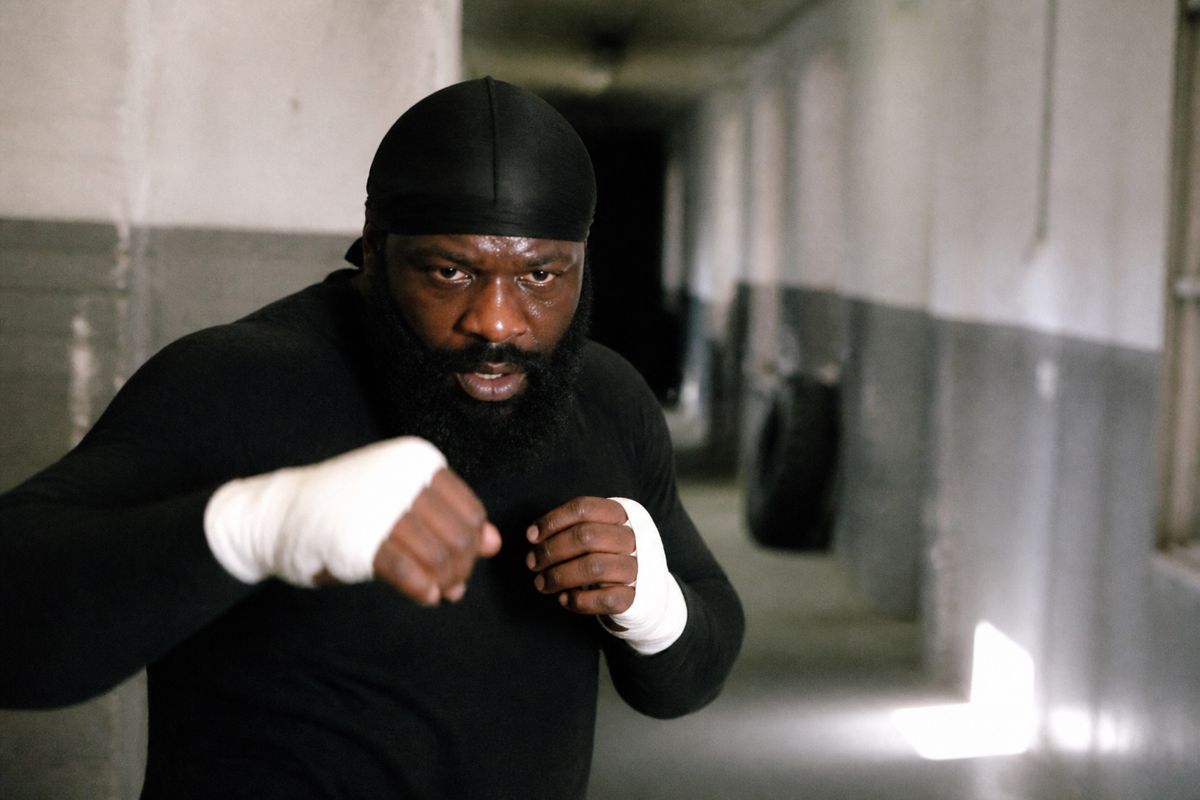
Kimbo's conditioning was a recurring issue in his professional career. His output declined noticeably when fights passed the first round, and his methods of recovery, preparation and fight IQ were not at the level of his contemporaries. By contrast, fighters schooled in traditional disciplines typically learn to pace themselves from their first amateur bouts. Sparring sessions, drilling and competition prepare them for the grind of a professional fight, not just the opening flurry.
Durability is another point of comparison. Kimbo absorbed significant punishment in several of his losses, and his health in later life raised questions about the cumulative toll of years of unprotected head trauma. Sanctioned MMA, whatever its shortcomings, provides referees, medical oversight and rules that street fights lack. This is not a criticism unique to Kimbo; it applies to every fighter who built a career on absorbing hits to land their own. The comparison, though, is stark: the street approach prizes toughness, while the disciplinary approach prizes avoiding avoidable damage.
Kimbo Slice MMA and Traditional Arts: Side by Side Comparison Table
The table below summarises how Kimbo Slice's street style measures against the traditional martial arts that dominate modern MMA. No single row tells the whole story, but together they illustrate why the debate persists.
| Comparison Area | Kimbo Slice Street Style | Traditional MMA Disciplines |
|---|---|---|
| Entry point | Unsanctioned backyard contests built on viral reputation | Licensed gyms, coaching, amateur and professional progression |
| Primary weapon | Heavy hands, raw power, intimidation and finishing instinct | Technical combinations, distance management and fight strategy |
| Defensive technique | Limited head movement, reliance on chin and recovery | Drilled guards, footwork, parries and counter-punching |
| Ground game | Improvised escapes, power from top position, no formal ranking | Wrestling takedowns, jiu-jitsu submissions and positional control |
| Cardiovascular demands | Built for short bursts and early knockouts | Periodised conditioning for three to five round bouts |
| Opponent quality | Veterans, brawlers and carefully selected matchups | Full division depth, from prospects to championship calibre |
| Legacy outcome | Cultural phenomenon, limited peak, early decline | Sustained excellence, title runs and technical evolution |
Pros and Cons: Street Instinct Versus Structured Training
Pros and Cons of the Kimbo Slice Street Approach
- Pros: unmatched entertainment value, genuine knockout power, fearless willingness to engage, and an aura that made casual fans care about MMA.
- Cons: shallow defensive game, no formal grappling base, questionable conditioning over full fight distance, and a ceiling that was exposed by competent athletes.
Pros and Cons of Traditional MMA Disciplines
- Pros: proven technical framework, adaptability across all phases of a fight, better injury management, and a clear pathway from beginner to elite competitor.
- Cons: slower to develop into a fan favourite, potential for overly cautious fight styles, dependence on quality coaching, and higher upfront costs of sustained gym training.
The comparison is not entirely fair, because Kimbo was never given the same developmental runway as a fighter who started in a discipline at age six. His success came from natural gifts and sheer force of will. Yet the sport judges fighters by results, and his results against the best of his era do not support the idea that street fighting was a genuine alternative system. It was a missing system, compensated by charisma and power until the gap became too wide to bridge.
The Verdict: What Kimbo Slice Taught Modern MMA
The verdict depends on what the reader values. For pure spectacle, Kimbo Slice delivered something that disciplined technicians rarely offer. He made heavyweight fights feel dangerous again, and he proved that a single punch can overturn hours of tactical preparation. His brief run in the spotlight forced promoters to recognise that audiences respond to personality and violence, not just to technical merit. In that sense, his contribution to MMA's commercial growth is genuine and should not be dismissed.
But as a technical blueprint, the street approach fails. Kimbo's own record demonstrates that brawling without a foundation in wrestling, jiu-jitsu and striking fundamentals cannot survive sustained exposure to trained opposition. The most generous reading of his career is that he was an entertainer who briefly blurred the line between street combat and professional sport. The most honest reading is that his success came despite his lack of formal training, not because of it.
Modern MMA, in 2026, continues to evolve in the opposite direction from Kimbo's model. Fighters are more athletic, more technical and better conditioned than ever before. The debate he embodied has resurfaced in influencer boxing and social media combat events, where stars with no martial arts background draw huge audiences before meeting trained professionals. Kimbo's legacy offers a warning to that generation: the crowd will cheer for the street fighter, but the cage, the ring and the record book always favour the disciplined athlete.