UFC 329 delivers a brutal ending to Conor McGregor’s comeback, and a blockbuster business night for the UFC
UFC 329 is supposed to be the celebratory centrepiece of International Fight Week, a showcase of star power and spectacle in Las Vegas. Instead, it becomes a sharp reminder of how unforgiving elite mixed martial arts remains, even for the sport’s biggest commercial attraction. On 11 July 2026 at T Mobile Arena in Paradise, Nevada, Max Holloway defeats Conor McGregor by TKO in 1 minute 9 seconds, with the stoppage attributed to a knee injury suffered by McGregor.
The result is instantly consequential on two levels. Competitively, it halts McGregor’s first UFC appearance since he breaks his leg at UFC 264 in July 2021, and it launches Holloway’s welterweight debut in the most high pressure setting possible. Commercially, UFC 329 sets a new UFC record for the biggest live gate in company history, reporting $26,430,566 in ticket receipts from an attendance of 20,078. The UFC’s modern business model is built on premium live events, global broadcast deals, and the ability to turn a handful of nights each year into cultural moments. UFC 329 proves that the brand can still do that, even when the main event ends almost as soon as it begins.
That tension, between the UFC’s ability to generate enormous revenue and the sport’s inability to guarantee a satisfying narrative, defines the after story. McGregor’s return is meant to answer questions about age, wear, and motivation. Holloway’s move up is meant to test whether an all action volume striker can translate his style to a heavier division. What unfolds is a different kind of statement: the margins at the top are thin, injuries are decisive, and the UFC’s biggest nights can pivot on a single compromised joint.
UFC 329: McGregor vs Holloway 2, the event details and the records it sets
UFC 329: McGregor vs Holloway 2 takes place on 11 July 2026 at T Mobile Arena, staged during the UFC’s annual International Fight Week. The UFC Hall of Fame induction ceremony is held two days earlier, on 9 July 2026, reinforcing the week’s purpose as both a celebration of the sport’s past and a platform for its next commercial peak. The promotion positions the card as a tentpole, and the financial outcome supports that strategy: the reported $26,430,566 gate surpasses the previous record set by UFC 306 in September 2024, which had a gate of $21,829,245.
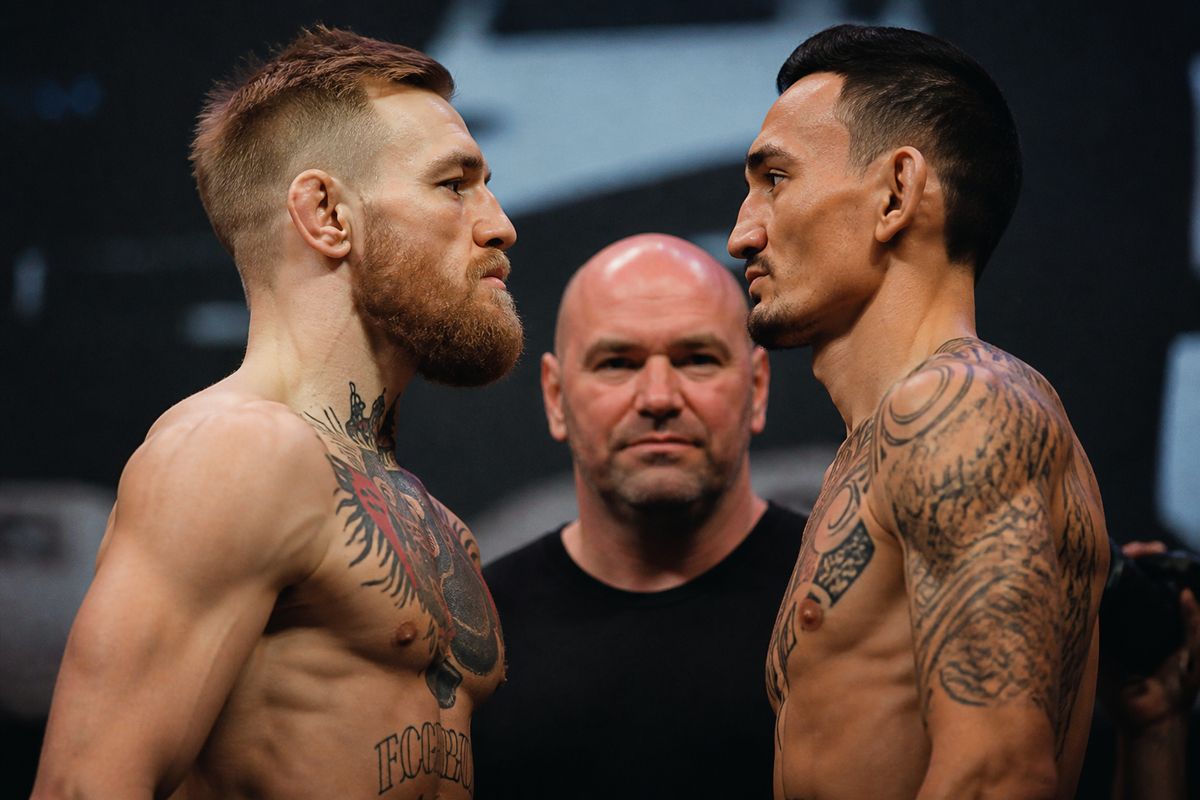
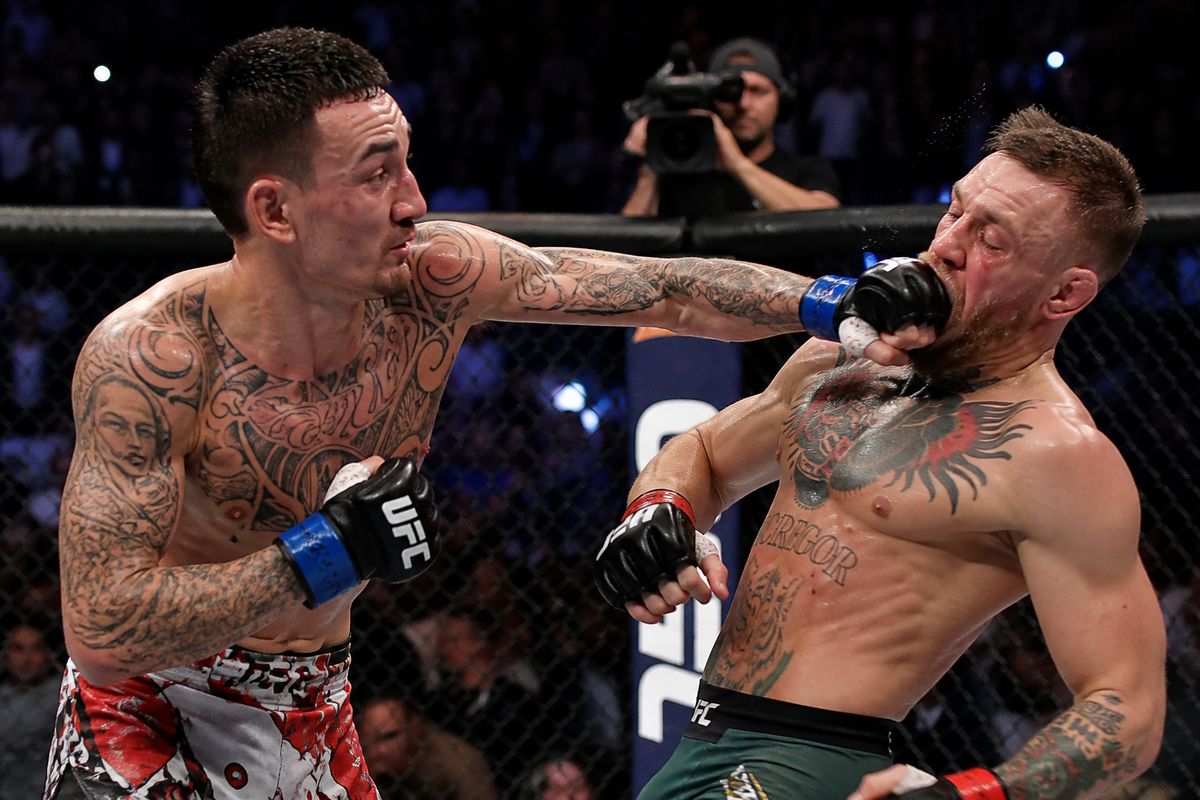
Inside the cage, the headline bout ends abruptly. Holloway defeats McGregor via TKO due to a knee injury at 1:09 of round one. The brevity is jarring given the bout’s framing as a sequel to their first meeting, a featherweight contest in August 2013 that McGregor wins by unanimous decision early in both men’s UFC careers. This time the stakes and context are different, with the fight booked at welterweight, a division McGregor has competed in before and one that Holloway enters for the first time in the UFC.
The rest of the card is unusually finish heavy, and that becomes part of the event’s identity. UFC 329 matches the UFC record for the most finishes in a single event with 11, tying UFC Fight Night: Rockhold vs Bisping, UFC 224, UFC 281, and UFC Fight Night: Imavov vs Borralho. It also sets the record for the most first round finishes in a modern UFC event with eight. Those records are later surpassed in August 2026 at UFC Fight Night: Medić vs Rodriguez, but UFC 329 still stands as one of the most relentlessly decisive nights the promotion has ever staged.
Several results underline how quickly elite fights can end when styles collide. Paddy Pimblett defeats Benoît Saint Denis by technical submission, a Peruvian necktie, in 52 seconds of round one. King Green stops Terrance McKinney by TKO at 4:59 of round one. Brandon Royval submits Lone’er Kavanagh with a rear naked choke in round three, a bout that earns Fight of the Night. The UFC also awards $100,000 bonuses to Royval and Kavanagh for Fight of the Night, and to Pimblett and Green for Performance of the Night, with other finishes receiving $25,000 additional bonuses. The promotion’s incentive structure, and the card’s violence, align neatly: this is a night designed to reward urgency and deliver highlight reels.
Conor McGregor’s long road back to UFC 329, and why the comeback is never just sporting
Conor McGregor remains the most commercially significant fighter in MMA history, and his return at UFC 329 carries weight beyond rankings. Born in Dublin on 14 July 1988, McGregor becomes the first fighter to hold UFC championships in two weight classes simultaneously, capturing the featherweight title and then the lightweight title. His 13 second knockout of José Aldo at UFC 194 is the fastest finish in UFC title fight history, a moment that helps define the modern UFC’s viral era. He later wins the UFC lightweight championship at UFC 205 by defeating Eddie Alvarez.
McGregor’s drawing power is documented in the sport’s biggest pay per view moments. His UFC 229 fight against Khabib Nurmagomedov draws 2.4 million PPV buys, the most ever for an MMA event. His 2017 boxing match against Floyd Mayweather Jr generates over 5.3 million buys across the United States and the United Kingdom, making it the second highest selling pay per view event in history. Even outside the cage, his profile is global: Forbes ranks him as the world’s highest paid athlete in 2021 with reported earnings of $180 million, and lists him fourth in 2018 with earnings of $99 million.
Yet the McGregor story is also inseparable from legal and reputational turbulence. He has faced multiple legal issues, including civil and criminal cases, and Wikipedia notes 20 plus criminal charges, including driving offences and assault. In November 2024, an Irish High Court rules in a civil case that he assaults and rapes a woman in 2018, ordering him to pay over €248,000 in damages. In December 2024, he is ordered to pay the victim’s legal costs of approximately €1,500,000. In July 2025, he loses an appeal on the verdict. Following the 2024 civil court ruling, he loses several sponsorship and partnership deals. That context matters because it changes the meaning of any comeback: for some fans and brands, the question is no longer only whether he can still win, but whether the sport and its partners want him as a public face.
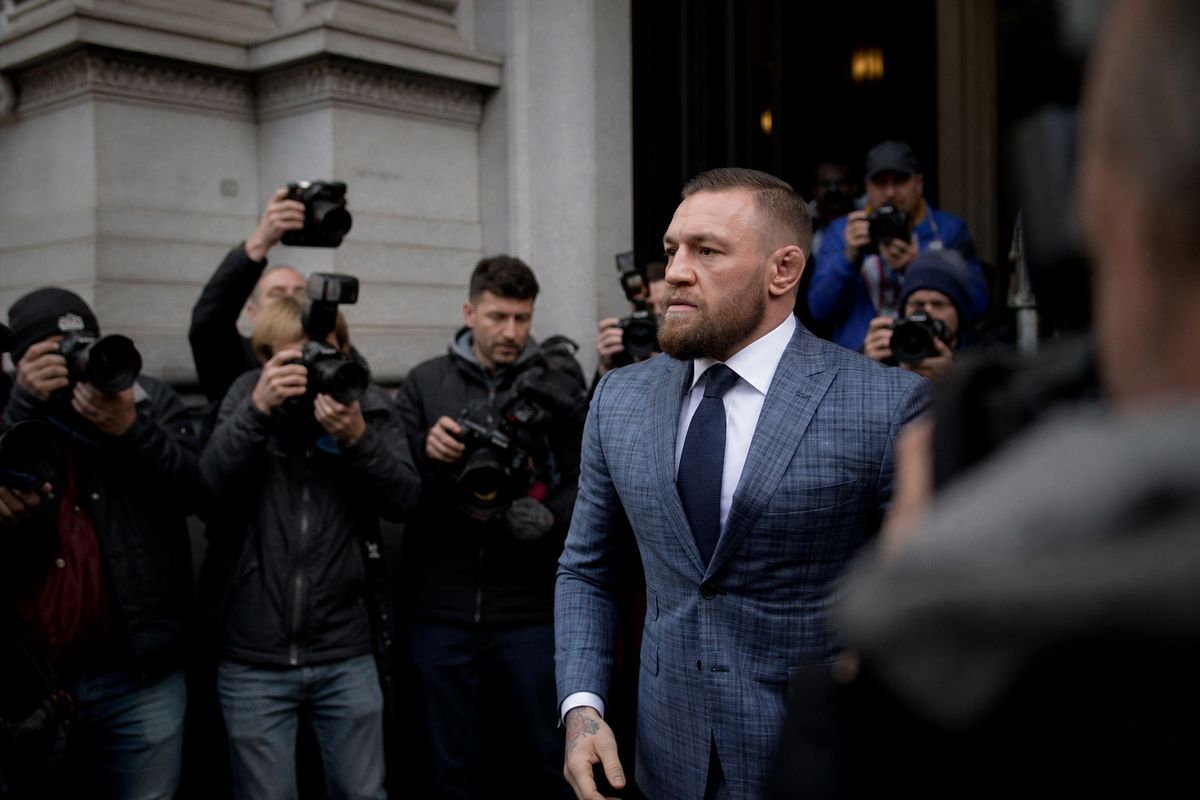
UFC 329 therefore functions as a convergence point. McGregor returns as a fighter who has not competed since a severe injury in 2021, and as a celebrity whose public standing is contested. The UFC’s willingness to headline International Fight Week with him signals that the promotion still views his name as a commercial engine. The abrupt, injury led stoppage complicates that bet. If the comeback is meant to reset the narrative around competitive relevance, the first round ending instead reinforces the fragility that comes with age, inactivity, and accumulated damage.
Max Holloway’s welterweight debut at UFC 329, and what the win signals about elite adaptability
Max Holloway enters UFC 329 as a former UFC featherweight champion, but also as a fighter whose identity is built on durability, pace, and volume. The move to welterweight is significant because it is not a minor adjustment. It is a shift into a division where size and physicality often decide clinch exchanges and late round grappling. UFC 329 marks Holloway’s debut at welterweight, and it comes against a former two division UFC champion whose brand ensures the fight is treated like a major event rather than an experiment.
Holloway’s win, recorded as a TKO due to a knee injury at 1:09 of round one, does not provide the long technical sample that analysts typically want when judging a divisional transition. It does, however, offer a different kind of evidence: the ability to impose danger immediately, and to survive the chaos of a high profile main event where every exchange carries consequence. In a sport where momentum often becomes mythology, Holloway leaves Las Vegas with the simplest and most valuable commodity, a win over the biggest name available.
The sequel framing adds historical texture. Their first fight in August 2013 is a featherweight bout early in their UFC careers, with McGregor winning by unanimous decision. Thirteen years later, the rematch is staged at welterweight, with both men carrying the scars and experience of long elite runs. The UFC’s matchmaking here is not subtle. It is designed to connect eras, to sell nostalgia, and to test whether McGregor can still compete with a proven champion calibre opponent. Holloway’s victory flips that narrative, and it does so in a way that leaves little room for debate about the official result, even if it invites debate about what might have happened without the injury.
For the UFC, Holloway’s emergence at welterweight is strategically useful. The promotion benefits when established stars can credibly move divisions, because it creates new matchups without needing to manufacture contenders. Holloway’s win also demonstrates that International Fight Week can still produce a fresh headline, not only a legacy act. Even with the injury caveat, the promotional value is clear: Holloway now has a welterweight signature moment, and the UFC has a new lever to pull when building future main events.
What UFC 329 means for the UFC business model, and for the wider MMA industry
The most striking statistic from UFC 329 is not the 1:09 main event, it is the $26,430,566 gate. Live event revenue has become a crucial pillar for the UFC, particularly for premium cards tied to destination weeks like International Fight Week. By breaking the company’s all time gate record, UFC 329 shows that the UFC can still monetise scarcity and spectacle at the highest level. The previous record, UFC 306 in September 2024 at $21,829,245, is surpassed by a meaningful margin, indicating that pricing power and demand remain strong in Las Vegas for the right headliner.
That commercial success arrives alongside a sporting reality that is harder to control. A main event ending due to injury in just over a minute can leave fans feeling short changed, even if the undercard delivers finishes and bonuses. The UFC’s answer, historically, is that the brand is the draw as much as any single contest, and that the product is the night rather than one fight. UFC 329’s record for finishes supports that argument. Eleven finishes and eight first round finishes create a sense of constant payoff, a hedge against the risk that the main event does not deliver a classic.
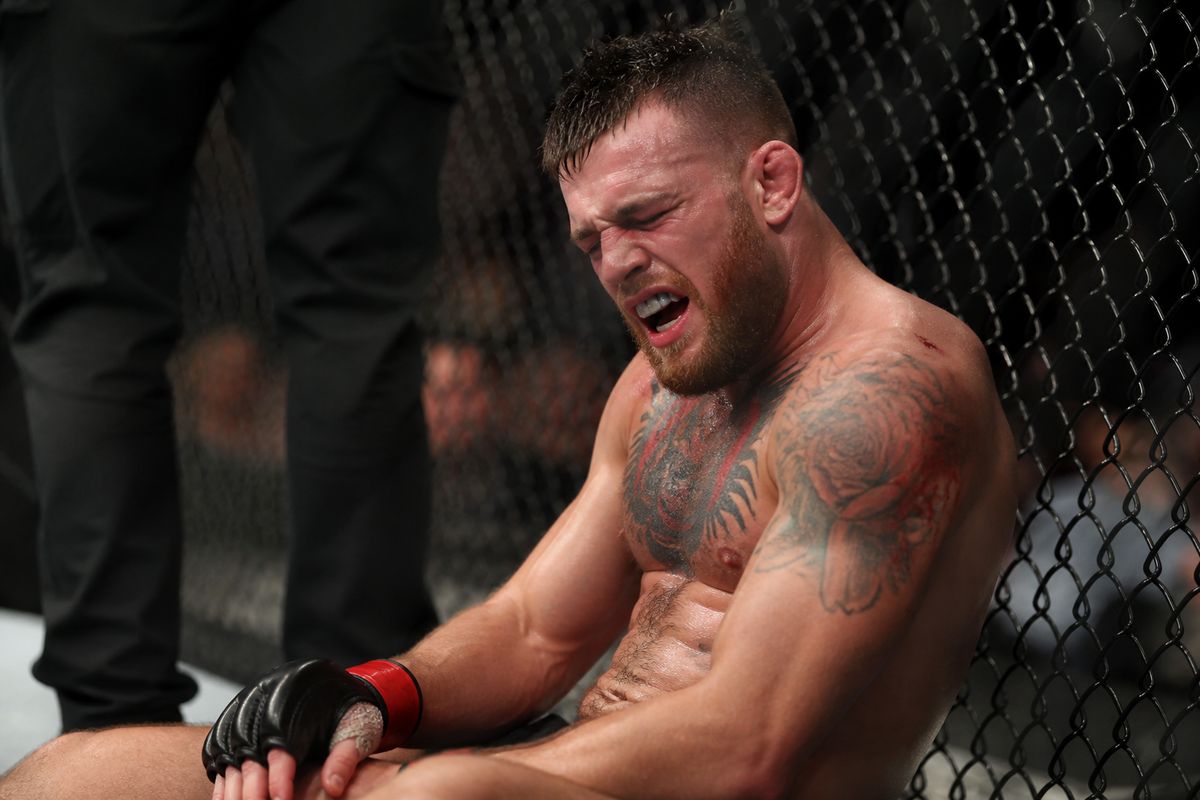
There is also a broader industry implication in the way star power is deployed. McGregor is not only a fighter, he is a business figure with ventures including the alcoholic beverage industry, and he is a co owner of Bare Knuckle Fighting Championship. When a figure like that returns, it pulls attention from across combat sports, including boxing and bare knuckle. The UFC benefits from the halo effect, but it also faces the downside: if the comeback fails, the promotional ecosystem that depends on his relevance loses oxygen. UFC 329 suggests the UFC can still cash in on his name, but it also underlines that relying on a single superstar is inherently volatile.
Finally, the event’s bonus structure and finish heavy outcomes reinforce the UFC’s entertainment incentives. With $100,000 bonuses for Fight of the Night and select performances, and additional $25,000 bonuses for other finishes, the promotion signals that aggression is rewarded. That matters for the sport’s evolution, because incentives shape behaviour. UFC 329 becomes an example of a card where the incentive design, the matchmaking, and the outcomes align to produce a product that is easy to package and replay, even if the headline story is an anticlimax for those who want rounds, adjustments, and a definitive competitive conclusion.
Historical context: from McGregor’s fastest title finish to a comeback defined by injury
McGregor’s career is built on moments that compress time. The 13 second knockout of José Aldo at UFC 194 is the clearest example, a title fight that ends before many viewers settle into their seats. That kind of instant ending once serves McGregor, turning him into a symbol of inevitability and precision. At UFC 329, the compression of time works against him. The fight ends in 69 seconds, and the defining image is not a left hand landing clean, but a knee injury that forces a stoppage.
This is not a unique cruelty in MMA, but it is a familiar one. The sport’s history is full of nights where the most anticipated fight is decided by an injury, a cut, or a sudden technical failure rather than a prolonged contest. What makes UFC 329 different is the scale of the commercial stage. International Fight Week is designed as the UFC’s annual festival, and the promotion chooses to centre it on a fighter whose last appearance ends with a broken leg in July 2021. The comeback narrative is therefore always shadowed by the possibility that the body does not cooperate.
UFC 329 also sits within a modern era where records are increasingly about event metrics as much as sporting achievements. The gate record, the finishes record, and the first round finishes record become part of the story. In earlier eras, the UFC’s milestones are often framed around titles and rivalries. Now, the promotion’s growth means that business records are treated as headline achievements. UFC 329’s $26,430,566 gate is not a footnote, it is a central data point that signals the UFC’s continued ability to command premium pricing in a competitive entertainment market.
For McGregor specifically, the historical comparison is stark. He is once the fighter who bends time in his favour, who ends fights instantly and turns that into myth. Now he is the fighter whose return is ended instantly by injury. That reversal does not erase his achievements, including being the first simultaneous two division UFC champion, but it does change the present tense reality of his career. The question after UFC 329 is no longer whether he can still sell, the gate suggests he can. It is whether he can still withstand the physical demands required to justify the sporting stakes attached to his name.
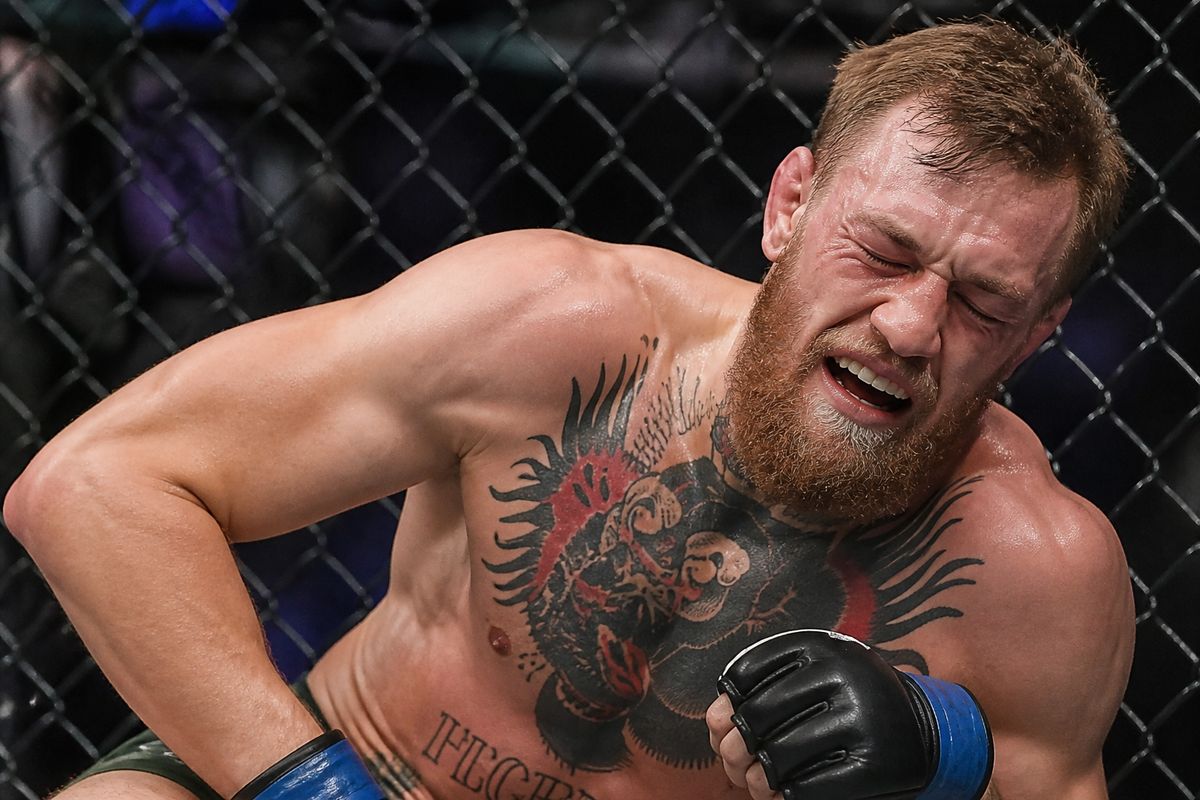
What’s Next
The immediate question is what the UFC does with both men, and how it manages the uncertainty created by an injury led stoppage. For Holloway, the path is clearer in promotional terms than in technical evaluation. A win over McGregor in a main event at International Fight Week is a marketing asset, regardless of how long the fight lasts. The UFC can credibly position Holloway as a welterweight contender based on the scale of the occasion and the decisiveness of the official result. The challenge is matchmaking that validates the move beyond a single chaotic minute, because the division change still needs proof across longer exchanges, grappling sequences, and the kind of attritional rounds that define welterweight title fights.
For McGregor, the options are narrower and more politically complicated. He returns after nearly five years away from competition, only for the comeback to end with another serious looking leg related issue, this time a knee injury. The UFC must decide whether it can responsibly book him in another elite main event without clearer evidence that his body can handle a full camp and a full fight. There is also the reputational layer. McGregor’s legal history, including the 2024 civil ruling and the financial penalties that follow, continues to shape sponsor appetite and public reaction. Even if the UFC is willing to proceed, partners and broadcasters may weigh the risk differently now than they did at the height of his commercial peak.
At an industry level, UFC 329 may accelerate a trend already visible in the promotion’s strategy, using legacy stars to set gates and attention peaks, while ensuring the undercard is built to deliver finishes and introduce the next wave. The record gate proves the economic value of a recognisable name. The finish heavy card proves the UFC can still satisfy audiences even when the main event is brief. Going forward, the UFC is likely to lean harder into this dual approach: headline with a proven draw when possible, but construct the rest of the card as an insurance policy, a guarantee of action that protects the product from the inherent randomness of a single fight.
Closing thoughts: UFC 329 as a snapshot of modern MMA’s promise and volatility
UFC 329 encapsulates the two truths that define the UFC in 2026. The first is commercial strength. A $26,430,566 gate and 20,078 in attendance demonstrate that the UFC can still turn a fight week into a premium live event that fans will pay heavily to attend. The second is competitive volatility. The main event ends in 1:09 due to a knee injury, a reminder that even the most carefully marketed comeback can collapse in an instant.
For Holloway, the night is a launch point, a welterweight debut that immediately becomes a career headline. For McGregor, it is a sobering continuation of a late career defined as much by interruptions, injuries, and controversy as by titles and knockouts. The UFC, meanwhile, walks away with a record gate and a card full of finishes, proof that the promotion’s event machine remains powerful even when the central sporting story refuses to follow the script.
In the long run, UFC 329 may be remembered less for the specific exchanges that occur in the main event and more for what it reveals about the UFC’s current era. Star power still sells at historic levels. The sport still punishes the body without sentiment. And the UFC’s job, as both promoter and curator, is to keep building nights that can survive the moment when the biggest name on the poster cannot.