
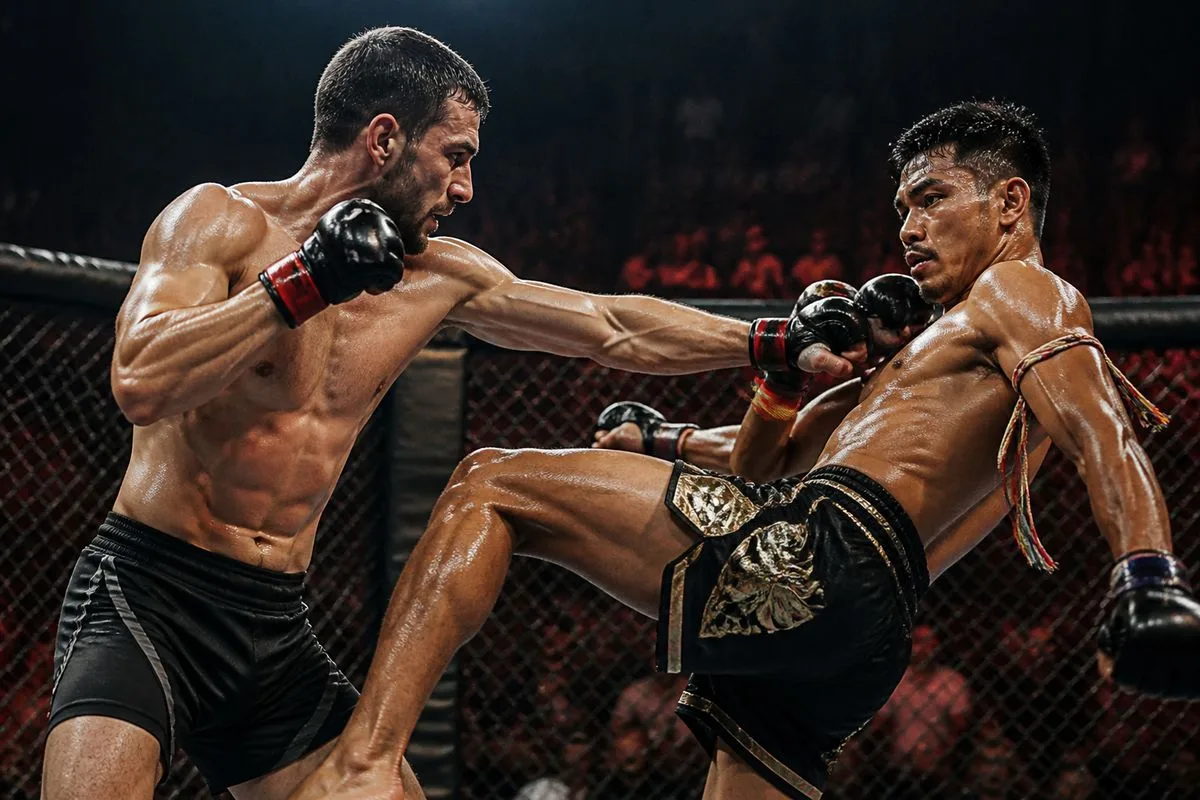
Why mixed martial arts vs muay thai is the decision many beginners face in 2026
The question of mixed martial arts vs muay thai is no longer confined to aspiring professional fighters. In 2026, it is a mainstream consumer choice shaped by a flood of comparison guides, gym marketing, and a growing fitness-first audience that wants practical skills without committing to a single competitive pathway. The latest wave of training explainers, including a 2026 guide that breaks down 20 martial arts styles and a series of discipline comparisons published in late 2025, signals a clear trend: people are shopping for combat sports the way they shop for gyms, by outcomes, culture, learning curve, and lifestyle fit.
That shift matters because MMA and Muay Thai solve different problems. Muay Thai is a specialist striking art, built around punches, kicks, elbows, knees, and clinch work. MMA is a hybrid rule set and training ecosystem that expects competence across striking, wrestling, and ground fighting. The practical implication is simple but often missed in online debates: choosing between them is less about which is “better”, and more about what kind of training week, injury risk, and progression path a person is willing to sustain.
The most newsworthy development in the current cycle is not a single fight announcement, it is the way the industry is packaging the choice. The 2026 Gymdesk guide positions MMA as “Hybrid / All” and explicitly labels it advanced, while listing Muay Thai as striking-focused with a moderate difficulty rating and a clear “fitness plus self-defense” pitch. Meanwhile, a beginner-oriented gym explainer argues that coaching quality outweighs the label, a direct response to the reality that many newcomers quit because the room is chaotic, not because the art is wrong for them.
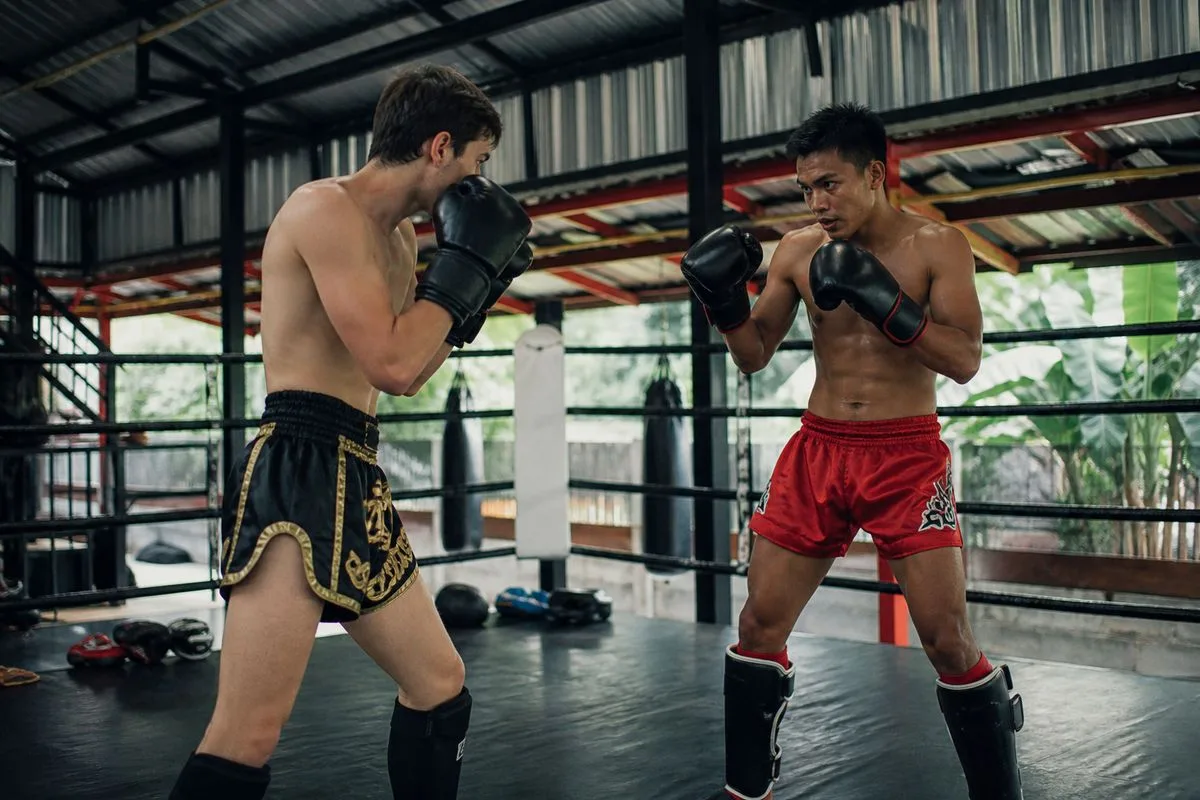
What the latest guides actually say, and why it is driving the MMA vs Muay Thai conversation
Three pieces of source material frame the 2026 conversation in a way that is unusually consumer-focused. First, the Gymdesk “20 Types of Martial Arts Explained (2026 Guide)” treats martial arts as both training systems and business categories. It highlights that each style attracts different demographics and suggests that a school’s choice of style shapes its revenue model, class structure, and marketing. That is a notable lens because it explains why the same “Muay Thai” sign can mean very different experiences, from authentic fight training to cardio-heavy classes designed for recreational members.
Second, a long-form comparison of boxing, Brazilian Jiu-Jitsu, Muay Thai, and wrestling published on 9 December 2025 reinforces the idea that disciplines differ in culture, learning curve, and physical demand. Even though it is not an MMA article, it indirectly explains MMA’s challenge: MMA is built from these component sports, so a newcomer choosing MMA is implicitly choosing to juggle multiple learning curves at once. The piece also underlines a key truth relevant to Muay Thai: striking arts can look simple from the outside, but depth emerges in timing, distance, defence, and composure under pressure.
Third, a beginner guide comparing Muay Thai and kickboxing makes an argument that has become central to modern gym selection: coaching matters more than the label. It notes that Muay Thai can feel “deeper” immediately because it includes elbows, knees, and clinch work, but that a well-coached class is easier to start than a poorly run alternative. While the example is Muay Thai vs kickboxing, the logic applies directly to MMA vs Muay Thai: the best choice is the programme that provides structure, safe progression, and consistency, not the one that wins internet arguments.
Taken together, these guides amount to a market signal. The industry is increasingly transparent about who each style is for, and it is nudging beginners to make a decision based on sustainability. That is the hidden “news” in 2026: the consumerisation of combat sports training, where the first question is not “what is the deadliest”, it is “what will I still be doing in six months”.
Mixed martial arts vs muay thai, rules, tools, and what training is designed to produce
Muay Thai is consistently described as the “art of eight limbs”, a system that uses fists, elbows, knees, and shins, plus clinch techniques that blend stand-up control with strikes. The Gymdesk guide emphasises that Muay Thai is full contact in competition, but notes that most sparring in Thai boxing training is light. That distinction is important for beginners who fear constant hard sparring, and it also reflects a broader safety trend in reputable gyms, where technical development and longevity are prioritised over gym wars.
MMA, by contrast, is framed as “Hybrid / All” and “Well-rounded fighters”, with an “Advanced” difficulty rating. Even without a detailed MMA breakdown in the source material, the classification itself is revealing. MMA training is not simply “doing everything”, it is learning to connect ranges, striking to takedown, takedown to control, control to submission, and back to striking. That integration is why MMA can feel overwhelming early on, and why many gyms split MMA into separate classes, striking, wrestling, and grappling, before offering true mixed rounds.

Historically, Muay Thai’s origin story is tied to Thailand and close-quarters combat, traced in the guide to Siamese warriors and battlefield necessity. Over time it becomes a spectator sport and a cultural institution, with training that builds conditioning, endurance, and precise technique. MMA’s modern identity is global and competition-driven, shaped by cross-training and the need to solve problems posed by specialists. In practical terms, Muay Thai produces a striker with a broad striking toolkit and strong clinch fundamentals, while MMA aims to produce a generalist who can survive and win across phases.
For someone searching “mixed martial arts vs muay thai”, the key takeaway is that the two are not mutually exclusive. Muay Thai is often a core striking base inside MMA. The real decision is sequencing and emphasis: start with a specialist striking art and add grappling later, or start with MMA and accept a steeper early learning curve in exchange for broader competence.
Learning curve, safety, and the reality of sticking with it
The Gymdesk comparison table labels Muay Thai as moderate difficulty and MMA as advanced. Those labels align with what many beginners experience. Muay Thai has a clear technical syllabus that can be taught progressively, stance, guard, basic punches, basic kicks, defence, clinch entries, and conditioning. MMA, even at beginner level, asks students to process more variables: stance changes, takedown threats, ground positions, and transitions, often while wearing different equipment and training under multiple rule constraints.
Safety is where marketing and reality often diverge. The Muay Thai description explicitly notes that most sparring is light, despite the sport’s full contact reputation. That is a subtle but significant reassurance, and it reflects a modern coaching approach where controlled sparring is used to develop timing and composure rather than to “win” in the gym. In MMA, the safety question is more complex because the sport includes strikes and grappling. Even when sparring is controlled, the range of potential accidents increases, awkward falls, joint stress, and head contact can all appear in the same session if the class is poorly structured.
The beginner guide’s argument that coaching matters more than the label becomes the deciding factor here. A well-organised MMA programme can be safer than a chaotic Muay Thai room, and vice versa. The difference is usually visible in how a gym handles fundamentals, partner matching, and intensity control. Beginners benefit from clear rounds, specific drills, and instructors who stop bad habits early. Without that structure, “advanced” becomes a euphemism for “survival”, and dropout rates rise.
Consistency is the hidden metric. The boxing and BJJ comparison piece makes the point that the best martial art is the one a person actually sticks with. Applied to MMA vs Muay Thai, that means the “best” choice is the one that fits schedule, recovery capacity, and motivation. A person who loves striking and hates ground contact may train Muay Thai for years, while the same person might quit MMA within a month. Conversely, someone who enjoys problem-solving and positional battles may find MMA’s variety more engaging than repeating striking rounds.
Fitness, conditioning, and what each style does to the body
Muay Thai training is repeatedly associated with conditioning, endurance, and mental resilience. The Gymdesk guide describes rigorous sessions that include pad work, heavy bag training, sparring, and conditioning drills, aiming to develop strength, speed, agility, and resilience. For many recreational trainees, that translates into a high-output workout with a clear skill component, a combination that ordinary fitness classes struggle to replicate.
MMA conditioning is harder to summarise because it depends on the gym’s structure. In practice, MMA conditioning often blends striking intervals with grappling scrambles, wall work, and positional rounds. The physical demand is not just cardiovascular, it is also muscular endurance under tension, grip fatigue, and the ability to stay calm while someone is trying to control posture and breathing. The BJJ section of the comparison piece captures this sensation well, describing live rolling as deceptively exhausting and highlighting grip, core, and hip demands. MMA inherits that grappling fatigue and adds striking stress on top.

For weight loss and general fitness, both can work, but the experience differs. Muay Thai often feels like a structured striking workout with measurable progress in technique and conditioning. MMA can feel like learning multiple sports at once, which some people find motivating and others find frustrating. The practical question is not which burns more calories, the source material does not provide calorie data, it is which environment a person will attend consistently enough for fitness changes to compound.
Injury risk is also shaped by the body’s adaptation curve. Muay Thai commonly stresses shins, hips, and shoulders as kicking volume rises. MMA adds the wear-and-tear of takedowns and grappling positions. A beginner with previous joint issues may prefer to start with Muay Thai fundamentals and controlled sparring, then add grappling later, rather than absorbing the full mixed load immediately.
A side by side comparison table for mixed martial arts vs muay thai
The table below consolidates what the 2026 guide explicitly states, and what logically follows from the way each sport is structured. Where the sources provide specific labels, those are used directly, for example difficulty ratings and “best for” categories. Where the sources do not provide numbers or hard metrics, the comparison stays qualitative.
| Category | Muay Thai | MMA |
|---|---|---|
| Type | Striking | Hybrid, all ranges |
| Best for (as labelled) | Fitness plus self-defense | Well-rounded fighters |
| Difficulty (as labelled) | Moderate | Advanced |
| Core tools | Punches, kicks, elbows, knees, clinch | Striking plus takedowns plus ground control and submissions |
| Typical session feel | Pad work, bag work, technique, conditioning, light sparring in many gyms | Mixed drilling, positional work, sparring split by range, higher complexity |
| Cultural identity | Thai boxing tradition, sport culture, strong conditioning ethos | Global competition culture, cross-training mindset, integration focus |
One detail in the 2026 guide also hints at market direction: Muay Thai is described as “growing steadily, especially in urban markets”, and as having “strong crossover with the fitness market”, with “kickboxing cardio” acting as an entry point for recreational students. The guide also states that Muay Thai trainees are “adults 20 to 40”, and includes a partial statistic, “with about 65% train”, but the source text is cut off and does not specify what that 65% refers to. Without the missing context, it cannot be treated as a reliable demographic breakdown.
Pros and cons, what each option gives up to get what it wants
Every combat sport is a trade-off. Muay Thai trades breadth for depth in striking. MMA trades early simplicity for long-term completeness. The lists below reflect the strengths and compromises implied by the source material, especially the stated difficulty levels and the emphasis on coaching quality.
Muay Thai, pros
- Broad striking toolkit, punches, kicks, elbows, knees, plus clinch work, which can feel like a complete stand-up system.
- Clear conditioning pathway, pad work, bag work, and structured rounds make progress measurable.
- Moderate learning curve compared with MMA, as labelled in the 2026 comparison table.
- Often lighter sparring in training despite full contact competition, which can support longevity for recreational students.
Muay Thai, cons
- Limited ground skills, without cross-training, it does not address takedowns and grappling control.
- Repetitive impact load, high kicking volume can stress shins, hips, and ankles if progression is rushed.
- Quality varies, some gyms market “Muay Thai” but deliver generic cardio kickboxing, which may disappoint students seeking authentic technique.
MMA, pros
- Well-rounded competence, the training goal is to function across striking, takedowns, and ground fighting.
- High engagement through variety, multiple ranges and problem types can keep motivation high.
- Direct pathway to MMA competition, for those who want the sport itself rather than a component discipline.
MMA, cons
- Advanced difficulty as labelled in the 2026 guide, beginners can feel overwhelmed by the number of skills.
- Safety depends heavily on structure, mixing strikes and grappling requires careful coaching and partner management.
- Slower early mastery, progress can feel diluted because time is split across multiple disciplines.
These trade-offs are why many experienced coaches quietly recommend a hybrid approach for true beginners: start with a base, then add the missing pieces. The sources do not prescribe that strategy directly, but they strongly support the underlying logic, especially the emphasis on sticking with training and the warning that labels matter less than coaching quality.
Industry and gym floor implications, why this comparison is also a business story
The Gymdesk guide is explicit that style choice shapes student demographics and revenue models. That is not just a note for school owners, it explains what consumers are seeing in 2026. Muay Thai’s “strong crossover with the fitness market” means many gyms position it as both a combat sport and a conditioning product. That can be positive, it lowers the intimidation barrier, but it also creates confusion when “Muay Thai” becomes a catch-all term for any class involving pads and kicks.

MMA’s “advanced” label has a similar commercial effect. Some gyms use MMA as a premium offering, marketed to serious trainees, while running separate beginner-friendly classes in boxing, Muay Thai, or BJJ to feed the MMA pipeline. Others sell MMA as the fastest route to real-world self-defence, which can attract beginners who are not prepared for the complexity. The coaching-focused beginner guide effectively calls out this mismatch, arguing that structure and standards matter more than the name on the timetable.
For the wider industry, the trend is towards clearer segmentation. Striking-only programmes can be packaged for fitness and confidence, while MMA is positioned as a longer-term skill project. That segmentation also reflects retention economics. A person who feels competent quickly is more likely to renew membership. Muay Thai can deliver that early competence through pad work and visible technical milestones. MMA can deliver deeper competence, but only if the gym designs a progression system that prevents beginners from being thrown into mixed sparring too early.
The consumer takeaway is that the “best” choice depends on what the gym is actually selling. Two clubs can advertise MMA and deliver radically different experiences. The same is true for Muay Thai. In 2026, the smarter approach is to evaluate class structure, coaching attention, and how beginners are integrated, rather than assuming the style name guarantees a particular standard.
The Verdict on mixed martial arts vs muay thai, who should choose what
For most beginners, Muay Thai is the cleaner entry point. The 2026 guide’s classification of Muay Thai as moderate difficulty and fitness plus self-defense aligns with what newcomers typically want: a hard workout, practical striking, and a sense of progress that is visible week to week. The sport’s broad striking toolkit, including clinch work, also means it does not feel narrow in the way boxing can feel to some first-timers. Just as importantly, the guide notes that most sparring is light in training, which supports consistency for people who are not trying to fight.
MMA is the better choice for a different personality and a different goal. Anyone who is genuinely motivated by becoming well-rounded, or who wants to compete under MMA rules, benefits from starting in MMA early, provided the gym runs a structured beginner pathway. The “advanced” label is not a warning to avoid it, it is a warning to choose the room carefully. A well-coached MMA programme can build competence across ranges without overwhelming students, but a poorly organised one can turn the first month into a blur of injuries, confusion, and stalled confidence.
The most practical recommendation in 2026 is a sequencing strategy. If a person is undecided, starting with Muay Thai for three to six months can build striking fundamentals, conditioning, and comfort under pressure, then transitioning into MMA or adding grappling classes can round out the skill set. Conversely, someone who starts in MMA but feels lost can temporarily specialise, taking dedicated Muay Thai or BJJ sessions to stabilise one range at a time. The sources repeatedly point to the same principle: the best martial art is the one a person sticks with, and the best gym is the one that makes them want to come back next week.
Closing thoughts, making the choice without getting trapped by the label
The current wave of training guides is effectively rewriting how combat sports are sold to the public. Instead of mystique and machismo, the emphasis is on fit, coaching quality, and sustainable progression. That is good news for beginners, but it also raises the bar for gyms, which must now justify what their “Muay Thai” or “MMA” actually includes.
In the end, the mixed martial arts vs muay thai debate is best understood as a choice between breadth and focus. Muay Thai offers a deep, demanding striking system with a strong conditioning culture and a moderate learning curve. MMA offers a comprehensive skill project that can be immensely rewarding, but is labelled advanced for a reason. In 2026, the smartest decision is not ideological. It is practical: choose the environment with the clearest fundamentals, the safest intensity control, and the strongest chance of long-term consistency.