
Food Lion restores digital shopping after a week offline
Food Lion’s website and mobile app are back online as of Tuesday, 20 October 2026, ending a disruption that kept the grocer’s digital channels offline for about a week. The restoration brings back Food Lion To Go ordering, a key service for customers who rely on pickup and delivery to manage busy schedules, limited transport, or caregiving responsibilities.
The company says the outage stems from a cybersecurity incident at its parent organisation, Ahold Delhaize USA. While Food Lion’s digital experience is unavailable during the incident response, the chain’s physical operations continue: stores, pharmacies, and fuel stations remain open throughout the disruption. That distinction matters, because it shows the incident affects customer facing digital systems more than the ability to trade in person, at least based on what Food Lion discloses so far.
Food Lion also addresses the question that tends to dominate public concern after any cyber event: whether personal information is taken. The company states that the investigation remains ongoing, but that there is no evidence at this point that any sensitive customer, associate, or partner data is taken. It is a careful formulation, signalling both reassurance and the reality that incident response is a process rather than a single moment of certainty.

What happened, timeline, and what Food Lion confirms
Food Lion describes the disruption as tied to a cybersecurity incident at Ahold Delhaize USA, the US division of Zaandam, Netherlands based Ahold Delhaize. The impact is practical and immediate: Food Lion’s website and app go offline for roughly a week, and Food Lion To Go ordering is unavailable during that period. The company restores the services on Tuesday, 20 October 2026.
During the outage, Food Lion keeps its bricks and mortar footprint trading. Stores, pharmacies, and fuel stations remain open, which limits the risk of a total business shutdown but does not eliminate customer frustration. For many households, digital grocery ordering is not a luxury feature. It is a way to control spending, compare prices, use loyalty offers, and reduce time in store. When those channels disappear, the friction is felt most by customers who plan their shopping around online baskets and scheduled collection windows.
Food Lion’s public messaging centres on apology, restoration, and reassurance. Greg Finchum, president of Food Lion, says the company is pleased to have foodlion.com and the Food Lion app back online, adding that customers “count on us to provide an easy, fresh and affordable shopping experience”. He also acknowledges the gap between expectation and reality, saying the business is “truly sorry” for being unable to provide the digital experience customers “expect and deserve” over several days.
On data security, Food Lion says there is no evidence at this point that sensitive customer, associate, or partner data is taken. The wording is important for shoppers to understand. It does not claim a definitive all clear, it reflects the current state of the investigation. In cyber incidents, evidence can emerge over time as logs are reviewed and systems are validated, so Food Lion’s statement is best read as a status update rather than a final conclusion.
Customer offers and loyalty incentives, how Food Lion tries to rebuild trust
Food Lion pairs the return of its website and app with a set of offers framed as appreciation for customers’ patience. These incentives are time bound and targeted at common shopping behaviours, particularly delivery and loyalty based spending. The structure suggests Food Lion wants to do two things at once: compensate for inconvenience and quickly bring customers back into digital ordering habits.
Through 23 October 2026, the chain offers $15 off a $75 Instacart order and $30 off a $75 DoorDash order using promo code 30FOODLION. The inclusion of third party delivery partners is notable. It signals that Food Lion’s digital recovery is not only about its own app and website, but also about restoring the broader e-commerce ecosystem that many shoppers use as their default entry point.
Starting 21 October 2026 and running through the end of the month, MVP loyalty members receive $10 off a $50 purchase. From 22 October 2026, Food Lion To Go pickup and delivery are free on orders of $75 or more through the end of October. Food Lion also says additional savings are available for e-commerce shoppers, MVP cardholders, and Shop and Earn participants, though it does not provide specific figures for those extra offers in the source material.
These incentives matter beyond the immediate savings. Loyalty programmes and digital coupons are behavioural tools. When an outage interrupts that loop, customers can drift to competitors, especially in regions where multiple grocers offer similar price points. By attaching tangible, near term value to the return of its digital services, Food Lion is effectively paying to re-establish routine, and to remind customers that the brand’s value proposition is built around affordability and convenience.
Food Lion and Ahold Delhaize USA, scale, footprint, and what is at stake
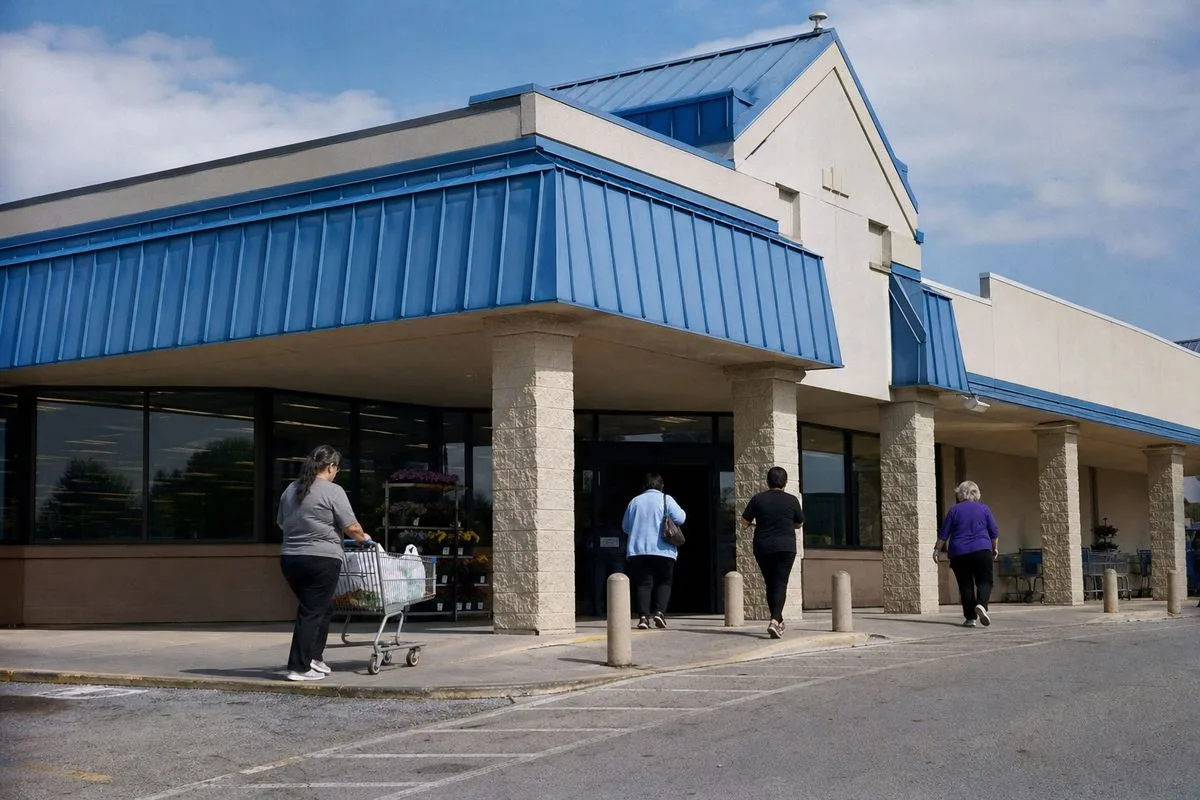
Food Lion is not a small regional chain experimenting with online ordering. It operates more than 1,100 stores across 10 Southeastern and Mid-Atlantic states and employs more than 82,000 associates. That scale changes the meaning of a week long digital disruption. Even if stores stay open, the interruption touches a large customer base and a significant workforce that must handle service questions, altered workflows, and the operational knock on effects of customers shifting from online ordering back to in store shopping.
The chain sits within Ahold Delhaize USA, part of the wider Ahold Delhaize group headquartered in Zaandam in the Netherlands. In practice, that means Food Lion’s technology environment is likely connected to shared services, shared security operations, and shared vendor relationships across the US division. Food Lion’s statement that the incident occurs at the parent company level is a reminder that cybersecurity risk is often systemic. A problem in one part of a corporate technology stack can cascade into customer facing services across banners.
Food Lion’s community positioning also forms part of what is at stake. Through its Food Lion Feeds hunger relief programme, the company says it donates more than 1.5 billion meals since 2014 and commits to 3 billion by 2032. Those figures underline the brand’s long running emphasis on community support. When a retailer with that profile experiences a cyber disruption, the reputational risk is not limited to shopping convenience. It can also affect how communities perceive the company’s reliability, particularly in areas where Food Lion is a major local employer and a primary grocery option.
Greg Finchum’s messaging reflects that broader trust equation. In a separate message posted to the company’s newsroom, Food Lion tells customers it “let them down” and thanks them for continuing to shop during the disruption. The language is deliberately personal and values driven. It is designed to reassure households that the company understands the disruption in human terms, not only as a technical incident.
Cybersecurity and grocery retail, why outages hit harder than they used to
Grocery retail is increasingly a technology business. Online ordering, digital coupons, loyalty pricing, and fulfilment scheduling are now core parts of how many customers experience a supermarket. When Food Lion’s website and app go dark for about a week, the impact is not only the inability to place an order. It can also affect meal planning, budgeting, and access to promotions that customers expect to be available at the point of decision.
Food Lion’s experience also illustrates a modern operational reality: keeping stores open is not the same as maintaining full service. A retailer can continue to trade in person while still suffering a meaningful service outage. For customers who use Food Lion To Go, the outage removes a channel that may be essential, not optional. For the business, it can shift demand into stores in ways that strain staffing and customer service, especially if associates must explain what is happening without having full visibility into the technical details.
The company’s statement that there is no evidence at this point of sensitive data being taken is significant, but it does not eliminate the need for vigilance. Cyber incidents can involve a range of outcomes, from service disruption to attempted data access. Food Lion does not provide technical specifics in the source material, and it does not describe the nature of the incident, the systems affected, or the remediation steps taken. That absence is common in early stage incident communications, but it also leaves customers and industry observers to interpret the event through the lens of broader retail cybersecurity trends.
For the grocery sector, the takeaway is that digital resilience is now part of brand resilience. Retailers have spent years training customers to use apps for savings and convenience. That creates a dependency. When the app fails, customers feel the loss more sharply than they would have five or ten years ago, because the app is where the deals live, where the lists live, and where the time saving features live.
Why It Matters
Food Lion’s outage is a case study in how trust is built and tested in modern grocery. The company’s value proposition is “easy, fresh and affordable”, and digital tools are central to delivering the “easy” and increasingly the “affordable” parts. When the website and app go offline, the brand is temporarily forced back into a purely physical model, even though many customers now shop in a hybrid way. The offers that follow are not just goodwill gestures, they are a strategic attempt to restore the digital habit loop before customers reset their routines elsewhere.
There is also a subtle signal in the way Food Lion leans on third party platforms with the Instacart and DoorDash discounts. It suggests that, for many shoppers, Food Lion is accessed through an ecosystem rather than a single owned channel. That has implications for resilience planning. Retailers must think beyond their own app uptime and consider how outages affect partner integrations, delivery capacity, and customer support across multiple touchpoints. In other words, a cyber incident can disrupt not only a website, but a network of services that collectively make grocery e-commerce work.
Finally, the incident highlights a tension that the industry is still learning to manage: transparency versus operational security. Customers want detail and certainty, especially about data. Companies often cannot provide it immediately without risking misinformation or compromising investigations. Food Lion’s phrasing, “no evidence at this point”, is responsible, but it also places a burden on the retailer to keep communicating as the investigation progresses. In the long run, the winners in grocery will not only be those with the best prices, they will be those who can maintain service continuity and communicate clearly when continuity breaks.
What shoppers can do now, and what to watch next
With Food Lion’s website and app back online as of 20 October 2026, customers who rely on Food Lion To Go can resume ordering. The immediate practical step for shoppers is to confirm that their preferred fulfilment option, pickup or delivery, is available in their area and that the app experience is functioning as expected. Customers who use MVP should also pay attention to the timing windows Food Lion outlines, because the offers are staggered across late October.
For customers looking to make the most of the company’s post outage incentives, the dates matter. The Instacart and DoorDash offers run through 23 October 2026, with the DoorDash promotion requiring the code 30FOODLION. The MVP loyalty offer of $10 off a $50 purchase begins 21 October 2026 and runs through the end of the month. Free Food Lion To Go pickup and delivery on orders of $75 or more begins 22 October 2026 and runs through the end of October. Food Lion also mentions additional savings for e-commerce shoppers, MVP cardholders, and Shop and Earn participants, but does not specify the exact amounts in the available source material.
What to watch next is the investigation’s outcome and any further communication about customer data. Food Lion states there is no evidence at this point that sensitive customer, associate, or partner data is taken, and that the investigation is ongoing. If the company provides updates, customers will want clarity on whether any action is required on their part. Based on the information provided here, Food Lion does not instruct customers to take specific steps such as password resets, and it does not claim that data is compromised.
For the industry, the broader watch point is how quickly Food Lion’s digital ordering volumes rebound. The company’s offers are designed to accelerate that recovery. Whether customers return immediately or remain cautious will be a real world measure of how much digital trust matters in grocery, and how effectively a retailer can rebuild it after a week of disruption.
Closing thoughts, Food Lion’s recovery is about more than uptime
Food Lion’s return to online operations closes the most visible chapter of this incident, but it does not end the story. The company still has an ongoing investigation tied to a cybersecurity incident at Ahold Delhaize USA, and it must balance reassurance with accuracy as more information becomes available. For now, Food Lion’s key message is that services are restored and that there is no evidence at this point of sensitive data being taken.
The episode is a reminder that grocery retail’s digital transformation comes with new forms of risk. A week long outage is not just a technical inconvenience, it is a disruption to how households plan, budget, and access food. Food Lion’s response, restoring service and pairing it with targeted offers, shows a retailer trying to protect customer relationships in a competitive market where switching costs are low and convenience is a differentiator.
In the months ahead, Food Lion’s challenge is to demonstrate that the return of its website and app is not merely a restart, but a strengthening of resilience. With more than 1,100 stores, more than 82,000 associates, and a community programme that reports more than 1.5 billion meals donated since 2014, the chain’s influence is substantial. When a retailer of that scale stumbles digitally, the recovery must be measured not only in restored screens and reopened ordering slots, but in the confidence customers feel when they tap “checkout” again.