UFC Shanghai weigh in drama throws fight week into late turmoil
UFC Shanghai arrives in China this weekend with a familiar, avoidable controversy, the scales. On 28 August 2026, reports indicate three UFC Shanghai fighters miss weight, including both sides of one scheduled matchup. In a sport where preparation is measured in grams as much as it is in rounds, multiple misses on the same card instantly reshape competitive integrity, matchmaking logic, and the commercial promises made to fans.
The timing matters. A weigh in stumble is not simply a procedural footnote, it is a late stage disruption that can force renegotiations, alter tactics, and in some cases collapse bouts entirely. When both fighters in a single pairing fail to hit the contracted limit, it also punctures the usual narrative that weight cutting is an individual lapse. It becomes a shared systems failure, a sign that the weight class itself, the travel schedule, the performance incentives, or the oversight mechanisms are misaligned.
UFC Shanghai is also positioned as a showcase event, with a marquee main event that places elite bantamweight contenders in the spotlight. Against that backdrop, a cluster of weight misses threatens to dominate the conversation, pulling attention away from sporting merit and towards governance. For the UFC, which has spent years expanding its footprint in Asia, the optics of a high profile international card being defined by weight management problems are particularly unwelcome.
What is known so far about the UFC Shanghai weight misses
The key development is straightforward but significant. On 28 August 2026, coverage states that three fighters on the UFC Shanghai card miss weight, and that both sides of one scheduled matchup come in heavy. The source material does not provide the names of the fighters who miss weight, the weight class involved, or the exact amounts by which they miss. Without those specifics, it is not responsible to speculate on the athletes or the margins.
Even with limited detail, the structural consequences are clear. A single miss typically triggers a chain of decisions, whether the bout proceeds at a catchweight, whether a purse penalty is applied, and whether the bout is reclassified for rankings purposes. When multiple athletes miss on the same card, commissions and promoters face a compounded risk profile, including medical concerns linked to aggressive late cuts, and the possibility that a bout becomes competitively distorted if one athlete is materially larger on fight night.
The unusual element is the double miss in one pairing. In practice, that can create a strange incentive landscape. If both athletes are heavy, neither can claim the moral high ground, and the bout can still proceed if both are medically cleared and both camps agree. Yet it also raises questions about whether the contracted limit is realistic for either athlete at this stage of their careers, and whether the UFC is matching fighters in a division where the “true” weight of the athletes is drifting upwards.
For fans, the immediate impact is uncertainty. Fight week narratives are built around stylistic matchups, form, and stakes. Weight misses inject ambiguity, will the bout happen, will it be altered, and if it proceeds, will cardio and durability be compromised? Those questions become central to how audiences interpret the results, particularly in close fights where any physical advantage is scrutinised.
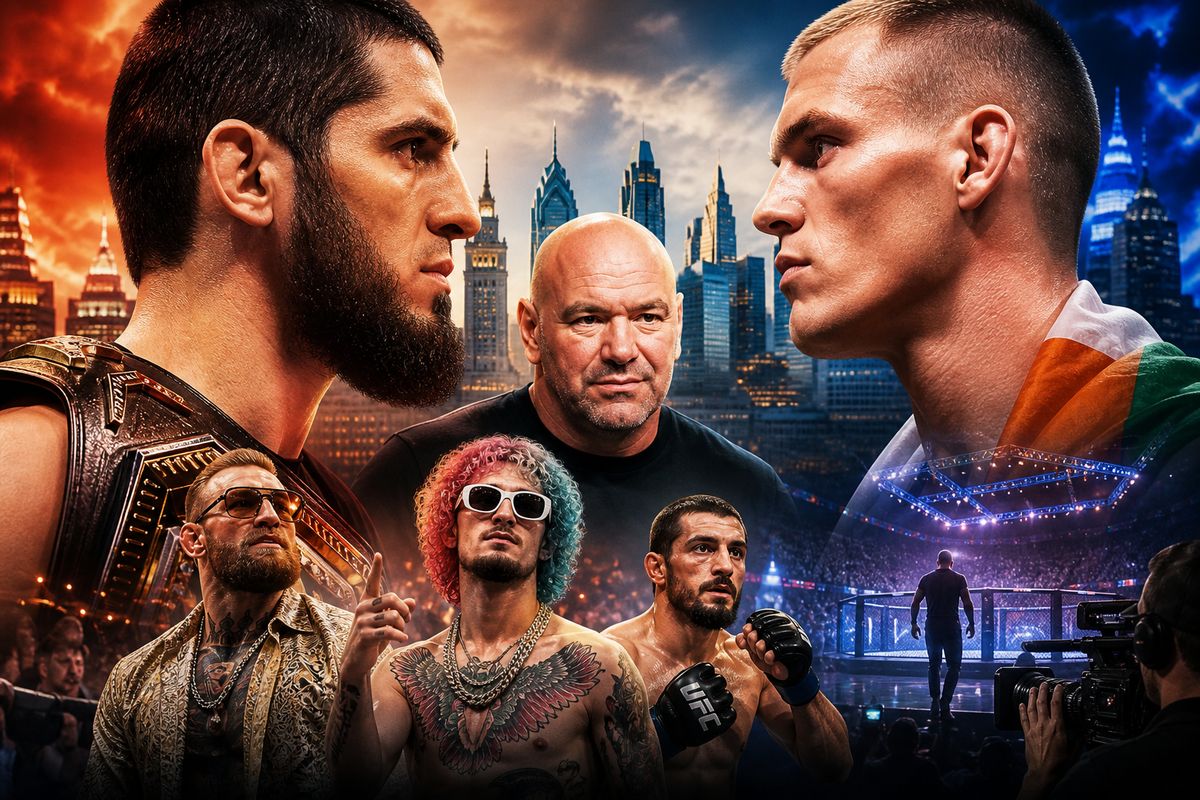
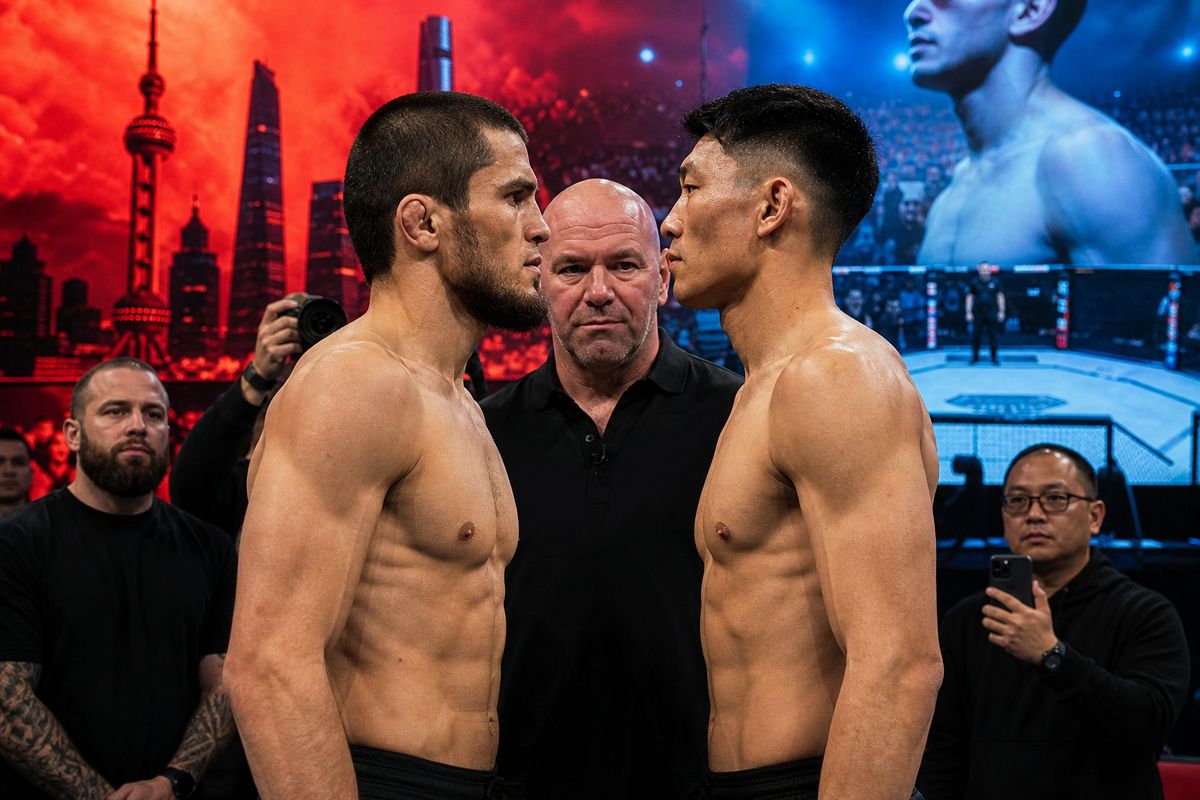
UFC Shanghai main event context, Umar Nurmagomedov vs Song Yadong
While the weigh in issues grab headlines, UFC Shanghai still carries sporting weight because of its main event, Umar Nurmagomedov vs Song Yadong. Coverage frames it as a meeting of top bantamweight contenders, and staff predictions highlight the bout’s significance for the division’s immediate future. The event is also notable for returning the UFC to China with a local star in a headline slot, a strategic choice that aligns with the promotion’s long term market ambitions.
Nurmagomedov enters the week with an additional layer of narrative heat. Separate reporting notes he has a new nickname for Merab Dvalishvili after recent comments, describing him as “all the time crying”. That line, while aimed at another contender, signals the broader competitive tension at bantamweight, a division where contenders often jostle publicly for position as much as they do in the cage. It also underlines how quickly a fight week storyline can be hijacked by off cage discourse, whether it is trash talk, rankings politics, or in this case, weight management.
Song, meanwhile, represents a different kind of pressure. Headlining at home, or at least in front of a regional audience that expects a statement performance, can amplify the stakes. For the UFC, a strong showing from Song is commercially valuable, but it also increases the reputational cost if the card is overshadowed by administrative chaos. A main event can be brilliant, yet the event’s legacy can still be defined by what happened on the scales.
The weight misses therefore land in a delicate context. The UFC is trying to sell UFC Shanghai as elite sport and global spectacle. The main event is designed to do that. But repeated weigh in problems, especially if they affect meaningful bouts, can erode trust in the product, particularly among casual viewers who already perceive weight cutting as an opaque and sometimes dangerous practice.
Why weight misses keep happening in modern MMA
Weight cutting is not new, but its persistence at the highest level suggests the incentives remain stronger than the deterrents. Fighters cut weight because size matters, and because the rules allow it. When a fighter can rehydrate after weigh ins, the temptation is to arrive as large as possible on fight night. The result is a system where “making weight” becomes a high risk performance in itself, and missing weight can be the predictable outcome of pushing physiological limits too far.
International travel adds another layer. UFC Shanghai requires athletes and teams to manage time zones, unfamiliar food environments, and logistical constraints around training and recovery. None of that excuses missing weight, but it does help explain why cards staged far from an athlete’s home base can produce more volatility. A disrupted routine can turn a manageable cut into a crisis, particularly if the final days involve dehydration strategies that leave little margin for error.
The double miss in a single matchup is especially revealing. It suggests that both athletes may be operating at the edge of what is sustainable in that division. In many cases, fighters grow into higher weight classes over time, or they find that repeated cuts degrade performance. When both sides miss, it can indicate that the division’s official limit is out of step with the athletes’ realistic walk around weights, or that both camps misjudge the cut under the same environmental conditions.
There is also a cultural component. Fighters are often praised for “professionalism” when they make brutal cuts, and criticised for weakness when they move up. That framing rewards risk taking. Until the sport more consistently values long term health and performance over short term size advantages, weight misses will remain a recurring feature of major events, including showcase cards like UFC Shanghai.
Industry impact, credibility, matchmaking, and the business of UFC Shanghai
For the UFC, weigh in failures are not merely competitive issues, they are business issues. A card is sold on certainty, a promised set of contests at contracted terms. When three fighters miss weight, the promotion may still deliver the fights, but it risks delivering a different product than the one marketed. That matters for consumer confidence, broadcaster relationships, and the broader perception of MMA as a regulated sport rather than a loosely controlled spectacle.
Matchmaking credibility is also at stake. Rankings and title contention are built on the assumption that athletes compete within agreed limits. If a fighter wins after missing weight, the result can feel compromised, even if the contest is thrilling. It can also create resentment within the division, where athletes who consistently make weight may feel disadvantaged by those who gamble on coming in heavy. Over time, that dynamic can distort divisional hierarchies, encouraging a quiet arms race of ever more aggressive cuts.
UFC Shanghai’s weigh in problems also intersect with the promotion’s international strategy. The UFC has invested heavily in global expansion, and events in Asia are part of that. A smooth, professional fight week helps build local trust and long term fan engagement. A chaotic one risks reinforcing scepticism among regulators and mainstream sports audiences. The UFC can still produce a successful night of fights, but the narrative cost is real, especially when the headlines are about missed weights rather than athletic excellence.
There is a wider industry ripple too. Rival promotions watch how the UFC handles these moments because it sets informal standards. If the response is perceived as lenient, it can normalise risk taking across the sport. If it is perceived as overly punitive, it can create labour tensions with fighters who already operate in a precarious economic environment. The balance is difficult, but repeated incidents increase pressure for clearer, more consistent policy.
Historical context, from routine misses to systemic reform debates
MMA has long wrestled with weight cutting, but the modern era has made the issue more visible and more contentious. The sport’s global broadcast reach means weigh ins are content, not just compliance. That visibility amplifies controversy when things go wrong, and it turns what used to be backstage drama into a public referendum on safety and professionalism.
Historically, weight misses were often treated as individual failures, a lack of discipline or a miscalculated cut. Increasingly, however, the conversation has shifted towards systems. When multiple fighters miss on the same card, or when both sides of a matchup miss, it becomes harder to argue that the problem is purely personal. It points to structural incentives, the timing of weigh ins, and the competitive advantage conferred by size on fight night.
UFC Shanghai’s situation fits into that broader arc. The source material does not detail the commission response, purse penalties, or whether any bouts are altered. But the mere fact of three misses, including a double miss, is enough to reignite the long running debate about whether MMA should adopt additional weight classes, change weigh in timing, or implement hydration testing. Those ideas are not new, but each high profile incident gives them fresh momentum.
Comparisons to boxing are instructive, even if the sports differ. Boxing has its own history of weight manipulation, but it also has a longer tradition of catchweights and negotiated terms, sometimes at the expense of clarity. MMA, by contrast, sells itself on standardised divisions and rankings. That makes weight misses feel like a breach of the sport’s core promise, that elite competition occurs on equal, regulated terms.
What’s Next
The immediate next step is practical. UFC Shanghai must stabilise the card, confirm which bouts proceed, and ensure medical clearance for athletes who have undergone difficult cuts. If bouts go ahead at catchweights, the UFC and relevant regulators will need to communicate clearly, not only to media but to fans who may not understand the implications. Transparency matters because it shapes how results are interpreted, especially if a fighter who misses weight wins convincingly.
Beyond this weekend, the bigger question is whether the UFC treats this as an isolated mishap or as evidence of a deeper pattern. Three misses on one card, with a double miss in a single pairing, is the kind of headline that can push policy discussions from abstract to urgent. The UFC has strong incentives to protect its brand as a premium, professionally run sports product. That may mean firmer internal standards, more conservative matchmaking in certain divisions, or stronger consequences for repeat offenders. The source material does not indicate any new policy, so any reform remains speculative, but the pressure is clearly building.
For the bantamweight picture, the main event still carries divisional consequences. Umar Nurmagomedov vs Song Yadong is framed as a contender level clash, and Nurmagomedov’s ongoing verbal sparring with Merab Dvalishvili shows how quickly the next title narrative can form. If UFC Shanghai delivers a clean, compelling main event, it can partially offset the weigh in damage. If the night is defined by compromised bouts and exhausted athletes, it will strengthen calls for structural change, not just for this card, but for how the sport manages weight across its calendar.
Closing thoughts, UFC Shanghai as a test of professionalism
UFC Shanghai should be a showcase of elite MMA and a statement of intent in a key market. Instead, the event enters its final days under the shadow of weigh in controversy, with three fighters reportedly missing weight and one matchup seeing both athletes fail to hit the limit. The lack of publicly available specifics in the source material limits precise assessment, but the broader significance is unmistakable. Multiple misses on a single card are never just a footnote, they are a stress test of the sport’s governance.
For the UFC, the challenge is to ensure the fights that do happen are fair, safe, and clearly communicated. For fighters, the episode is another reminder that weight cutting is both a competitive tool and a reputational risk. And for the sport as a whole, UFC Shanghai becomes part of the ongoing argument that MMA’s weight system, as currently practised, rewards dangerous brinkmanship. If the promotion wants the conversation after Saturday night to be about contenders and championships, not scales and shortcuts, it will need more than stern words. It will need a credible path to fewer failures, and fewer headlines like this one.