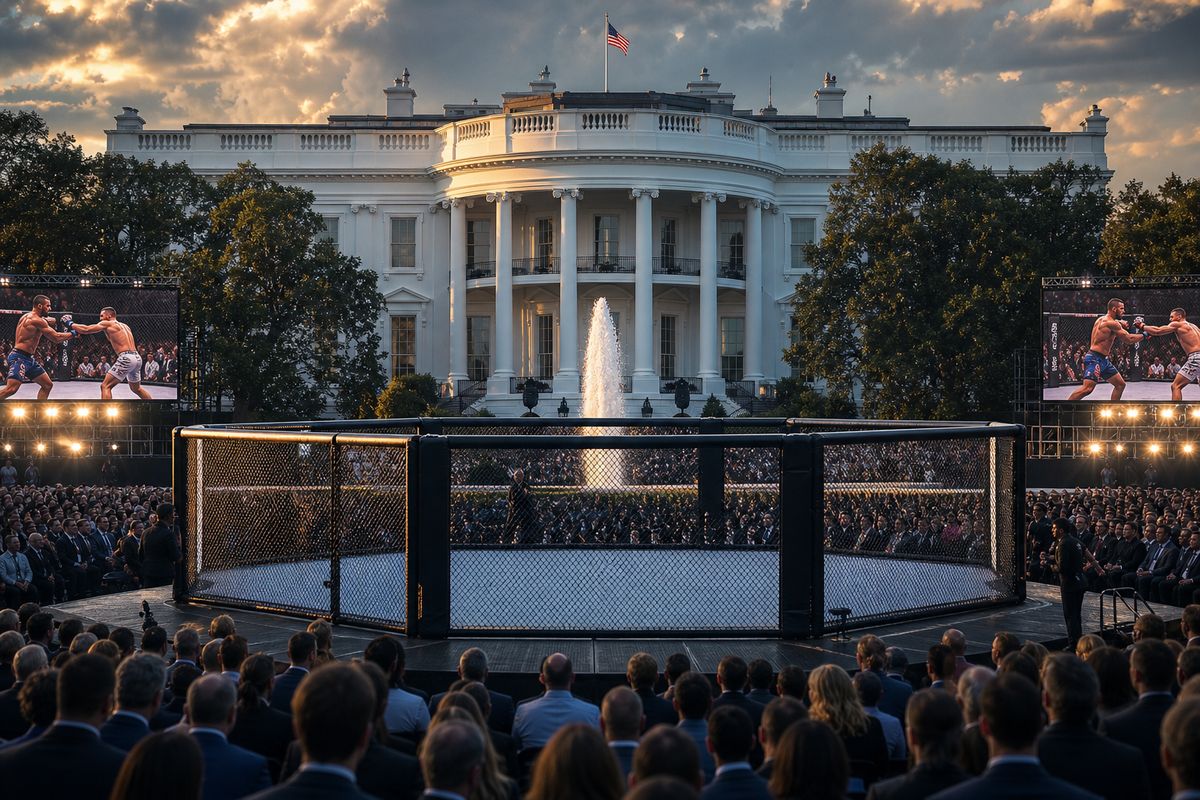
UFC Freedom 250 turns the White House into a fight venue, and forces a national argument
UFC Freedom 250 is not just another pay per view weekend repackaged as patriotic theatre. Staged on 14 June 2026 on the South Lawn of the White House in Washington, D.C., it becomes the first professional sporting event held at the US presidential residence, and a deliberately symbolic centrepiece in the run up to the United States’ 250th anniversary celebrations on 4 July 2026. The Ultimate Fighting Championship, already the most culturally visible combat sports brand in America, effectively tests how far sport, politics, and platform economics can be fused into a single live product.
The event also arrives with built in controversy. Reuters and Ipsos polling, as cited in the source material, indicates that most Americans disapprove of using the White House to stage cage fighting. That disapproval matters because the venue is not a neutral arena. It is a national symbol, a security zone, and a political stage. UFC Freedom 250 therefore reads as a case study in modern spectacle, where the fight card is only one part of the story, and where the audience is asked to consume an idea of America as much as a night of knockouts.
Commercially, it is a streaming milestone. The broadcast is exclusive to Paramount+, and the reported viewing figures are striking: an average of 8.2 million viewers, at least 17 million unique viewers across the US and Latin America, and 34 million viewers worldwide. The source material describes it as the most watched exclusive live event on Paramount+ as of June 2026, and one of the most watched MMA events of all time. Whether those numbers can be independently verified is beyond the provided material, but the claim itself signals the ambition: UFC Freedom 250 is positioned as proof that premium live sport can be used to build a streaming platform’s identity, not merely fill its schedule.
UFC Freedom 250 event details, from the South Lawn build to the Paramount+ bet
UFC Freedom 250 takes place on 14 June 2026 at the White House, specifically on the South Lawn. Attendance is not officially announced, but the source material cites an estimate of roughly 4,300. That figure is not accidental. UFC CEO Dana White says in earlier interviews that capacity must remain under 5,000 due to security concerns, and TKO Group Holdings CEO Ari Emanuel later frames the likely crowd as 3,000 to 4,000. By May 2026, White is publicly discussing an expected 4,300 capacity, aligning with the estimate attached to the event.
The physical staging is central to the narrative. A Pennsylvania staging company, TAIT, contracts for a giant structure known as “the Claw”, described as a 90 foot tall arch built around the Octagon. The build is not just production flair, it is a security and broadcast solution. A temporary arena on the South Lawn must manage sightlines, lighting, camera positions, and crowd containment under intense scrutiny. The result is a venue that looks like a modern stadium insert dropped into a historic landscape, a visual metaphor for how contemporary entertainment seeks to occupy civic space.
Access is tightly controlled. No public seating is made available, with seats reserved for financial sponsors, political allies, and active duty service members. That choice shapes the optics: the White House crowd is curated, and the event becomes less a ticketed public gathering than an invitation only showcase. To compensate, White discusses plans for large screens at The Ellipse, with capacity for up to 85,000 spectators, and later says tickets for that viewing area will be free. The sources do not confirm how that public viewing plays out on the day, but the intention is clear, create the impression of mass participation while keeping the South Lawn itself restricted.
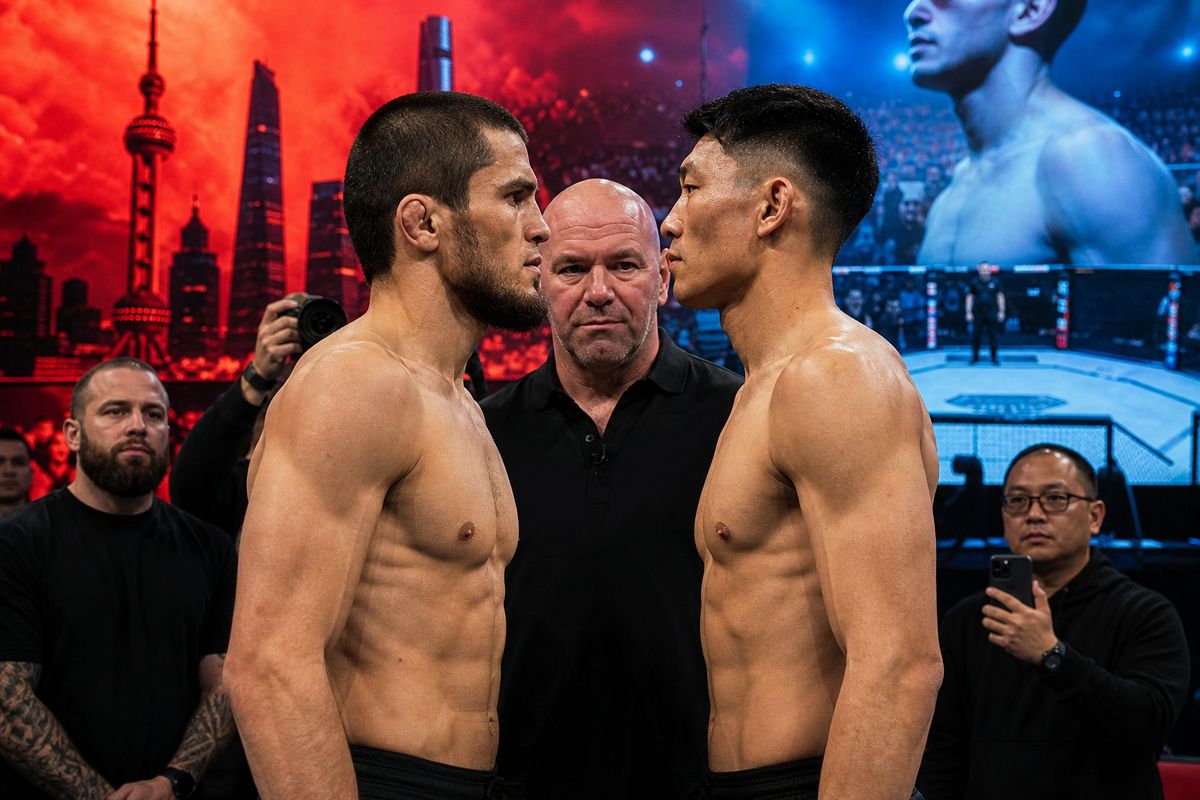
There is also a broader festival wrapper. The venue hosts a fan fest the day before, headlined by the Zac Brown Band, and featuring ceremonial weigh ins, meet and greets, on stage entertainment, interactive experiences, and appearances from UFC athletes and other celebrities. The weigh ins take place at the Lincoln Memorial, another deliberate choice of national iconography. Even before the first punch is thrown, the weekend is designed as a tour through American symbols, with the UFC positioned as both entertainment and cultural event.
How UFC Freedom 250 is conceived, Trump, Dana White, and the politics of proximity
The origins of UFC Freedom 250 trace back to presidential announcement rather than a promoter’s press release. President Donald Trump first announces the plan on 3 July 2025 during a rally at the Iowa State Fairgrounds. Dana White confirms on 29 August 2025 that plans are finalised, saying, “We had the meeting at the White House ... The White House fight is on.” The quote is included in the source material and matters because it frames the event as a product of direct political access, not merely a venue rental negotiated through standard sporting channels.
Trump’s relationship with the UFC is presented as personal and visible. The source material notes he has frequently attended UFC events in recent years, including UFC 316 in New Jersey on 7 June 2025, where several fighters greet him cageside. In this telling, UFC Freedom 250 is not a one off novelty, it is the culmination of a long running association between a political figure and a sport that has become a mainstream cultural force.
The scheduling itself becomes part of the controversy. Initial reporting suggests a 4 July date, but the event is officially rescheduled for June due to logistical reasons. On 6 October 2025, during a speech at Naval Station Norfolk, Trump announces it will take place on 14 June 2026, coinciding with his 80th birthday and the Flag Day holiday. Critics argue the date makes the event feel like a celebration of Trump more than America, a critique referenced in the source material through mentions of multiple news outlets. The point is not simply partisan, it is structural: when a sporting event is staged at the White House, every production decision becomes politically legible.
Even the name is carefully engineered. The event title, UFC Freedom 250, is announced during the UFC 326 broadcast on 7 March 2026, explicitly referencing the 250th anniversary of the US Declaration of Independence on 4 July 2026, twenty days after the fight night. The branding tries to anchor the spectacle in national commemoration, but the proximity to political messaging ensures the name is read as a statement, not just a theme.
Inside the spectacle, media narratives, curated crowds, and the cultural backlash
UFC Freedom 250 is designed to be watched as much as attended. The South Lawn capacity is tiny by UFC standards, and the guest list is restricted. That makes the broadcast the primary product, and the audience at home the real crowd. Paramount+ exclusivity turns the event into a platform statement, while the White House setting supplies the kind of imagery that travels far beyond MMA circles. In a fragmented media environment, the venue itself functions as the headline.
Yet the spectacle does not land cleanly. The source material points to controversy over staging cage fighting at the White House, with most Americans disapproving according to Reuters and Ipsos. That disapproval is not simply squeamishness about violence. It reflects discomfort with the idea that the seat of government is being used as a set for a commercial combat sports promotion, and with the implied endorsement that comes from proximity to presidential power.
Long form commentary captures a different kind of unease, the sense that the event is a planned media spectacle that cannot quite make sense of itself. A Longreads piece about attending the “White House Brawl” describes the surrounding scene with a skewed perspective, including an anecdote involving photographer Bruce Gilden and Stephen Miller. The details are not about the fights themselves, but about the ecosystem of personalities, influencers, and political operatives that gather around the event. The takeaway is that UFC Freedom 250 is not merely sport plus politics, it is sport plus politics plus an attention economy that thrives on awkwardness, confrontation, and viral moments.
This is where the UFC’s modern cultural position becomes relevant. The company has moved far beyond its early reputation as a niche, late night spectacle. The source material references a Rolling Stone feature describing the UFC as a “culture shifting sport” that counts Trump as a fan, and frames the organisation as big, brash, and competition crushing. UFC Freedom 250 fits that arc. It is an assertion that the UFC can occupy any stage, even the most symbolically protected real estate in the country, and still deliver a commercially successful product.
What the numbers and the knockouts suggest about MMA’s next phase
On the sporting side, UFC Freedom 250 produces a statistical oddity that becomes part of its mythology. The source material describes it as the only UFC event to end with all fights ending by knockout. It also ties UFC Fight Night: Rockhold vs. Bisping and UFC on ESPN: Santos vs. Hill for having all fights end by finish at a modern era UFC event, with 11 and 10 fights respectively. Even without the full bout list in the provided material, the claim signals how the event is packaged, a night of decisive endings that suits the broadcast narrative of relentless action.
For the UFC as a business, the more consequential numbers are the streaming figures attributed to Paramount+. An average of 8.2 million viewers, at least 17 million unique viewers in the US and Latin America, and 34 million worldwide is presented as a platform record for a live exclusive event as of June 2026. If accurate, it demonstrates that a streaming service can drive mass appointment viewing with the right combination of exclusivity, cultural controversy, and must see visuals. It also suggests that the UFC’s value is not only in fight quality but in its ability to manufacture moments that feel unmissable.
For the wider combat sports industry, UFC Freedom 250 is a warning and an invitation. It warns rival promotions that the UFC can still outmuscle competitors through scale and spectacle. It invites broadcasters and streamers to think bigger about event packaging, location, and narrative. The event is not simply a card, it is a national set piece, with weigh ins at the Lincoln Memorial, a fan fest headlined by a major band, and a temporary arena built as a landmark structure. That is the template, turn a fight night into a cultural festival, then sell the festival as the reason to subscribe.
Historically, combat sports have often chased legitimacy by moving closer to establishment venues and institutions. Boxing’s long relationship with civic arenas and political patronage is one example, and major fights have frequently been used as soft power showcases by cities and states. UFC Freedom 250 pushes that logic into unprecedented territory by using the presidential residence itself. The comparison is not perfect, because the White House is not a conventional venue, but the underlying dynamic is familiar: the sport seeks legitimacy and reach, while political actors seek the reflected energy of a popular spectacle.
UFC Freedom 250 and the future of sports streaming, branding, and civic space
The Paramount+ exclusivity is not a footnote, it is the business model. In an era when streaming platforms compete for retention, live sport is one of the few products that can still create real time urgency. UFC Freedom 250 is framed in the source material as the most watched exclusive live event on Paramount+ as of June 2026. That makes the event a case study in how a platform can use a single night to reposition itself in the market, and how a sports property can leverage distribution to amplify its cultural footprint.
The event also highlights a shift in how sports brands think about place. Traditional venue choices are usually driven by capacity, gate revenue, and local commission incentives. Here, capacity is intentionally small, and the venue’s symbolic value is the primary asset. The White House setting creates imagery that cannot be replicated by an arena, and it generates debate that functions as free marketing. The trade off is reputational risk, and the Reuters and Ipsos disapproval figure suggests that risk is real. The UFC’s calculation appears to be that controversy is manageable if the product delivers and the broadcast numbers justify the decision.
There is also a civic question that will not go away. If the White House can host a professional combat sports event, what else can it host, and under what rules? The source material emphasises that this is the first professional sporting event staged at the presidential residence. Firsts create precedents. Even if UFC Freedom 250 remains a one off, it expands the boundaries of what is considered acceptable use of civic symbols for commercial entertainment. That is likely to be debated long after the last replay is clipped for social media.
Finally, the event underscores how modern sports consumption is shaped by narrative ecosystems. The Longreads account focuses on the surrounding media spectacle and the personalities orbiting it. That matters because the UFC’s growth has been fuelled not only by athletic competition but by storylines, rivalries, and cultural positioning. UFC Freedom 250 is a high stakes attempt to turn national symbolism into content, and content into subscriptions.
What This Means For You
For viewers, UFC Freedom 250 is a signal that major sports moments are increasingly engineered around where they happen and how they are distributed, not just who fights. Anyone deciding which subscriptions to keep should expect more platform exclusive tentpole events designed to create fear of missing out. The practical implication is to treat streaming services less like libraries and more like seasonal tickets. If a platform lands a one off exclusive event with genuine cultural pull, it may be worth subscribing for a month and cancelling, rather than carrying multiple services year round.
For fans who care about the sport’s direction, the White House staging raises questions about what kind of legitimacy MMA is chasing. Some will see it as mainstream acceptance, others as politicisation. Either way, consumers have more influence than they think. Viewing choices, social media engagement, and willingness to pay for exclusives all shape what promoters repeat. If audiences reward venue stunts and political proximity with record numbers, the industry will do more of it. If audiences punish it, promoters will pivot back towards sporting purity and competitive narratives.
For readers who are not MMA followers, UFC Freedom 250 still matters because it illustrates how civic symbols can be repurposed as entertainment backdrops. The Reuters and Ipsos disapproval finding suggests many Americans are uneasy with that shift. The actionable takeaway is to watch how future events are justified, who gets access, and what is offered to the public versus reserved for sponsors and allies. When an event has no public seating but promises mass viewing elsewhere, it is worth asking whether the public is being included, or merely used as scenery for a broadcast story.
Closing thoughts, a landmark night that leaves unresolved questions
UFC Freedom 250 is likely to be remembered less for individual matchups than for the fact it happens at all. A 4,300 seat, invitation only crowd on the South Lawn, a temporary structure called the Claw towering over the Octagon, and a Paramount+ exclusive broadcast that reportedly draws tens of millions worldwide combine into a single message: the UFC can turn almost any location into a global arena if the narrative is strong enough.
But the event also leaves unresolved tensions. The White House is not just a venue, and the backlash measured by Reuters and Ipsos indicates that many people see a line being crossed. The UFC, Trump, and their partners frame the night as part of America’s 250th anniversary moment, yet the date choice, Flag Day and Trump’s 80th birthday, ensures that the symbolism remains contested. UFC Freedom 250 therefore stands as both a commercial triumph and a cultural argument, one that will shape how promoters, politicians, and platforms think about the next big spectacle.