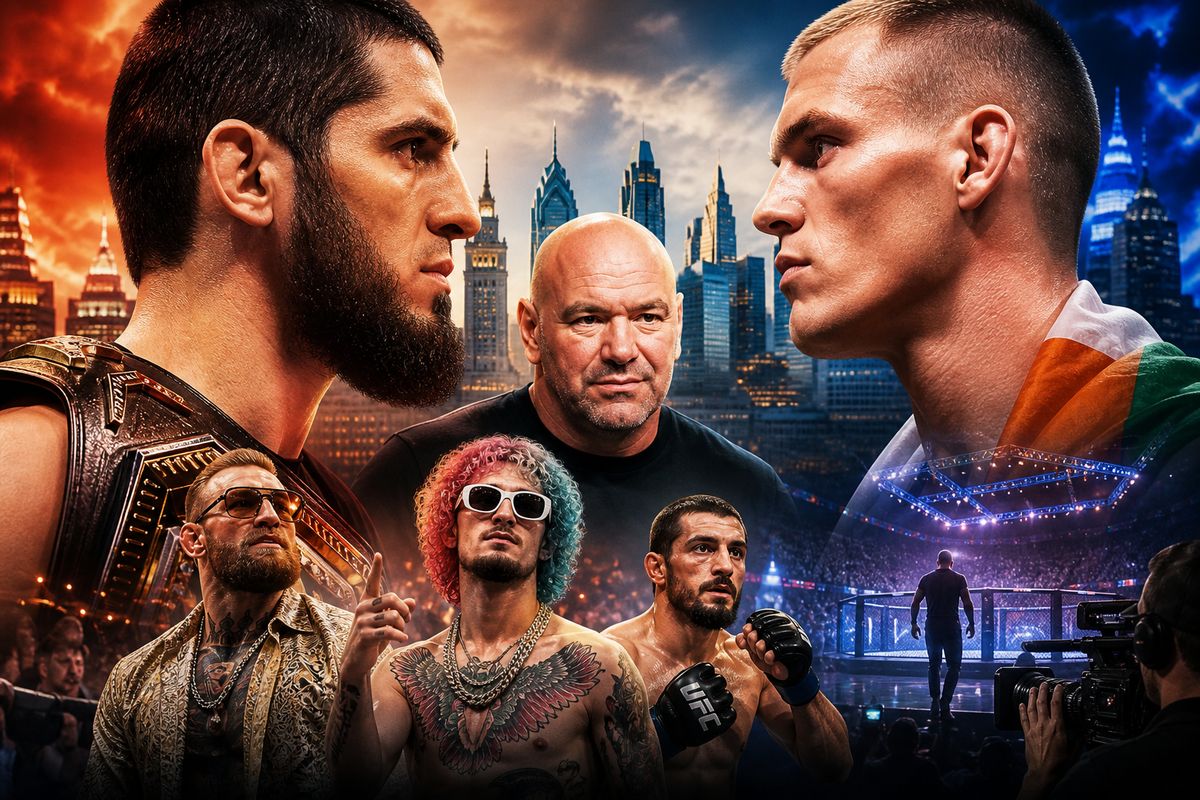
UFC 330 press week ignites as Makhachev and Machado Garry feud in Philadelphia
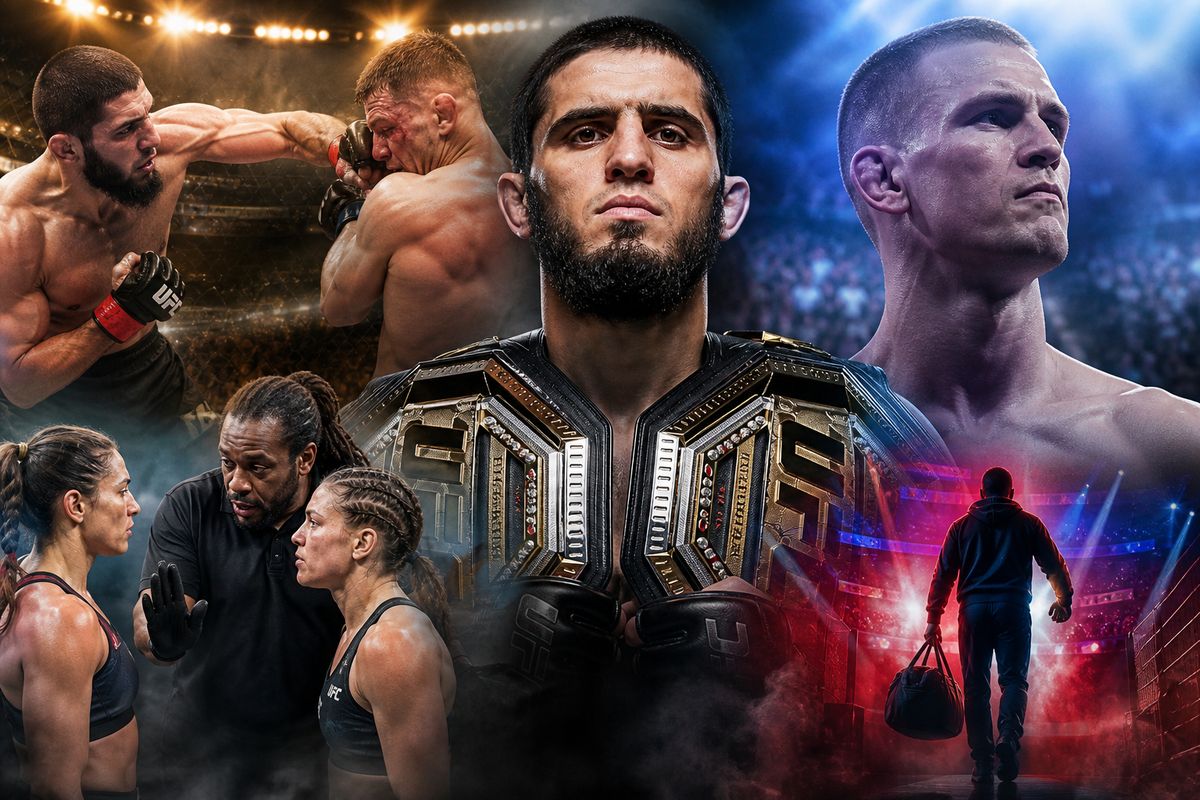
UFC 330 arrives in Philadelphia this Saturday with a welterweight title fight that is already louder than the sport’s usual pre pay per view noise. At the centre is champion Islam Makhachev, defending his belt against Ireland’s Ian Machado Garry, and using the stage to frame the challenger as a manufactured villain. At the pre fight press conference on 13 August 2026, Makhachev declares that “nobody likes” Machado Garry after the challenger is booed heavily by the local crowd, a moment reported by MMA Fighting.
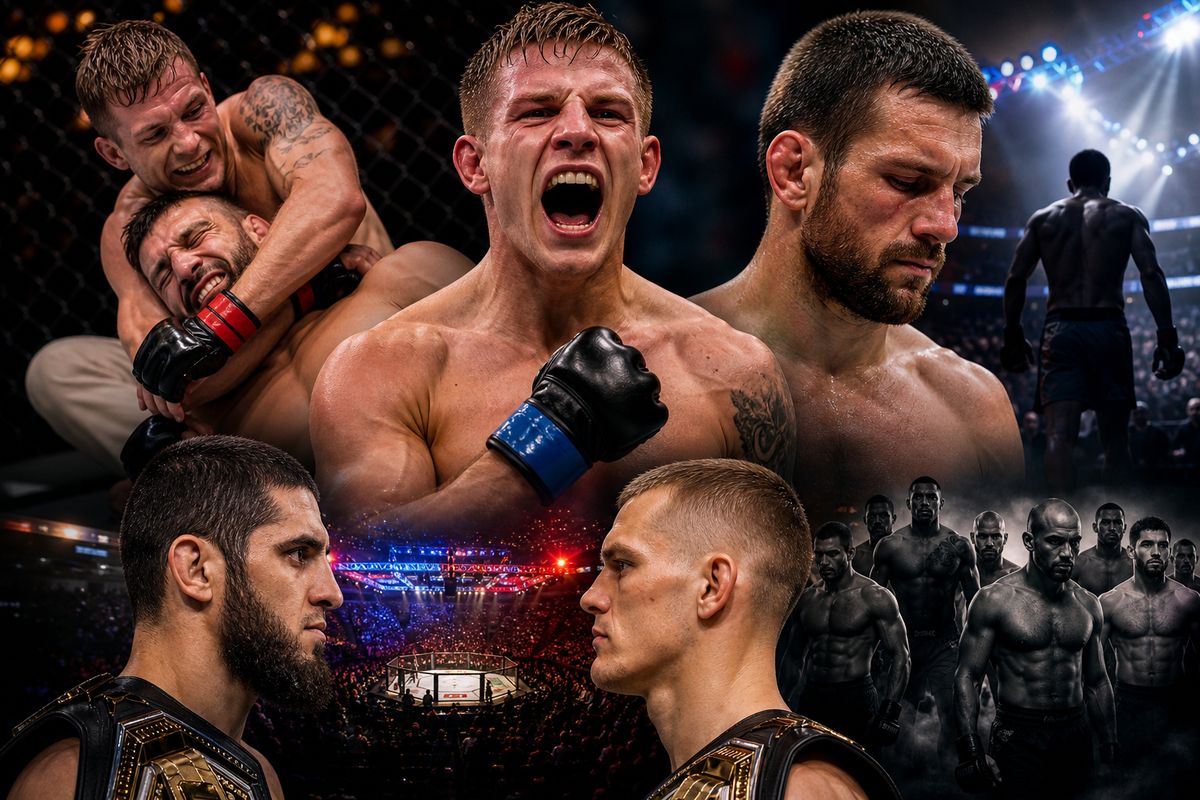
The hostility is not confined to the microphone. Video and photo coverage from the same media cycle shows Machado Garry physically towering over Makhachev during their face off, a visual that becomes an instant talking point as analysts and fighters debate whether size and range can disrupt the champion’s control based approach. The tension is amplified by a wave of public predictions, including commentary highlighted by BJPenn.com and MMA Junkie, where prominent names weigh in on whether an upset is plausible or whether the bout trends towards a tactical, potentially low risk title defence.
In a week where the UFC’s promotional machine is also pushing storylines about legacy, future contenders, and even the next mega event teased by Dana White, UFC 330 becomes a referendum on two competing models of stardom. Makhachev represents the champion as system, disciplined, efficient, and increasingly comfortable in the role of divisional gatekeeper. Machado Garry represents the champion as brand, outspoken, polarising, and ambitious enough to talk openly about a decade at the top.
What happens at UFC 330, and why the build up feels different
The headline development is straightforward: Islam Makhachev defends the UFC welterweight championship against Ian Machado Garry at UFC 330 in Philadelphia. Yet the build up carries unusual heat for a title fight that, on paper, pits a champion known for control against a challenger still defining his signature wins at the elite level. The Philadelphia crowd’s reaction becomes part of the narrative, with Makhachev leaning into the boos as proof that the challenger lacks genuine support, according to MMA Fighting.
Multiple outlets frame the contest as a stylistic puzzle with a clear promotional hook: can a long, confident striker with a flair for provocation disrupt a champion whose reputation is built on pressure and positional dominance. The face off visuals, with Machado Garry appearing significantly taller, sharpen that question. Even without official measurements in the provided source material, the optics matter because they influence how casual viewers interpret risk. In combat sports marketing, the image of a challenger physically imposing on a champion can be as valuable as any statistic.
UFC 330’s undercard storylines also feed into the main event’s stakes. BJPenn.com reports that Esteban Ribovics targets a bonus in his bout with Edson Barboza, while other coverage flags roster churn and short notice changes. MMA Fighting notes a newcomer stepping in on four days’ notice to save a bout on the card, underscoring the UFC’s constant balancing act between spectacle and logistics. The result is a card presented as “stacked” by betting previews and media packages, with the title fight positioned as the culmination of a week long narrative about who belongs at the top of the sport.
Islam Makhachev at welterweight, and the champion’s message before UFC 330
Makhachev enters UFC 330 not as a newcomer to pressure but as a champion increasingly comfortable shaping the public conversation. In interviews referenced by BJPenn.com, he dismisses the idea that retirement is near, pushing back on a suggestion associated with Joe Rogan and insisting the team is “still going”. That matters because it signals intent: Makhachev is not treating welterweight as a brief detour, he is presenting it as a platform for a longer reign and, potentially, a broader legacy argument.
He also draws a line between divisions. BJPenn.com highlights Makhachev discussing a “key difference” between welterweight and lightweight contenders ahead of UFC 330. The source material does not provide the full technical breakdown, but the framing alone is revealing. Champions often use divisional comparisons to justify strategic choices, whether that means emphasising physicality at 170 pounds or suggesting that certain threats are overstated. In this case, Makhachev appears to be managing expectations: acknowledging that welterweight presents different problems while still projecting certainty that the challenger is not his biggest test.
That projection is echoed in MMA Fighting’s coverage, where Makhachev scoffs at the idea that Machado Garry is his toughest opponent to date. The champion’s rhetorical strategy is consistent: diminish the challenger’s credibility, highlight the crowd’s hostility, and position himself as the adult in the room who will execute a plan regardless of noise. It is a familiar champion’s playbook, but it lands differently at welterweight because the division traditionally rewards charisma and rivalry as much as results.
Ian Machado Garry’s rise, polarising persona, and “decade of domination” claim
Machado Garry’s side of the story is built on ambition and certainty. BJPenn.com reports that he eyes a “decade of domination” ahead of UFC 330, language that is both a promise and a provocation. In a sport where title reigns are fragile and injuries are common, talking in decades is a deliberate act of branding. It invites ridicule if he loses, but it also creates a narrative runway if he wins, because every defence becomes a chapter in a long term project rather than a one off achievement.
He also attempts to control the post fight landscape before the fight even happens. Both BJPenn.com and MMA Fighting report Machado Garry claiming there is “only one” person who deserves the next title shot after he beats Makhachev. The identity of that person is not specified in the provided excerpts, but the tactic is clear: he is trying to turn UFC 330 from a single event into the start of a matchmaking arc led by him. That is a modern contender’s approach, using media to pressure the UFC into a particular direction.
The problem for Machado Garry is that his persona appears to be generating as much resistance as interest. The boos in Philadelphia, described as merciless by MMA Fighting, become a storyline of their own. In the UFC, being disliked is not necessarily a disadvantage, it can be a commercial asset. But it can also shape how fights are judged in the court of public opinion, especially if the bout becomes tactical. When a fighter is framed as a villain, any cautious moment is interpreted as cowardice, while the champion’s caution is interpreted as professionalism. That asymmetry can matter in how a performance is remembered.
Predictions flood in, from McGregor to O’Malley, and the “snoozer” fear
UFC 330’s main event attracts a wave of predictions that reveal as much about the sport’s current culture as they do about the matchup itself. BJPenn.com reports Conor McGregor sharing a specific prediction for Machado Garry to upset Makhachev, while also noting Sean O’Malley predicting an upset in what he characterises as a “boring” title fight. MMA Junkie similarly highlights that an ex UFC champion picks Machado Garry to upset Makhachev “in a snoozer”. The consistent theme is striking: even those entertaining an upset are bracing audiences for a fight that may be more strategic than spectacular.
This is where the UFC’s promotional challenge becomes visible. The organisation sells pay per view on the promise of decisive moments, but elite title fights often become risk managed chess matches. Analysts cited by BJPenn.com and MMA Junkie suggest Makhachev may take the “path of least resistance” to victory, a phrase that implies grappling heavy control and incremental scoring rather than highlight reel exchanges. If that is the expectation, then Machado Garry’s best promotional asset, his talk, must be matched by a style that forces volatility. Otherwise, the boos and bravado risk becoming the story rather than the result.
At the same time, the prediction economy is part of the UFC’s modern media ecosystem. When McGregor comments, it is never just analysis, it is attention. When O’Malley comments, it is also positioning within the sport’s celebrity hierarchy. These predictions function as cross promotion, creating a sense that UFC 330 is not only a title fight but a moment the wider UFC universe is watching. That helps the UFC, but it also raises the stakes for both athletes: a dull fight becomes a reputational problem, not merely a tactical win.
UFC 330’s wider context, Dana White’s next mega event tease and the sport’s constant churn
UFC 330 unfolds against a backdrop of broader organisational momentum. BJPenn.com reports Dana White teasing another blockbuster UFC event after the success of a White House show. The source material does not provide financial figures or viewership data, so the scale of that success cannot be quantified here, but the promotional implication is clear. The UFC is leaning into spectacle and venue symbolism, and it wants each major card to feel like part of a larger cultural footprint rather than a standalone sports event.
That ambition intersects with the UFC’s constant roster churn. BJPenn.com reports top prospect Bilal Hasan being booked for a UFC debut just days after a Dana White’s Contender Series knockout, while MMA Junkie echoes that Hasan is already booked after his DWCS win. MMA Fighting’s coverage of short notice changes on the UFC 330 card reinforces the same point: the UFC’s product is designed to be resilient. Fights fall apart, replacements appear, and the machine keeps moving. For champions and contenders, that means the window to capitalise on momentum is narrow, and the pressure to deliver is relentless.
There is also a subtle but important subplot around the Nurmagomedov pipeline. MMA Fighting reports Makhachev stumping for Usman Nurmagomedov to join the UFC, saying he is ready to fight for the title tomorrow. BJPenn.com similarly notes Makhachev picking potential opponents for Usman’s possible UFC debut. Even without confirmation of any signing in the provided material, the message is unmistakable: Makhachev is positioning himself as the face of a broader team and style, not merely an individual champion. That has implications for matchmaking politics at welterweight and beyond.
Why It Matters
UFC 330 matters because it tests whether the UFC’s current star making formula can still produce durable champions in an era of fragmented attention. Makhachev’s approach is built on repeatable excellence and low variance decision making. It is the kind of style that wins titles and sustains reigns, but it can struggle to generate the viral moments that now drive mainstream reach. Machado Garry, by contrast, is attempting to hack the attention economy with bold claims, rivalry framing, and future matchmaking demands. The boos in Philadelphia show the risk: the same tactics that create visibility can also create backlash, and backlash can become a cage that limits how audiences interpret a fighter’s performances.
The bout also highlights a deeper shift in how title fights are sold. Predictions from McGregor and O’Malley, and the repeated “boring” or “snoozer” framing, reveal a market tension. Hardcore fans often appreciate technical control, but the UFC’s commercial ceiling depends on casual buyers who want drama. If Makhachev wins via a safe, methodical approach, it strengthens the argument that champions should prioritise longevity over entertainment. If Machado Garry wins, especially in a way that forces chaos, it validates the UFC’s preference for charismatic disruptors who can turn a championship into a weekly storyline.
Finally, UFC 330 matters for what it signals about divisional identity at welterweight. Historically, the division has been defined by personalities and rivalries as much as by tactics. A Makhachev era could tilt it towards a more systematised, grappling led hierarchy, especially if the Nurmagomedov camp expands its presence. A Machado Garry era would likely tilt it back towards talk driven promotion and star narratives. Either outcome shapes not only matchmaking but also how the UFC packages its next generation of pay per view headliners.
Historical parallels and what to watch on fight night
The UFC has seen this dynamic before: a dominant champion framed as inevitable, and a challenger framed as either the future or the irritant. The difference in 2026 is that the media ecosystem is faster and more crowded. Press conference moments, like the Philadelphia booing and the face off visuals, travel instantly and become part of the fight’s perceived reality. That can influence everything from betting narratives to how fighters feel pressure to perform. The sources provided do not include betting lines or official UFC promotional statistics, but the volume of commentary itself is evidence of heightened attention.
On fight night, the key question is whether Machado Garry can force Makhachev into uncomfortable decisions. If the champion can dictate where the fight takes place, he can turn the challenger’s height and reach into a non factor. If Machado Garry can keep the fight at range, make Makhachev pay for entries, and create moments that sway judges and audiences, the upset talk becomes more than promotional chatter. The “path of least resistance” framing suggests many expect Makhachev to choose control, so the challenger’s task is to make that path costly.
Whatever the result, UFC 330 is positioned as a pivot point. A convincing Makhachev win strengthens his claim to long term dominance and reinforces the idea that welterweight is entering a new technical era. A Machado Garry win would instantly reshape the division’s commercial and competitive landscape, because his public insistence on who deserves the next shot suggests he intends to run the division as a narrative as well as a sport. In either case, Philadelphia’s hostile energy has already ensured the fight will be remembered as more than a routine title defence.
Closing thoughts: UFC 330 as a referendum on control versus charisma
UFC 330’s main event is not merely Makhachev versus Machado Garry, it is control versus charisma, system versus brand. The champion arrives with the confidence of a man who believes the crowd does not matter and the plan will hold. The challenger arrives with the confidence of a man who believes the crowd can be turned, and that the belt is only the beginning of a longer reign he is already selling.
The pre fight week provides the sharpest clues. Makhachev leans into the boos and dismisses the challenger’s standing, while Machado Garry leans into long term promises and attempts to shape the post fight queue. With Dana White teasing future blockbuster events and the UFC’s roster pipeline constantly feeding new names into the system, the organisation needs champions who can either dominate consistently or sell consistently. UFC 330 will indicate which of those models is about to define welterweight in 2026 and beyond.
For the UFC, the ideal outcome is a decisive finish that resolves the “boring fight” anxiety and creates a clear next chapter. For the fighters, the stakes are simpler and harsher. Makhachev is defending not only a belt but a style of championship legitimacy. Machado Garry is defending not only his title bid but the credibility of his decade long promise. In Philadelphia, one of those visions becomes real.