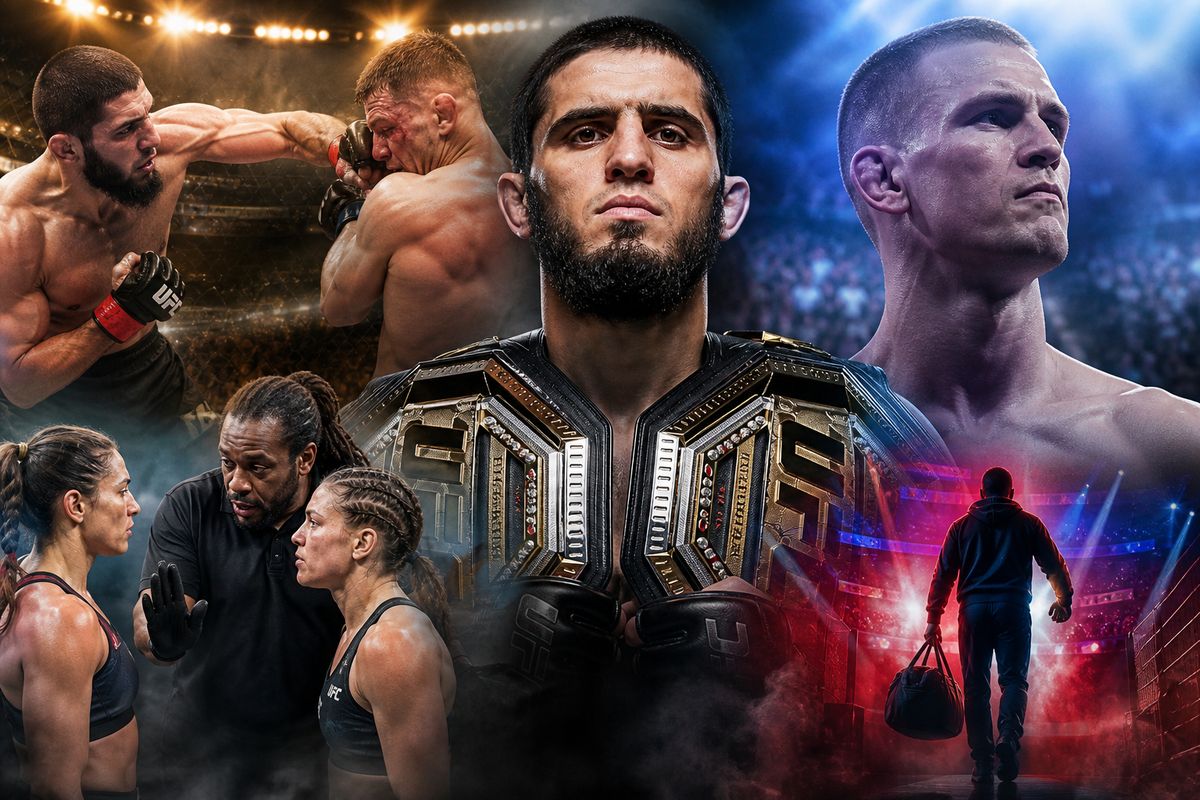
UFC 330 fallout puts Islam Makhachev at the centre of multiple storms
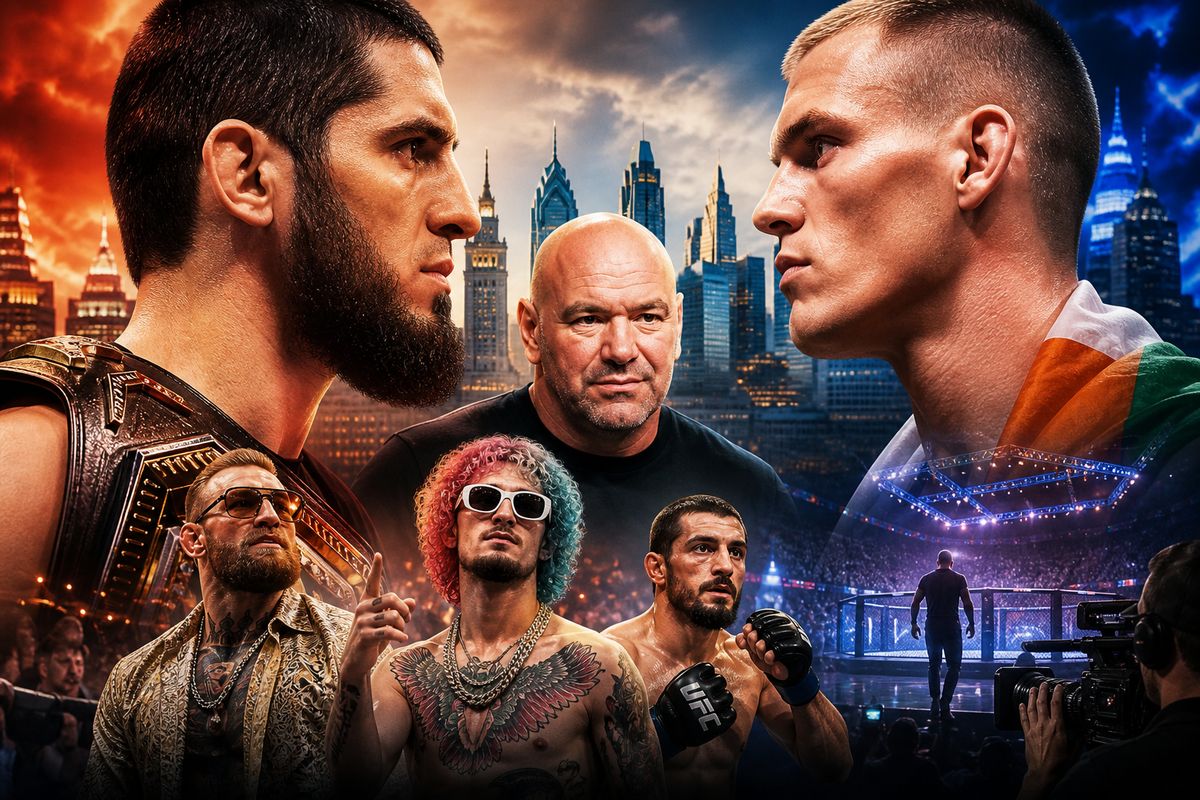
The immediate UFC 330 fallout is not confined to the scorecards. It expands into a wider argument about what champions owe the sport, what contenders must risk to earn a title shot, and how modern MMA promotion increasingly blurs the line between competitive legitimacy and entertainment spectacle. At the centre of it all is Islam Makhachev, who retains his title after a five round battle with Ian Machado Garry in Philadelphia, then becomes the focal point of a public dispute about walking around with two belts.
Within 48 hours of the event, the conversation splinters into several headline threads. MMA Fighting frames the central question bluntly, “What do we make of Islam Makhachev’s win over Ian Machado Garry?” while also reporting on Max Holloway questioning why Makhachev is “walking around with 2 belts” and Makhachev’s response. Bloody Elbow adds further texture, including commentary from Dan Hardy that Makhachev is “forced to change his game” after UFC 330, and a separate report on Kamaru Usman insisting he would be Makhachev’s “toughest test”. The result is a rare moment where one title defence triggers debates about performance, optics, matchmaking, and the business model all at once.
UFC 330 also produces a parallel controversy in the women’s title picture. Mackenzie Dern defeats Gillian Robertson in the co-main event, but the fight is widely described as underwhelming in the source material, and Dern later expresses unhappiness with her own performance, saying she “should’ve knocked her out”, according to Bloody Elbow. That dissatisfaction matters because it feeds into the same post-event theme, the difference between winning and convincing, and how that difference shapes what comes next.
UFC 330: what happened in the main event, and why the win feels complicated
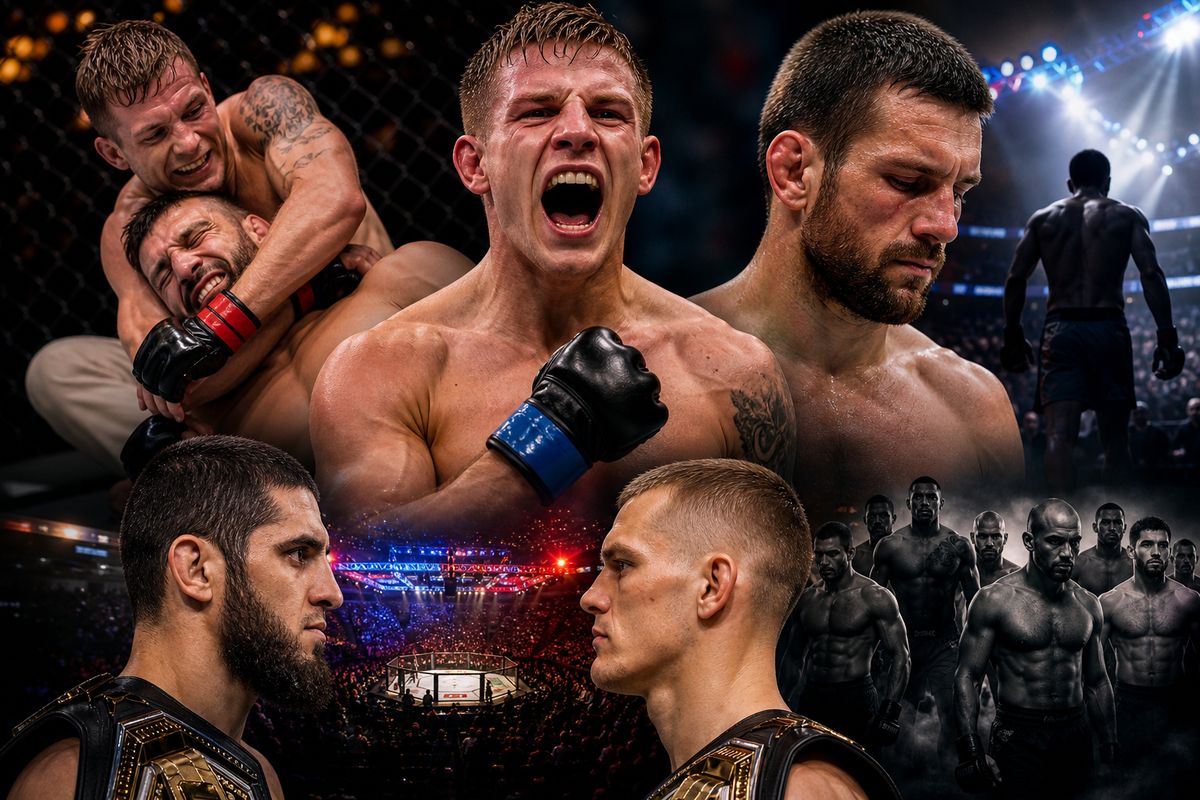
On 16 August 2026, UFC 330’s main event ends with Makhachev retaining his title against Ian Machado Garry after five rounds. MMA Fighting’s event coverage notes a head kick knockdown for Makhachev and sustained control that ultimately carries him through the fight. Bloody Elbow describes “history made after five round battle in Philly”, and MMA Fighting’s post-fight programming positions the bout as a record-setting moment, although the source material does not specify the exact record, so it cannot be responsibly detailed here.
What makes the win feel complicated is that the post-fight narrative is not simply “dominant champion rolls challenger”. MMA Fighting reports Dana White criticises Garry for a lack of “killer instinct”, and also notes Makhachev himself takes issue with the tone of the contest, saying the hugs are “too much” and adding, “This is a fight. This is not a game.” That line is revealing, because it shows a champion who believes the fight is being framed as something other than a ruthless contest, and it hints at a broader tension in modern MMA, where personal brands, viral moments, and backstage theatrics can compete with the sport’s core promise of decisive competition.
There is also a matchmaking undercurrent. MMA Fighting reports Makhachev wonders why Carlos Prates and Michael Morales did not fight at UFC 330 to determine the number one contender. That is not a throwaway complaint. It is a champion publicly pushing the UFC’s ecosystem towards clarity, and implicitly pushing back against the increasingly common practice of letting contender status be shaped by social momentum, promotional value, or opportunistic timing rather than a clean, in-cage eliminator.
Islam Makhachev, the two-belt controversy, and what “champion optics” now mean
The most visible UFC 330 fallout is the two-belt row. MMA Fighting reports Max Holloway questions Makhachev “walking around with 2 belts”, and Bloody Elbow notes Makhachev “sends shot” back after Holloway raises confusion about the celebration. The sources do not provide the full verbatim exchange, but the dispute itself is telling: it is less about leather and gold, and more about what a champion is signalling to fans, contenders, and the promotion.
In an era where the UFC frequently leverages champion imagery for marketing, belt symbolism has become both currency and provocation. A second belt can imply double-champ ambitions, a claim to a legacy narrative, or simply a promotional prop. But it can also irritate other elite fighters who see it as an attempt to occupy multiple lanes at once, holding up divisions, or manufacturing status without a corresponding defence schedule. Holloway’s questioning, as reported by MMA Fighting, lands because it taps into a long-running fan frustration: the sense that belts sometimes move slower than contenders.
Dan Hardy’s analysis, reported by Bloody Elbow, that Makhachev is “forced to change his game” after UFC 330 adds another layer. If a champion is being pushed into tactical evolution, then the belt symbolism becomes even more charged. It is one thing to project invincibility with two belts, it is another to do so right after a “bloody battle” that, according to Bloody Elbow, leaves Makhachev discussing a timeframe for his return. The optics of dominance and the reality of damage do not always align, and UFC 330 makes that gap unusually visible.
Ian Machado Garry after UFC 330: the challenger’s brand meets championship reality
For Ian Machado Garry, UFC 330 is both a breakthrough and a setback. MMA Fighting reports he releases a statement following the loss, and also details a backstage moment where Garry lectures Michael Morales, warning that if someone talks “the shit”, they must “make sure you back it up”. Even without the full context, the message is clear: Garry sees himself as a standard-bearer for competitive seriousness and accountability, and he is actively shaping his public identity as someone who polices the culture around him.
Yet the post-fight criticism from the top is stark. MMA Fighting reports Dana White criticises Garry for lacking “killer instinct” against Makhachev. That critique matters because it is not merely technical, it is promotional. The UFC has long rewarded fighters who pursue finishes and create highlight moments, and White’s framing signals what the organisation wants from future title challengers: not just competitiveness, but a willingness to take risks that make the product more compelling.
That creates a difficult strategic puzzle for Garry and his team. Against a champion who can control rounds, a challenger can either play a measured game to win minutes, or swing for momentum-changing moments that may also create openings for takedowns and control. UFC 330’s fallout suggests Garry is being judged not only on whether he came close, but on whether he performed the kind of aggression that sells the next pay-per-view. In practical terms, that can influence matchmaking, media narratives, and the speed at which a fighter gets back into title contention.
Dern vs Robertson and the Din Thomas controversy: when corners become the story
The co-main event produces its own strand of UFC 330 fallout. MMA Fighting reports Mackenzie Dern outgrapples Gillian Robertson to win a “lackluster title fight”, and Bloody Elbow reports Dern later says, “I should’ve knocked her out.” That combination, winning a title fight while publicly expressing dissatisfaction, is significant. It suggests Dern understands that in 2026, a belt is not always enough to command the narrative, especially in divisions where star power and perceived excitement can shape opportunities.
Then comes the corner controversy. MMA Fighting reports Din Thomas retires from cornering fighters after Robertson’s disappointing loss, and later apologises to Robertson for his “despicable” decision to retire at UFC 330. The language is unusually severe for a coach describing his own conduct, and it indicates that the retirement announcement, or the manner in which it was delivered, is seen as overshadowing the athlete at a vulnerable moment.
Other fighters pile in. MMA Fighting reports Sean Strickland calls Thomas a “sh*t coach” for his reaction to the Robertson loss, and Bloody Elbow similarly reports Strickland “tears into” Thomas after the retirement. The story becomes a case study in how corners are no longer invisible support staff. In the social media era, a coach’s post-fight behaviour can become a reputational event, shaping perceptions of athlete welfare, professionalism, and team culture.
UFC 331’s walkout money story shows how MMA’s economy is changing
While UFC 330 dominates the competitive headlines, another development illustrates how the sport’s incentives are shifting. Bloody Elbow reports Arman Tsarukyan claims streamer N3on has paid him $200,000 to walk out to his song at UFC 331. The figure is explicit and newsworthy because it highlights a revenue stream that sits outside traditional fight purses, win bonuses, and sponsorship structures.
Even if the claim is taken as reported rather than independently verified in the source material, the implication is clear: attention is being monetised in increasingly direct ways. Walkouts have always been branding opportunities, but a six-figure payment tied to a streamer’s song suggests an emerging marketplace where influencers can effectively sponsor moments inside UFC broadcasts. That creates new questions for the UFC and regulators, including transparency, conflicts of interest, and whether such deals create uneven playing fields for fighters with different levels of online reach.
It also reframes what it means to be a contender. Tsarukyan is not just selling tickets or building a record, he is selling access to a cultural moment. For fighters, that can be empowering, but it can also add pressure to perform as content creators. UFC 330’s debates about “killer instinct” and “two belts” sit in the same ecosystem: the sport is increasingly judged through a lens of narrative, spectacle, and monetisable attention, not only through wins and losses.
The Bigger Picture
The UFC 330 fallout reveals a sport negotiating its own identity. On one side is the competitive logic, champions want clear contenders, contenders want fair routes, and coaches want to keep the focus on performance. On the other side is the entertainment logic, the UFC benefits when fighters create controversy, chase finishes, and generate viral moments that keep the brand dominant in an attention economy. When Dana White criticises a challenger’s “killer instinct”, it is not just a technical note, it is a signal about what the company believes sells.
The two-belt argument between Holloway and Makhachev is a microcosm of that tension. Belts are sporting trophies, but they are also marketing assets. A champion carrying two belts can be read as ambition and star power, or as a provocation that complicates divisional order. In past eras, the belt was primarily a sign of who was best. In 2026, it is also a prop in a broader narrative contest, one that can influence matchmaking and fan sentiment as much as rankings do.
Finally, the Tsarukyan walkout payment story points to a future where fighters’ incomes and leverage may increasingly depend on external ecosystems, streamers, platforms, and personal brand deals that sit adjacent to the UFC’s own commercial structure. That could widen the gap between fighters who can monetise attention and those who cannot, even if their competitive level is similar. UFC 330 is therefore not just a night of fights, it is a snapshot of MMA’s evolving power dynamics, where performance, promotion, and personal monetisation are becoming inseparable.
What comes next: pressure points for Makhachev, Garry, and the UFC
Makhachev leaves UFC 330 with his title intact, but the aftermath suggests his next steps will be scrutinised as much for symbolism as for substance. MMA Fighting reports he questions why potential contenders Carlos Prates and Michael Morales did not fight to determine a number one contender. That is a champion effectively asking the UFC to reduce ambiguity. If the promotion responds with a clear contender bout, it strengthens sporting credibility. If it responds with a more promotional choice, it reinforces the perception that star narratives can override merit.
For Garry, the immediate task is to convert a high-profile loss into a credible second run. The public critique about “killer instinct” creates a reputational hurdle, but it also provides a clear storyline for a comeback: a fighter who learns to turn competitiveness into decisive moments. MMA Fighting’s reporting that Garry issues a statement after the fight indicates he is already managing the narrative, which is now a core part of elite-level UFC careers.
For the UFC, UFC 330’s controversies are not purely problems, they are also content. The organisation benefits from debate, but it also risks eroding trust if fans believe belts and contender status are becoming props rather than outcomes. The post-UFC 330 news cycle, spanning performance analysis, coach conduct, champion optics, and influencer money, underlines the same reality: the UFC’s product is no longer just the fights. It is the ecosystem around them, and UFC 330 shows how quickly that ecosystem can become the main event.
Read more coverage and analysis via MMA Fighting at https://www.mmafighting.com/, Bloody Elbow at https://bloodyelbow.com/, and MMA Mania at https://www.mmamania.com/.