
SBG Manchester mixed martial arts and brazilian jiu jitsu, a renewed focus on beginner pathways in 2026
In a crowded combat sports market where many gyms sell intensity first and structure later, SBG Manchester mixed martial arts and brazilian jiu jitsu is leaning into the opposite message in 2026: progression, safety, and a clearly signposted route from first session to long term training. The most concrete expression of that approach is a six week beginners MMA programme priced at £150, with training gloves included, built around two coached sessions per week on Tuesday at 8:30pm and Sunday at 12:00pm.
The programme is not presented as a one off taster. It is positioned as an on ramp into a broader timetable that includes Brazilian Jiu Jitsu, no gi grappling, MMA, boxing, kickboxing, and wrestling. For a gym that describes itself as Manchester’s original Brazilian Jiu Jitsu and mixed martial arts academy, established in 1999, the 2026 emphasis reads less like a reinvention and more like a sharpening of identity: fundamentals first, then complexity.
SBG Manchester’s pitch is explicit about who it wants to reach. Adults with little or no previous experience are told they do not need to already be fit, strong, or confident. They are promised they will not be thrown into an advanced class, and that training takes place in a safe, supportive, ego free environment. In an era when newcomers often arrive with equal parts curiosity and anxiety, that framing is as much a strategic choice as a coaching philosophy.
What is changing, the six week beginners MMA programme and how it works
The headline development is the structured six week beginners MMA programme, designed specifically for complete beginners aged 18 and over. The gym states that course dates are announced approximately every six to eight weeks, and that places are limited, with payment completed online when booking. At the time of the material provided, the current programme is described as unavailable, with prospective students encouraged to join a waiting list for priority notification before booking opens.
In practical terms, the course is built around two coached sessions each week. The schedule is fixed, Tuesday evenings and Sunday midday, which matters for beginners because consistency is often the difference between a short lived burst of enthusiasm and a habit that sticks. The gym recommends attending both sessions each week to receive the maximum benefit, a straightforward acknowledgement that skill acquisition in MMA is cumulative, not episodic.
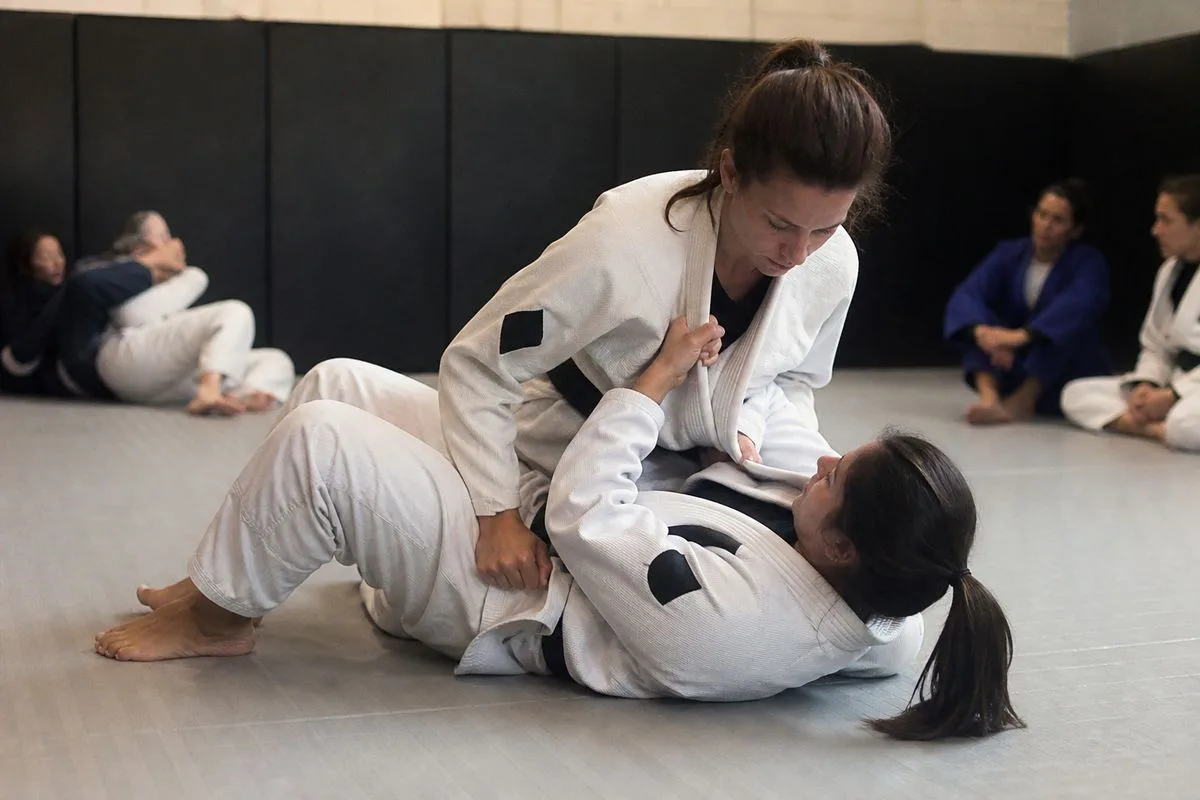
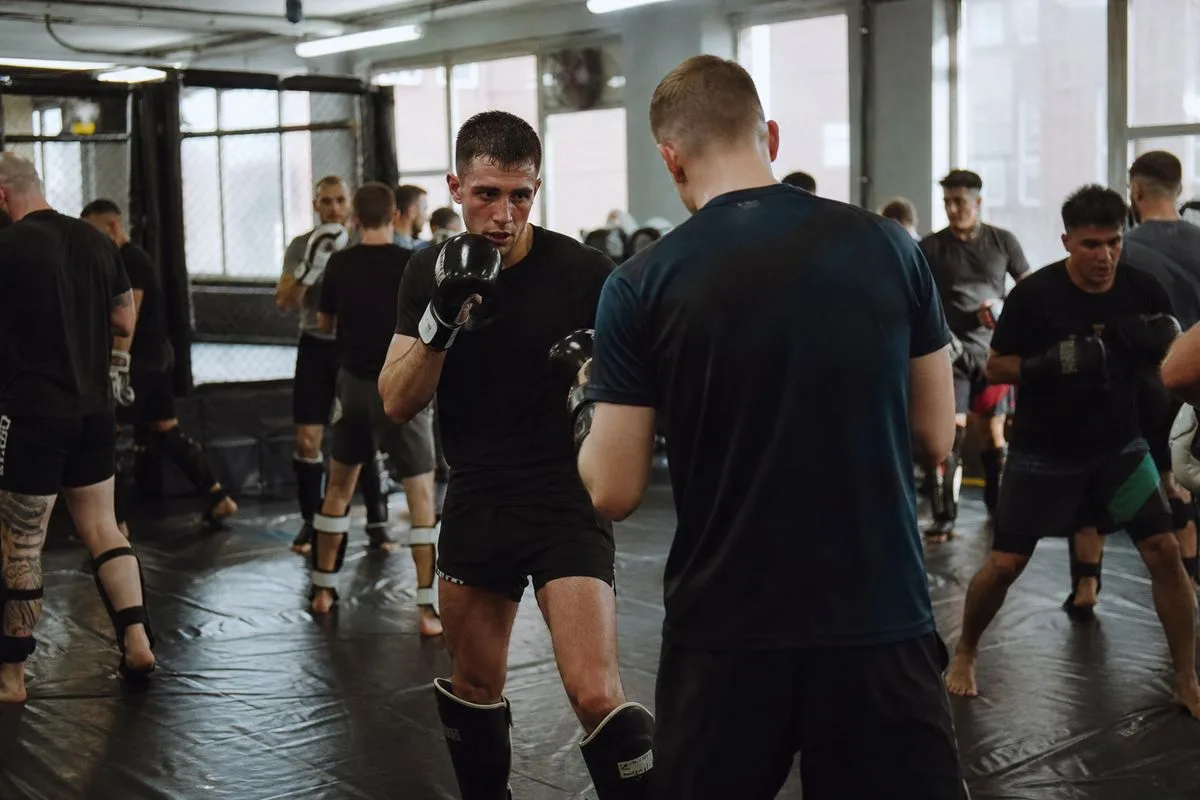
SBG Manchester breaks the curriculum into three ranges that mirror how modern MMA is taught at higher levels: standing range, clinch range, and ground range. Standing range focuses on striking, including boxing fundamentals, kicks and knees, footwork and defence. Clinch range focuses on wrestling, including clinch control, takedowns, and takedown defence. Ground range focuses on grappling, including positional control, escapes and transitions, and submission fundamentals rooted in Brazilian Jiu Jitsu.
The programme’s learning model is described as learn, practise, combine. That sequencing is significant because it rejects the sink or swim approach that still exists in parts of the sport. By isolating ranges before connecting them, the course aims to reduce cognitive overload and limit the kind of chaotic sparring that can discourage beginners or lead to avoidable injuries. It also signals a coaching culture that values repeatable systems over improvisation.
SBG Manchester mixed martial arts and brazilian jiu jitsu, the gym’s 1999 roots and city centre positioning
SBG Manchester describes itself as Manchester’s original Brazilian Jiu Jitsu and mixed martial arts academy, established by Karl Tanswell in 1999. That date matters in UK terms. It places the gym’s origins in a period when MMA is far less mainstream than it is in 2026, and when Brazilian Jiu Jitsu is still establishing itself outside a relatively small network of early adopters.

The gym’s positioning is also geographic and practical. It is based in Manchester city centre, described as five minutes from Piccadilly Station. For working adults, students, and commuters, that kind of access can be decisive, particularly for a programme that expects attendance twice a week. The facility is described as a purpose built martial arts academy, reinforcing the idea that this is not a casual side room operation but a dedicated training space.
SBG Manchester’s wider offer is deliberately broad. Alongside BJJ and MMA, it lists no gi grappling, boxing, kickboxing, and wrestling, and states it provides training for adults and children. The breadth matters because it reflects how MMA has evolved. Modern MMA is not a single discipline, it is an integration problem, and gyms that can teach the component parts with clarity tend to produce more rounded practitioners, even at hobbyist level.
Just as important is the way the gym describes its internal structure. It emphasises a structured curriculum, a clear path of progression, and training with a purpose, framed around confidence, fitness, resilience, and practical ability. It also outlines a pathway of levels, described as 101 for foundations, 201 for developing a personal game, and ALL for training together across experience levels. For beginners, that kind of map reduces uncertainty, and for the gym it creates a scalable way to manage mixed experience classes without compromising safety.
Coaching culture and what beginners are really buying
Combat sports gyms often market equipment, class variety, or competitive success. SBG Manchester’s messaging puts coaching process at the centre. It repeatedly stresses that skills are introduced at the right time, that students build foundations before progressing, and that techniques are developed against realistic resistance so students learn timing and application, not just choreography. For beginners, that is a promise of competence, not just participation.
Independent feedback included in the material points in the same direction. Several verified Google reviews highlight detailed coaching, a friendly environment, and a warm welcome. Individual coaches are praised by name, including Josh Kelly, and shout outs to coaches Paddy and Chris. One reviewer specifically mentions a lesson with Chris described as the head coach, noting useful tips and an ability to generate pressure on top, a very BJJ specific compliment that suggests technical depth rather than generic encouragement.
There is also a deliberate emphasis on ego management. The beginners programme explicitly promises a safe, supportive, ego free environment, and says students will be challenged but never thrown into chaos. In 2026, that is not merely a cultural preference, it is a retention strategy. Beginners who feel physically overwhelmed or socially intimidated tend to quit early, while those who feel guided and protected are more likely to stay long enough to see progress.
Although the source material does not provide a full list of SBG Manchester coaches or their biographies, the gym’s broader branding aligns with a professionalised coaching model seen across established MMA and BJJ organisations. It is not enough to have talented athletes on the mat, beginners need teachers who can sequence skills, manage intensity, and communicate clearly. The repeated focus on structure suggests SBG Manchester is selling a learning system as much as it is selling access to training.
How the curriculum reflects modern MMA and Brazilian Jiu Jitsu training
The three range breakdown, striking, wrestling, grappling, is now standard language in MMA, but it is not always standard practice for beginners. Many newcomers experience MMA as a blur of techniques and rulesets. By explicitly separating standing, clinch, and ground, SBG Manchester is signalling that it teaches MMA as a set of connected problems, each with its own priorities, rather than as a single free for all.
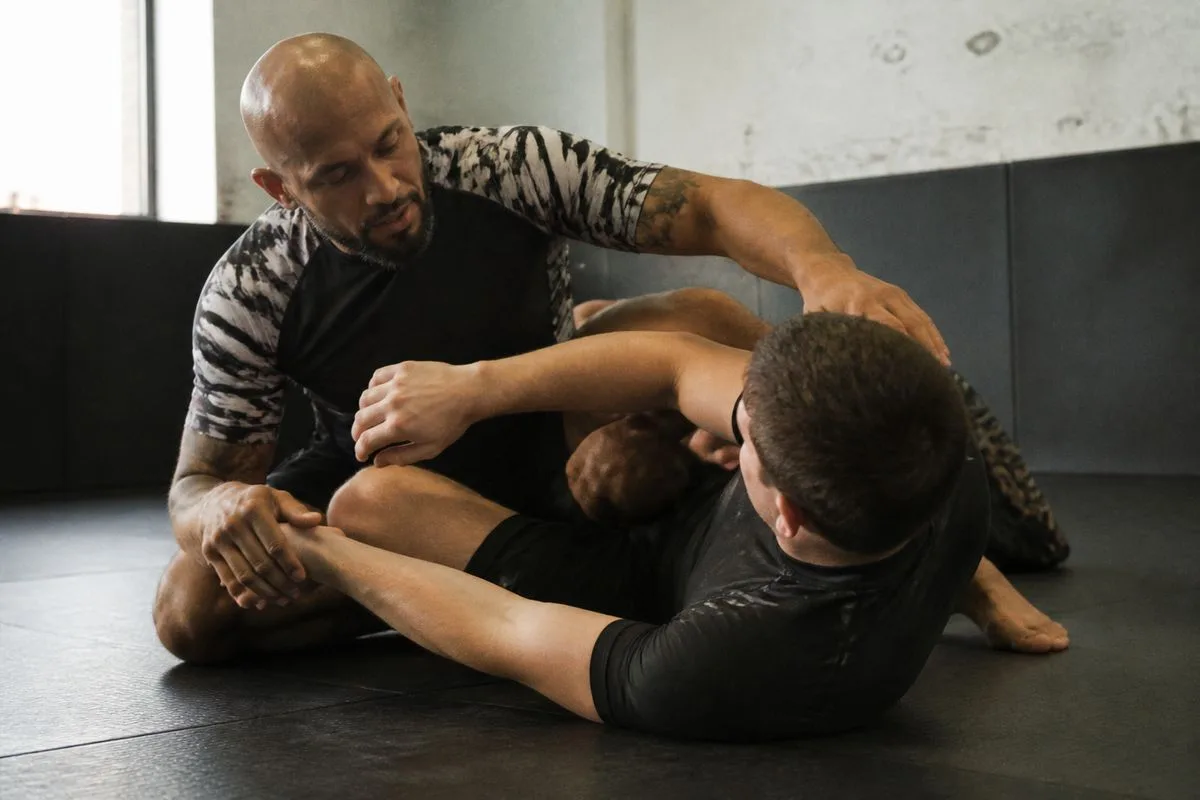
For Brazilian Jiu Jitsu, the programme’s ground range focus on positional control, escapes and transitions, and submission fundamentals is a notable choice. It prioritises survivability and understanding over flashy submissions. That aligns with the gym’s broader claim that it begins with fundamental movements, positions, and principles that support everything students learn later. In BJJ terms, that means learning how to move, frame, and escape before chasing finishes.
The gym also stresses that techniques are developed against realistic resistance. That is a subtle but important distinction. Beginners often learn techniques in cooperative drills that feel successful, then fail under pressure. Introducing resistance progressively helps bridge that gap, provided it is managed safely. The gym’s insistence on control and intelligent coaching suggests it is aware of the risks of throwing beginners into hard sparring too early.
Finally, the programme’s promise of a path beyond the course is not a throwaway line. It is an acknowledgement that MMA and BJJ are long games. A six week programme can build competence and confidence, but it cannot complete the journey. By explicitly pointing graduates into regular MMA, BJJ, wrestling, and striking classes, SBG Manchester is treating the course as a foundation layer in a longer curriculum, not as a standalone product.
Why It Matters
The most interesting aspect of SBG Manchester’s 2026 beginner push is what it says about where the UK market is heading. As MMA and Brazilian Jiu Jitsu become more mainstream, the competitive battleground shifts. The differentiator is no longer simply offering MMA classes, it is offering a credible, repeatable pathway that takes a true novice from uncertainty to competence without injury, embarrassment, or burnout. A structured six week programme with fixed sessions, limited places, and a clear syllabus is a direct response to that demand.
There is also a wider cultural correction underway in combat sports. For years, some gyms equate toughness with disorder, and treat beginners as raw material to be tested. SBG Manchester’s language rejects that. It frames safety and control as prerequisites for progress, not as constraints. In practice, that approach can widen participation. People who might never walk into an MMA gym, because they assume it is only for already fit or already confident athletes, are more likely to try a programme that explicitly tells them the opposite.
Finally, the gym’s emphasis on fundamentals across ranges reflects a maturing understanding of what keeps students training for years. Most hobbyists are not chasing professional fights, they are chasing sustainable improvement, fitness, and community. A curriculum that starts with foundations, then builds towards integration, is more likely to produce that outcome than a timetable dominated by ad hoc sparring. In that sense, the beginners programme is not just a product, it is a statement about what MMA and BJJ training should look like in a city centre gym in 2026.
Closing thoughts, what prospective students should take from the 2026 update
For anyone searching specifically for sbg manchester mixed martial arts and brazilian jiu jitsu, the key takeaway is that the gym is presenting a structured entry point rather than an intimidating leap into the deep end. The six week beginners MMA programme is priced at £150 with gloves included, runs two coached sessions per week, and is designed for adults aged 18 and over with little or no experience. It teaches striking, wrestling, and Brazilian Jiu Jitsu fundamentals in a staged way, then points students towards ongoing classes.
SBG Manchester’s longer story strengthens that proposition. Established in 1999 by Karl Tanswell, it positions itself as Manchester’s original BJJ and MMA academy, operating in the city centre close to Piccadilly Station. Its broader timetable spans BJJ, no gi, MMA, boxing, kickboxing, and wrestling, and it describes a structured pathway from foundations to more advanced training. That combination of longevity, location, and curriculum design is likely to appeal to beginners who want clarity and to experienced practitioners who value systematic coaching.
What cannot be concluded from the available material is the exact date of the next intake, or the full coaching roster and competitive record of the gym’s athletes. The gym states that new courses normally begin every six to eight weeks and that places are limited, but it does not provide a specific 2026 start date in the text provided. For prospective students, that means the practical next step is monitoring for the next announced intake and being ready to book quickly if places are capped.
In a sport where hype often outpaces teaching, SBG Manchester’s 2026 messaging is notable for its restraint. It sells the unglamorous things that actually make people better: fundamentals, progression, and a supportive room. For Manchester’s growing population of curious newcomers, that may be the most newsworthy development of all.