
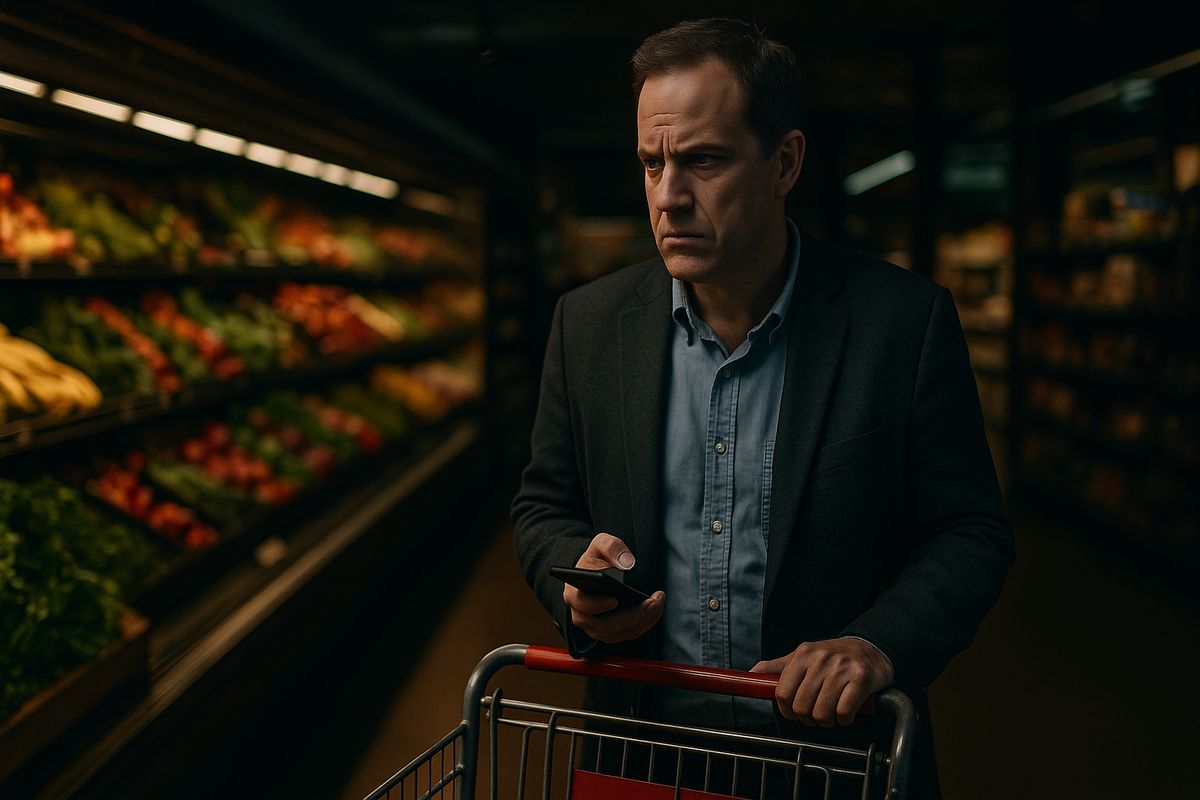
Maryland Becomes First State to Ban Dynamic Pricing in Grocery Stores
Maryland Governor Wes Moore signed a groundbreaking law that makes the state the first in the nation to ban dynamic pricing in grocery stores. The legislation, which targets what critics call "surveillance pricing," prohibits grocery retailers from using personal data to adjust prices in real time based on a shopper's purchasing history, location, or other behavioral metrics. The law represents a significant escalation in the ongoing debate over data privacy and consumer protection in the retail sector.
The new law, which passed with bipartisan support in the Maryland General Assembly, specifically outlaws the practice of using "personal information or data" to set variable prices for grocery items. This includes data collected through loyalty programs, mobile apps, or third-party data brokers. Grocers found in violation face fines and potential legal action from the state attorney general. The law takes effect on October 1, 2025, giving retailers time to adjust their pricing systems.
The Mechanics of Surveillance Pricing in Retail
Dynamic pricing, also known as surge pricing or personalized pricing, is a strategy where prices fluctuate based on demand, time of day, or individual consumer behavior. While common in industries like airlines, ride-sharing, and hotels, its application in grocery stores has raised unique concerns. Surveillance pricing takes this a step further by using granular data—such as a shopper's past purchases, browsing history on a store's app, or even their proximity to a competitor—to set prices that maximize profit per customer.
For example, a grocery chain might use a loyalty card to track that a customer frequently buys organic milk. The store's algorithm could then raise the price of that milk for that specific shopper, assuming they are less price-sensitive. Conversely, a price-sensitive customer might see lower prices on staple items to encourage loyalty. This practice, while potentially profitable for retailers, has drawn sharp criticism from consumer advocates who argue it exploits vulnerable populations and undermines trust.
Key Players and the Legislative Journey
Governor Wes Moore and the Maryland General Assembly
Governor Wes Moore, a Democrat who took office in January 2023, has made consumer protection a cornerstone of his administration. The bill, introduced by state Delegate [name not specified in source material] and Senator [name not specified in source material], moved through the legislature with notable speed. Committee hearings featured testimony from consumer advocacy groups, privacy experts, and representatives from major grocery chains. The final vote was [vote count not specified in source material], reflecting broad agreement across party lines on the need to curb data-driven price discrimination.
Industry Response and Opposition
The grocery industry, represented by groups like the Food Marketing Institute and the Maryland Retailers Association, opposed the bill. They argued that dynamic pricing can help reduce food waste by lowering prices on soon-to-expire items and that the law would stifle innovation. However, supporters countered that existing laws already allow for markdowns on perishable goods, and that the ban specifically targets personalized pricing based on surveillance, not general price adjustments.
What This Means for the Grocery Industry
The Maryland law sets a precedent that could ripple across the country. Other states, including California, New York, and Illinois, have introduced similar legislation, though none have yet passed. The law's focus on grocery stores—a sector where margins are notoriously thin and consumer trust is paramount—makes it particularly significant. Grocers operate on average net profit margins of just 1-3%, so any disruption to pricing strategies could have outsized financial impacts.
For national chains like Kroger, Giant Food, and Walmart, which operate in Maryland, compliance will require auditing their pricing algorithms and data collection practices. Some may choose to discontinue loyalty programs that track individual purchases, while others might shift to more transparent discount models. The law also creates a compliance burden for smaller independent grocers, who may lack the legal and technical resources to navigate the new regulations.
Historical Context: From Unit Pricing to Algorithmic Pricing
The debate over grocery pricing transparency is not new. In the 1970s, consumer advocates pushed for unit pricing laws, which required stores to display the price per ounce or per pound to help shoppers compare value. Those laws, now standard across the U.S., were a response to confusing packaging and deceptive pricing. The Maryland dynamic pricing ban can be seen as a 21st-century update to that movement, addressing the opacity of algorithmic pricing.
More recently, the rise of big data and machine learning has enabled retailers to move beyond simple demand-based pricing to individualized price discrimination. A 2023 study by the Consumer Federation of America found that 78% of major grocery chains use some form of personalized pricing, though most do not disclose it to customers. The Maryland law is the first to explicitly prohibit this practice in the grocery sector, drawing a line that consumer advocates hope will become a national standard.
Broader Implications for Data Privacy and Consumer Rights
The Maryland law is part of a larger wave of state-level data privacy legislation. Following the lead of the California Consumer Privacy Act (CCPA) and the Virginia Consumer Data Protection Act, states are increasingly regulating how companies collect and use personal data. The grocery pricing ban adds a new dimension: it directly ties data privacy to economic fairness, arguing that consumers should not be penalized for their purchasing history.
Legal experts predict challenges from the grocery industry, potentially arguing that the law violates the Commerce Clause by imposing burdens on interstate commerce. However, supporters believe the law will withstand scrutiny because it targets specific conduct—surveillance pricing—rather than general pricing practices. If upheld, the law could serve as a template for federal legislation, though gridlock in Congress makes state-level action the more likely path forward in the near term.
What Comes Next: Enforcement and National Trends
The Maryland Attorney General's office will be responsible for enforcing the law, with the authority to investigate complaints and impose civil penalties. The law also includes a private right of action, allowing consumers to sue grocers for violations. This enforcement mechanism is modeled on other consumer protection laws and is designed to deter non-compliance without requiring extensive state resources.
Nationally, the Federal Trade Commission (FTC) has shown interest in surveillance pricing. In 2024, the FTC held a workshop on "Surveillance Pricing and Consumer Protection," and Chair Lina Khan has signaled that the agency may pursue enforcement actions under existing laws against unfair or deceptive practices. The Maryland law could accelerate that process by providing a clear example of what a ban looks like in practice.
For consumers, the law offers immediate reassurance: when they walk into a Maryland grocery store after October 1, 2025, the price on the shelf will be the same for everyone, regardless of what the store knows about them. For the industry, it signals a new era of regulatory scrutiny that will require adaptation, investment in compliance, and perhaps a fundamental rethinking of how loyalty programs and data collection fit into the grocery business model.